Blog
Barudan Embroidery Machine: Thread Breakage Troubleshooting Guide

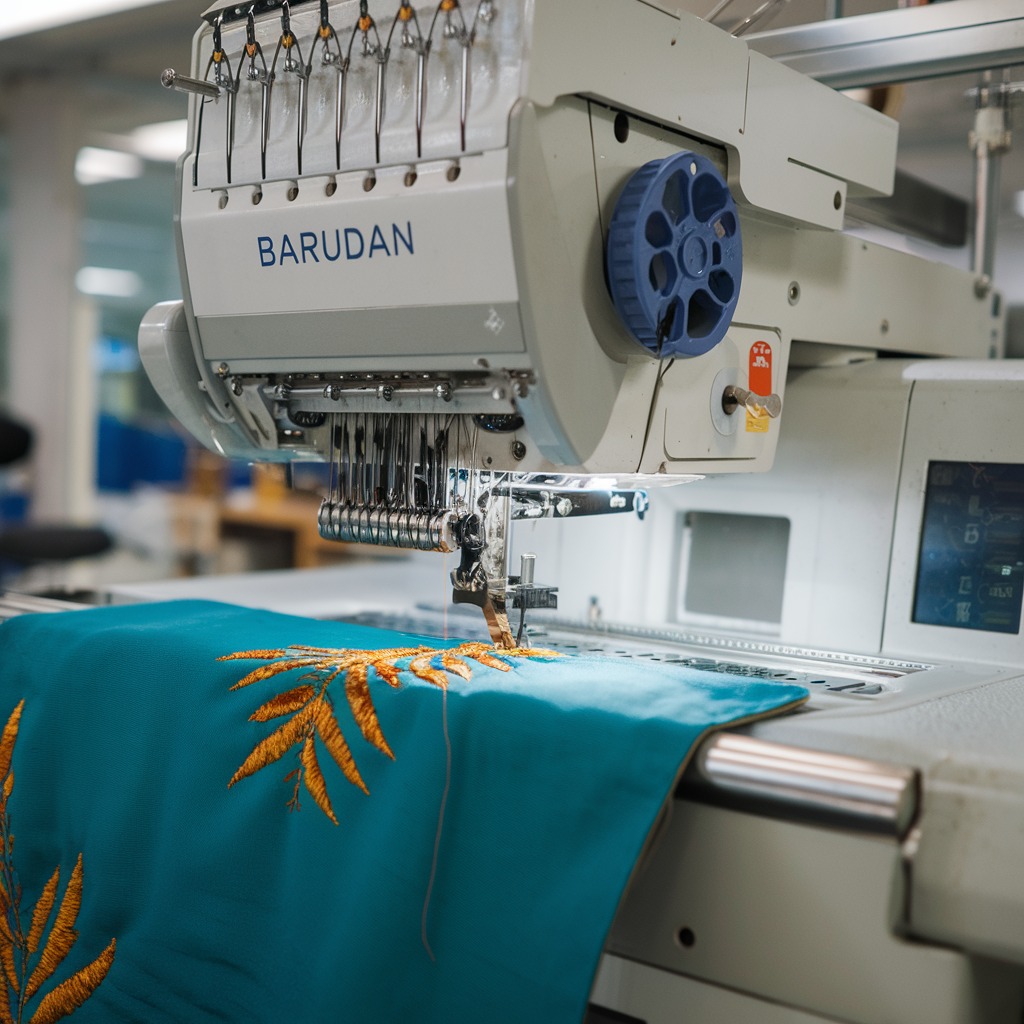
Quick answer: Frequent thread breakage on a Barudan embroidery machine is most commonly caused by incorrect thread tension, a damaged or incorrect needle, or improper threading. Systematically check these areas first.
Thread breakage is a common operational challenge on Barudan embroidery machines that can disrupt production. This guide provides a systematic approach for operators to diagnose and resolve the most frequent causes of thread breaks, focusing on practical, actionable steps to restore machine performance.
Two-minute checks before you open anything
- Verify the upper and bobbin thread are correctly threaded through all guides and tension disks.
- Inspect the needle for damage (bend, burr, dullness) and ensure it's the correct type and size for your thread and fabric.
- Check the upper thread tension dial and bobbin tension for proper balance. Adjust incrementally.
- Ensure the bobbin is wound evenly and inserted correctly into the bobbin case.
- Confirm the fabric is hooped tightly and evenly, without wrinkles or slack.
1. Incorrect Thread Tension (Upper or Bobbin) high likelihood
How to tell
Stitches appear uneven, looped, or loose on one side of the fabric. The thread may snap under normal stitching load, or fray excessively. Too-tight tension can cause the thread to 'sing' or stretch before breaking. Too-loose tension can cause loops and tangles, leading to breaks.
Fix
- For upper thread: Locate the tension adjustment dial for the affected needle. Turn the dial incrementally (e.g., 1/4 turn) to increase or decrease tension. Test on scrap fabric. Refer to your Barudan machine manual for recommended tension settings for different thread types and weights.
- For bobbin thread: Remove the bobbin case. Inspect the bobbin for even winding; rewind if necessary. If the bobbin case has an adjustment screw, turn it in very small increments (e.g., 1/8 turn) to adjust tension. A common test is the 'drop test': hold the bobbin thread, and the bobbin case should slowly drop a few inches, then stop. Consult your Barudan manual for the precise bobbin tension test for your model.
- Ensure both upper and bobbin tensions are balanced. The goal is for the bobbin thread to show approximately 1/3 on the underside of the fabric and the upper thread 2/3 on the top.
Tension disks are typically found in the '06 Thread guide' or '03 Take up lever' assembly. Bobbin cases are part of the '01A Head Bed A' or '01B Head Bed B' assembly.
Parts involved: Thread path & tension → Rotary hooks & bobbin cases →
2. Damaged or Incorrect Needle high likelihood
How to tell
Thread fraying, shredding, or breaking consistently at the needle eye or shaft. Skipped stitches. Punctures in the fabric are too large. The needle may appear bent, dull, or have burrs when inspected closely. Using the wrong needle type or size for the thread or fabric can cause excessive friction or an inadequate eye size.
Fix
- Power off the machine. Loosen the needle clamp screw for the affected needle. Remove the old needle.
- Inspect the needle clamp for any damage or burrs. Clean any lint or debris.
- Select a new, appropriate needle. Ensure it's the correct type (e.g., embroidery specific), size (e.g., DBxK5, 75/11 for general embroidery), and point style for your fabric and thread weight. Refer to your Barudan manual for needle recommendations.
- Insert the new needle fully into the needle clamp, ensuring the scarf (long groove) faces the front and the flat side of the shank faces the back (or as specified in your manual). Tighten the needle clamp screw securely.
- Run a test stitch on scrap fabric.
Needle clamp is part of the '04A-1 Needle bar A(Z12)' or similar Needle bar assembly.
Parts involved: Needles & needle bars → Screws, springs & small parts →
Parts you may need for Barudan
In stock, tested before dispatch, Buyer Protection on every order. Part types for this problem: Thread path & tension, Rotary hooks & bobbin cases, Needles & needle bars, Screws, springs & small parts.
 Groz Beckert RG DBXK5 Embroidery Needles Nm 65/9, 70/10, 75/11, 80/...$ 36.29View part →
 Hirose HSH-7.94ATR(MTQ) KHS12-RYP Rotary Hook for Tajima, Barudan, ...$ 18.09View part →
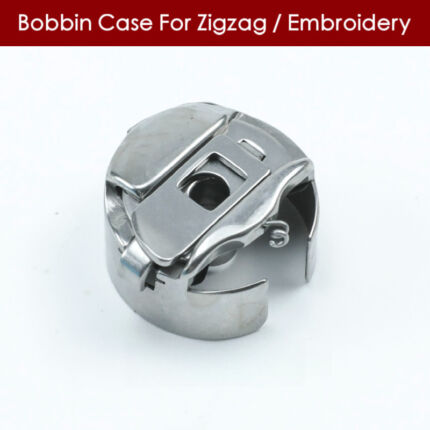 Industrial BC-DBZ(1)-NBL6 Bobbin Case for Barudan TZ1 LE2, Brother ...$ 7.49View part →
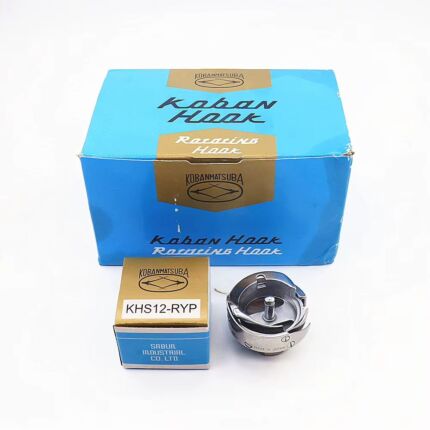 Koban KHS12-RYP Rotary Hook with Trimmer for Tajima, Barudan, SWF, ...$ 33.49View part →
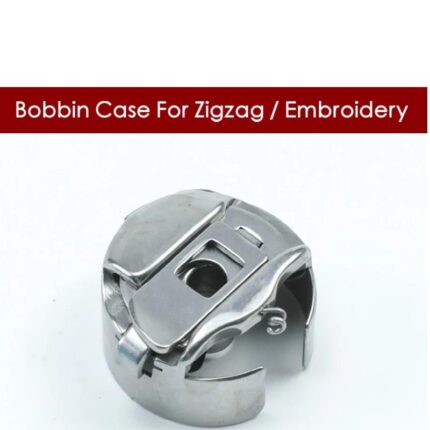 BC-DBZ(1)-NBL6 Bobbin Case for Barudan TZ1, Brother BAS-400, JUKI L...$ 7.49View part →
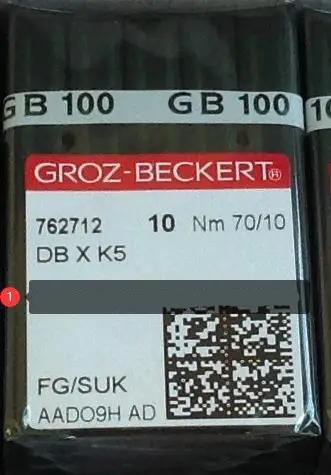 Groz-Beckert DBXK5 FG/SUK Embroidery Needles (100 Pcs) for Tajima, ...$ 34.49View part →
All Barudan parts → Thread Path & Tension → Rotary Hooks & Bobbin Cases → Needles & Needle Bars →
3. Improper Threading Path high likelihood
How to tell
Thread breaks occur inconsistently or immediately after re-threading. The thread may snag, jump out of guides, or not sit correctly in tension disks. Visual inspection reveals the thread bypassing a guide, not fully seated in tension disks, or tangled.
Fix
- Completely unthread the affected needle from the spool to the needle eye.
- Refer to your Barudan machine's user manual or the threading diagram on the machine itself. Follow the threading path precisely, ensuring the thread passes through every guide, pre-tensioner, and tension disk.
- Ensure the thread is fully seated between the tension disks. A slight 'pop' or resistance should be felt as it seats.
- Verify the thread is correctly routed through the take-up lever and all lower guides before entering the needle eye.
- Ensure the thread passes cleanly through the needle eye without loops or twists.
Thread guides are found in '06 Thread guide' and '03 Take up lever' assemblies.
Parts involved: Thread path & tension → Head & mechanical parts →
4. Poor Thread Quality or Storage medium likelihood
How to tell
Thread appears fuzzy, brittle, or frays easily even before stitching. Breaks occur with different needles and tension settings. Old or improperly stored thread can lose strength and elasticity. Excessive lint buildup around the needle and thread path.
Fix
- Replace the current thread spool with a new, high-quality embroidery thread from a reputable manufacturer. Polyester and rayon are generally durable.
- Avoid using thread that appears old, dusty, or has been exposed to extreme temperatures or humidity for extended periods.
- Store thread spools in a cool, dry environment, away from direct sunlight and heat sources, to preserve their integrity.
- If working in very dry conditions, consider using a thread lubricant or conditioner to reduce friction.
Parts involved: Threads & supplies →
5. Damaged Thread Guides, Tension Disks, or Hooks medium likelihood
How to tell
Thread fraying or shredding consistently at a specific point in the thread path. Visual inspection reveals burrs, nicks, rough spots, or grooves on metal guides, ceramic eyes, or tension disks. Lint and debris accumulation can also cause friction.
Fix
- Power off the machine. Carefully inspect all thread guides, pre-tensioners, tension disks, and thread hooks from the spool to the needle eye.
- Use a magnifying glass if necessary to check for any sharp edges, burrs, or wear marks. Pay close attention to ceramic eyes and metal guides.
- Clean any accumulated lint, dust, or thread residue from all components using a soft brush or compressed air.
- If a component has a minor burr, it may be carefully smoothed with a very fine emery cloth or jeweler's file. Exercise extreme caution to avoid further damage.
- If components are significantly worn, grooved, or damaged, they must be replaced. Consult your Barudan parts manual for the correct part numbers and replacement procedure, or contact a technician.
These parts are typically found in the '06 Thread guide', '03 Take up lever', and '01A Head Bed A' or '01B Head Bed B' assemblies.
Parts involved: Thread path & tension → Head & mechanical parts → Screws, springs & small parts →
6. Bobbin Winding Issues or Obstructions medium likelihood
How to tell
Bobbin thread breaks, or upper thread breaks due to excessive drag from the bobbin. The bobbin may be unevenly wound, overfilled, or have loose loops. Lint or debris in the bobbin case or race can impede smooth thread movement.
Fix
- Remove the bobbin and bobbin case. Inspect the bobbin for even winding. If uneven or overfilled, rewind it using the machine's bobbin winder, ensuring consistent tension during winding.
- Clean the bobbin case thoroughly with a small brush or compressed air, removing all lint and thread bits. Pay attention to the tension spring area.
- Clean the bobbin race area (where the bobbin case sits) of any lint or debris. This often requires removing the needle plate and possibly the rotary hook cover.
- Reinsert the bobbin correctly into the bobbin case, ensuring the thread feeds in the correct direction (usually clockwise for most Barudan models).
- Reinsert the bobbin case into the rotary hook assembly, ensuring it clicks securely into place.
Bobbin case and rotary hook are part of the '01A Head Bed A' or '01B Head Bed B' assembly.
Parts involved: Rotary hooks & bobbin cases → Lubrication & maintenance →
7. Incompatible Fabric, Stabilizer, or Hooping low likelihood
How to tell
Thread breaks occur primarily on specific fabric types or designs, especially those with high stitch density. Fabric puckering, shifting, or excessive resistance during stitching. The needle may deflect or struggle to penetrate the material.
Fix
- Ensure the stabilizer used is appropriate for the fabric weight and design density. Use cut-away for unstable fabrics, tear-away for stable fabrics, and water-soluble for delicate or topping applications. Layering may be necessary.
- Hoop the fabric and stabilizer together tightly and evenly, ensuring there are no wrinkles or slack. The fabric should be taut like a drum.
- Use a hoop size that is appropriate for the design and allows for proper tension without distorting the fabric.
- If the fabric is very thick or dense, consider using a larger needle size (e.g., 80/12 or 90/14) to reduce resistance.
- Test different combinations of fabric, stabilizer, and hooping techniques on scrap material before starting the main project.
Parts involved: Hoops & frames → Threads & supplies → Needles & needle bars →
8. Tension Spring Issues low likelihood
How to tell
Inconsistent thread tension despite adjustments to the tension dial. The thread may feel loose or tight intermittently. The tension spring itself may appear bent, stretched, or dislodged.
Fix
- Power off the machine. Carefully inspect the tension springs associated with the upper thread tension disks.
- Ensure the spring is properly seated and not bent or damaged. It should provide consistent pressure on the tension disks.
- If the spring is loose, gently try to reseat it. If it is visibly damaged, bent, or has lost its tension, it will need to be replaced.
- Consult your Barudan parts manual for the correct tension spring part number and replacement procedure. This may require partial disassembly of the tension assembly.
Tension springs are part of the '06 Thread guide' assembly.
Parts involved: Thread path & tension → Screws, springs & small parts →
Stop and call a technician if
- If thread breakage persists after performing all troubleshooting steps.
- If you identify damaged internal components (e.g., rotary hook, main shaft, circuit board) that require specialized tools or expertise to replace.
- If the machine requires calibration or software updates that you are not equipped to perform.
- If you suspect an issue with the machine's motor or electronics.
Prevent it coming back
- Regularly clean the entire thread path, including tension disks, thread guides, and the bobbin area, to prevent lint buildup and friction.
- Always use high-quality embroidery thread and store it properly in a cool, dry environment.
- Inspect and replace needles frequently, ensuring the correct type and size for your project.
- Follow the machine's threading diagram precisely every time you re-thread.
- Ensure bobbins are wound evenly and inserted correctly.
- Use appropriate stabilizer and proper hooping techniques to prevent fabric movement and excessive thread tension.
- Perform routine machine maintenance and lubrication as recommended in your Barudan manual.
Frequently asked questions
How often should I change my Barudan embroidery machine needle?
It's recommended to change your needle after every large project (e.g., 8-10 hours of stitching) or if you notice any signs of damage like dullness, bending, or burrs. A fresh needle prevents thread breakage and fabric damage.
What is the correct way to store embroidery thread?
Store embroidery thread in a cool, dry place away from direct sunlight, heat sources, and high humidity. This prevents the thread from becoming brittle, losing strength, or drying out, which can lead to breakage.
My Barudan machine keeps breaking thread, but I've checked everything. What next?
If you've systematically checked tension, needles, threading, and cleaned the thread path, persistent breakage might indicate an underlying mechanical issue. Consider advanced maintenance like calibration, checking for burrs on the rotary hook, or contacting a certified technician for diagnosis.
Can environmental factors cause thread breakage?
Yes, extreme environmental conditions like high humidity or very dry air can affect thread performance. High humidity can make thread sticky, while dry conditions can cause static and brittleness. Maintain a stable environment for your machine and thread.
From the Barudan BEVT-Z1501CII parts book
The assemblies involved in this problem, as the manufacturer lists them. Open a section to see every part number, which ones we stock, and get a price on the rest.
- 01a Head Bed A36 parts · 4 in stock
- Head Bed A30 parts · 4 in stock
- 01 A Head Bed A30 parts · 4 in stock
- 02c Thread Cut C22 parts · 4 in stock
- 04b Needle Bar B35 parts · 3 in stock
- 02a Thread Cut A36 parts · 1 in stock
Reference book: Barudan BEVT-Z1501CII. Part numbers differ by model - search yours below and we will confirm fit.
Did this guide fix your machine?
Rate it - it helps other operators find the right fix.
Not sure which part is failing?
Need the logo stitched too?
Get your logo digitized by the people who know this machine
Upload the artwork, see the stitch count and the exact price in 10 seconds, then order with a free sew-out preview. $1 per 1,000 stitches, $10 minimum, 24-hour delivery. Vector conversion from $12.
After the fix
Fixed it? Keep the rest of the shop moving.
OS 360 is the shop software from the team behind this parts store. Every job keeps its status, deadline and owner while a Barudan head is down, restock alerts fire for needles, hooks and bobbins before you run dry, and quotes, invoices and payment live in one place.
- Jobs with status, deadline and owner - nothing slips during downtime
- Inventory with restock alerts, this store one click away
- Instant quotes, invoices and one place to collect payment