What is this case study? This page documents a real completed Digitizing order produced by 360 Digitizing Solutions for a LEFT/RIGHT SLEEVE placement on POLY/COTTON BLEND POLOS. To protect client privacy, company and brand names have been anonymized. Browse specs, before/after images, and production notes below.
Precision Sleeve Digitizing for Performance Apparel
We successfully digitized a detailed logo for a restricted sleeve placement. This project required careful density management to ensure the final result looked professional on poly-cotton polo shirts.
Customer Original Artwork

Final Digitized Proof
Order Specifications
Project Background
The core challenge here was balancing the stitch density to ensure the design did not pull or distort the fabric. Poly-cotton blends are common for staff uniforms, but they can be temperamental. If the digitizing is too heavy or the pull compensation is incorrectly calculated, the garment will pucker around the embroidery, making it look unprofessional.
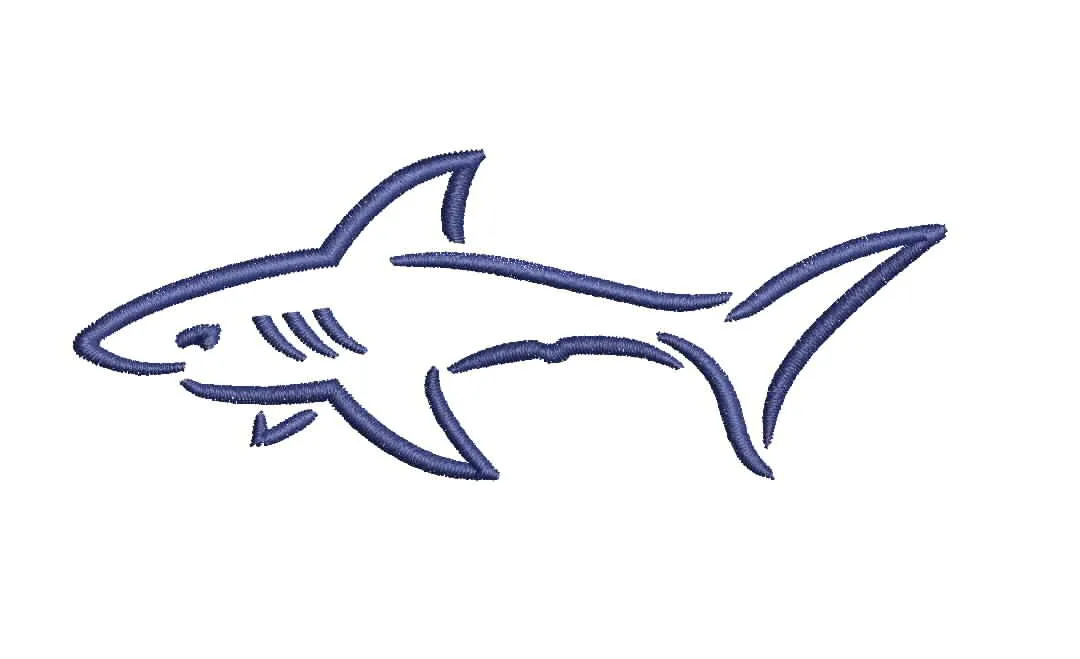
Our client needed this to run on high-speed commercial machines without breaking threads or causing delays. They provided the original artwork, which had several fine lines and sharp angles that had to be interpreted correctly for thread. We had to ensure that the small size of the logo (3 inches) did not compromise the legibility of the design.
We analyzed the artwork to identify areas where detail would likely be lost if the stitch count was too high. By simplifying certain elements while maintaining the visual integrity of the shark, we created a file that flows properly during the embroidery cycle. This approach helps the decorator maintain a high throughput speed without sacrificing the final aesthetic of the company logo on their client’s polos.
The project demanded a deep understanding of how thread interacts with lightweight, synthetic-blend fabrics. By keeping the design clean and avoiding unnecessary crossovers, we ensured that the final embroidery would look sharp and feel comfortable for the wearer, meeting the high standards expected by the end customer.
Technical Production Process
We carefully adjusted the stitch directions to create a sense of movement within the design. By ensuring that the fill stitches ran perpendicular to the main outlines, we minimized the risk of the fabric bunching up. The density was calibrated to provide full coverage without adding excess weight that might cause the garment to pull downward on the sleeve.
Our team focused heavily on the start and end points of each segment to ensure minimal jump stitches. This reduces the time the operator spends trimming threads, which is vital when running large batches of polos. Every connection point was carefully considered to create a clean path for the machine head.
Finally, we reviewed the entire sequence to ensure that the machine would traverse the design in the most efficient manner possible. This step-by-step optimization ensures that the embroidery stays true to the client’s original vision while remaining fully functional for industrial production.
- ✓ Optimized pull compensation for poly-cotton blends.
- ✓ Clean pathing to reduce machine trim time.
- ✓ Balanced stitch density for a flat, professional finish.
Final Outcome
The client was able to run the design on their production line immediately without needing to make adjustments to their machine settings. The success of this project highlights our commitment to providing digitizing files that are ready for immediate use. Our focus on technical accuracy ensures that our partners can spend more time producing apparel and less time fixing file issues.
Ready for Flawless Production?
We deliver production-ready files optimized for your exact machines and fabrics, reducing thread breaks and maximizing shop efficiency.
Frequently Asked Questions
Why is sleeve digitizing more difficult than chest logos? +
Sleeves have a smaller hoop area and often involve curved surfaces. Proper digitizing must account for the specific fabric tension and the limited space to prevent puckering.
How do you handle poly-cotton blends for embroidery? +
Poly-cotton blends are prone to shifting. We use specific underlay patterns and density settings to anchor the stitches to the fabric, ensuring the design stays crisp after multiple washes.
Disclaimer: All logos and designs are the property of their respective copyright/trademark owners. This case study is for the sole purpose of demonstrating 360 Digitizing Solutions’ technique and quality. We do not claim ownership of the original artwork, nor are these designs for sale.
Brand Representative? Request Portfolio Privacy/Removal (Corporate Email Required)