What is this case study? This page documents a real completed Digitizing order produced by 360 Digitizing Solutions for a Left Chest placement on Cotton. To protect client privacy, company and brand names have been anonymized. Browse specs, before/after images, and production notes below.
Mastering Left-Chest Cotton Embroidery with Precision Digitizing
See how our expert technicians translated a compact artwork into a clean, production-ready stitch file tailored specifically for cotton apparel.
Customer Original Artwork

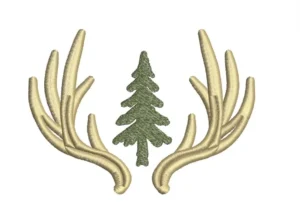
Final Digitized Proof

Order Specifications
Project Background
The client faced a common challenge with compact branding: fitting distinct lettering and graphic details into a restricted 5 by 1.25-inch window without letting the stitches crowd together. Cotton fabric offers a stable weaving structure, but if stitch density is set too high, the fabric can pucker or pull inward under the tension of thousands of needle penetrations. Our job was to engineer a clean path that respects the natural flexibility of cotton while locking down clear borders and sharp angles.
Working closely with the provided artwork, our digitizing crew mapped out every single element to ensure maximum visual clarity. We evaluated the weight of the cotton fabric to determine how much compensation was needed to counteract any natural shifting during high-speed machine runs. Every line and curve had to be carefully measured to guarantee that the final product would lay completely flat and professional on the wearer’s chest.
By focusing strictly on clean vector paths and balanced stitch distribution, we set up the design to run smoothly on commercial multi-head machines. The resulting file bridges the gap between creative concept and mechanical efficiency, ensuring that the decorator could load the program and run hundreds of pieces without encountering thread breaks, needle deflection, or birdnesting issues.
This project highlights why professional oversight matters for standard retail apparel. Without thoughtful pathing, smaller designs easily lose their shape in the wash or look muddy on the machine. Our team took the guesswork out of the production cycle, giving the decorator total confidence right out of the box.
Technical Production Process
We implemented a dual-layer underlay foundation consisting of a lightweight contour stitch paired with a zig-zag base. This anchors the cotton fibers securely, preventing the top fill stitches from sinking into the fabric texture over time. Proper underlay is the secret to keeping text legible and sharp at smaller scales.
Stitch density was precisely capped to prevent material stiffness while maintaining full coverage. By optimizing entry and exit points, we also eliminated unnecessary jump stitches and trimmed travel threads, keeping the machine running at top speed with minimal operator intervention.
- ✓ Applied balanced center-out pathing to eliminate cotton puckering
- ✓ Built a dual-layer underlay foundation for superior text clarity
- ✓ Optimized 2884 total stitches for high-speed commercial run times
Final Outcome
The local decorator successfully completed their bulk apparel run with zero downtime or thread breakage. Clean edges, crisp lettering, and a smooth surface finish ensured the final garments met the strict standards of their retail customers.
This project underscores our dedication to providing reliable, production-ready files that keep embroidery shops running profitably. When you need dependable digitizing for cotton and other common fabrics, our team delivers consistent quality every single time.
Ready for Flawless Production?
We deliver production-ready files optimized for your exact machines and fabrics, reducing thread breaks and maximizing shop efficiency.
Frequently Asked Questions
What fabric types work best for left-chest embroidery? +
Cotton is one of the most stable fabrics for left-chest embroidery, providing a solid foundation that minimizes puckering when proper underlay is applied.
How do you determine stitch density for a 5×1.25 inch design? +
Stitch density is carefully calibrated based on the fabric’s weight and stretch characteristics to ensure the thread sits cleanly without crowding or breaking.
Disclaimer: All logos and designs are the property of their respective copyright/trademark owners. This case study is for the sole purpose of demonstrating 360 Digitizing Solutions’ technique and quality. We do not claim ownership of the original artwork, nor are these designs for sale.
Brand Representative? Request Portfolio Privacy/Removal (Corporate Email Required)
More Left Chest digitizing case studies
Filed under Case Studies / Embroidery Digitizing / Left Chest
 Professional Embroidery Digitizing Services for Polyester
 Official Taster Left Chest Embroidery Case Study
 Left-Chest Cotton Embroidery Digitizing Case Study
 Professional Left Chest Embroidery Digitizing
 SVWC Grey Fleece Digitizing Case Study
 PCBL Chemical 2.75 Left-Chest Digitizing Case Study
 Professional Left-Chest Digitizing for Cotton Apparel
 CHRISTMAS CALLER Digitizing