
What is this case study? This page documents a real completed Digitizing order produced by 360 Digitizing Solutions for a Cap Front placement on Cotton. To protect client privacy, company and brand names have been anonymized. Browse specs, before/after images, and production notes below.
Cap Front Digitizing Precision on Cotton Twill
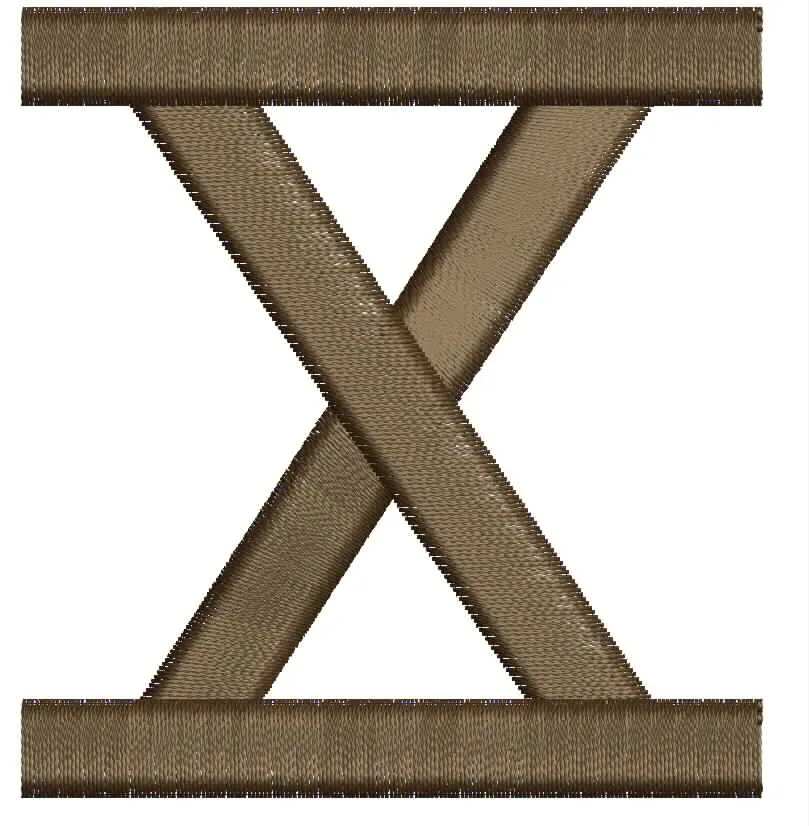
A custom headwear decorator needed a crisp 2.25×2.25 inch design digitized for cap fronts. By engineering precise underlay and pathing for 2,674 stitches, we ensured flawless execution across high-speed machine runs.
Final Digitized Proof
Order Specifications
Project Background
The client needed a digitizing solution that would look extremely sharp on standard structured and unstructured cotton twill fabrics without causing heavy puckering or thread bunching. Because cap fronts undergo significant physical tension when stretched over dynamic cap frames, the file required precise internal geometry. Standard flat logo pathing routines fail on headwear frames, leading to uneven alignment and frequent thread breaks.
In addition to physical placement issues, the client was preparing for a multi-thousand-piece cap run. Speed on the production floor was just as critical as visual quality. Every unnecessary stitch adds overhead, slows down machine output, and increases needle wear. The challenge was to maintain complete coverage and clean line definition while keeping the overall stitch count tightly controlled at under 3,000 stitches.
Cotton fabric, while generally stable compared to performance knits, still possesses natural fiber stretch and surface texture that can absorb fine satin stitches if the underlay foundation is insufficient. We evaluated these fabric characteristics alongside the compact 2.25×2.25 inch design dimensions to construct a digitizing blueprint that guaranteed stability across hundreds of continuous cap embroideries.
Technical Production Process
For the underlay structure, we utilized a combination of targeted center-run stitches and a light lattice grid. This established a firm anchor on the cotton twill, preventing top satin and fill stitches from sinking down into the weave. By raising the stitch profile slightly off the fabric base, the lines remain crisp and distinct even after aggressive capping tension is applied during hooping.
We applied carefully calibrated push-pull compensation, extending satin column ends slightly past the visual boundaries to account for the physical pull of the thread on curved panels. Stitch density was calibrated precisely to 2,674 stitches, providing total color coverage without creating a hard, uncomfortable badge effect that could distort the hat structure or feel stiff against the forehead.
- ✓ Applied center-out stitch sequencing to push fabric tension away from the cap frame focal point and prevent center seam distortion.
- ✓ Programmed custom push-pull compensation tuned specifically for cotton twill headwear frames to guarantee sharp geometric edges.
- ✓ Built an anchor underlay lattice to prevent stitches from sinking into cotton fabric while holding total stitch count to an efficient 2,674.
Final Outcome
The customer successfully executed their production run without downtime or thread tension headaches. By utilizing our professional embroidery digitizing services, they delivered a premium finished cap line to their buyer while maximizing shop throughput and maintaining strong profit margins on every piece embroidered.
Ready for Flawless Production?
We deliver production-ready files optimized for your exact machines and fabrics, reducing thread breaks and maximizing shop efficiency.
Frequently Asked Questions
How do you digitize logos to prevent distortion on cap front seams? +
We digitize cap fronts using a center-out and bottom-up stitching sequence. This technique pushes fabric slack away from the center seam, ensuring straight lines and perfect registration on curved headwear.
Why is stitch count optimization important for commercial hat orders? +
Optimizing stitch counts reduces total run time per hat, minimizes thread breaks, and prevents the embroidery from feeling stiff on the forehead, leading to faster shop output and higher profit margins.
Disclaimer: All logos and designs are the property of their respective copyright/trademark owners. This case study is for the sole purpose of demonstrating 360 Digitizing Solutions’ technique and quality. We do not claim ownership of the original artwork, nor are these designs for sale.
Brand Representative? Request Portfolio Privacy/Removal (Corporate Email Required)