
Blog
Tajima TEJT Series: Essential Maintenance Schedule & Wear Parts Guide


Quick answer: Regular maintenance, including daily cleaning, weekly lubrication, and periodic inspection of wear parts like timing belts and thread tension sensors, is crucial for the longevity and performance of your Tajima TEJT machine. Replace worn parts promptly to avoid costly breakdowns.
The Tajima TEJT series embroidery machines are workhorses in the industry, known for their reliability and precision. To ensure your TEJT machine continues to perform at its best and to extend its lifespan, a consistent and thorough maintenance routine is essential. This guide outlines a practical maintenance schedule and highlights common wear parts specific to the TEJT series, helping you identify issues early and keep your machine running efficiently.
Two-minute checks before you open anything
- Check for thread breaks and rethread if necessary.
- Inspect needles for bends, burrs, or dullness.
- Clean the rotary hook area of lint and thread scraps.
- Wipe down the machine exterior to remove dust and debris.
- Verify proper thread tension on all heads.
1. Timing Belts (X/Y Axis, Head Drive, Card Reader) high likelihood
How to tell
Visible cracks, fraying, stretching, or missing teeth on the belt. Machine may exhibit jerky movements, inaccurate stitching, skipped stitches, or unusual noises. Card reader belt wear can cause read errors or the card not moving correctly.
Fix
- Visually inspect all timing belts for signs of wear or damage.
- Check belt tension; belts should be taut but not overly tight. Refer to your machine's manual for specific tensioning procedures.
- If a belt is worn or damaged, loosen the motor or pulley mounting bolts.
- Carefully remove the old belt.
- Install the new belt, ensuring it is correctly seated on all pulleys.
- Adjust tension according to manufacturer specifications (typically by moving the motor or an idler pulley).
- Tighten mounting bolts securely.
- Test machine operation to confirm smooth movement and accurate stitching.
Common belts for TEJT series include W20-S5M0950/G Timing Belt, MBL S5M1160 Timing Belt 30mm, MBL S5M625 Timing Belt 25mm, and Tajima TU10 W25-170/E Timing Belt. The Tajima Card Reader Display Belt is also a frequent wear item.
Parts involved: Belts, pulleys & gears →
2. Tension Sensor Card & Thread Contact Set medium likelihood
How to tell
Inconsistent thread tension, frequent thread breaks without apparent cause, or 'thread break' errors when the thread is intact. The sensor card may appear dirty, corroded, or physically damaged. Contacts can become bent or worn.
Fix
- Power off the machine.
- Locate the thread tension sensor card, usually near the thread path on each head.
- Gently clean the sensor card and thread contact points with a soft, lint-free cloth and isopropyl alcohol.
- Inspect the contacts for bending or corrosion. Carefully straighten any bent contacts if possible, or clean corrosion.
- If cleaning does not resolve the issue, or if there is visible damage, disconnect the wiring harness.
- Unscrew and remove the old sensor card and contact set.
- Install the new Tajima TC Sensor Card & Thread Contact Set (e.g., 0J2602300A22, 0J2602300A23, FG7204010000, 0J2602100010).
- Reconnect the wiring harness.
- Power on and test thread tension and break detection.
Parts involved: Sensors & switches → Thread path & tension →
Parts you may need for Tajima TEJT
In stock, tested before dispatch, Buyer Protection on every order. Part types for this problem: Rotary hooks & bobbin cases, Needles & needle bars, Thread path & tension, Presser feet & sewing parts.
 Tajima TC Sensor Card & Thread Contact Set 0J2602300A22 0J2602300A2...$ 21.49View part →
 Richpeace RP-SFDR-VIU-A1.44 USB Floppy Drive Emulator for Tajima, T...$ 408.99View part →
 Tajima W20-16 Timing Belt Pulley CX0170000000 501440030000 S5M 20mm...$ 39.29View part →
 Tajima Spindle Pulley 3.5cm 15 Axis 60T Convex for TFMX TMFX TFGN T...$ 188.49View part →
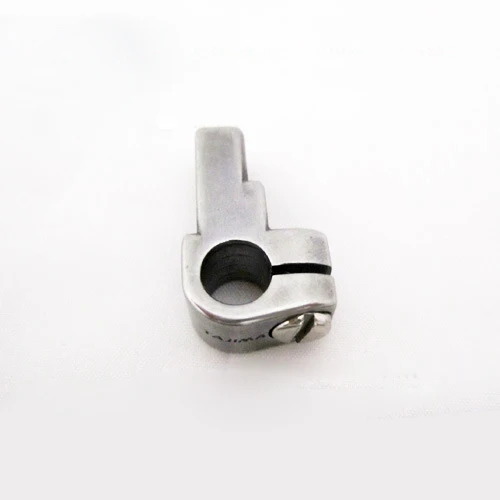 Tajima 090420060017 Stopper Lower Dead Point Needle Bar Connecting ...$ 0.00View part →
 Tajima Gotek SFRM72-FU USB Floppy Emulator for TMFX, TMFD, TME, TME...$ 58.99View part →
All Tajima TEJT parts → Rotary Hooks & Bobbin Cases → Needles & Needle Bars → Thread Path & Tension →
3. Spindle Pulleys & Timing Belt Pulleys medium likelihood
How to tell
Excessive play or wobble in the shaft, unusual grinding or squeaking noises, visible wear on the pulley teeth (especially if made of plastic), or a belt repeatedly slipping off. Bearings within the pulley can seize or become noisy.
Fix
- Power off the machine.
- Remove the timing belt from the affected pulley.
- Inspect the pulley for cracks, chipped teeth, or excessive play when wiggled.
- If replacing, loosen the set screw or retaining bolt holding the pulley to the shaft.
- Carefully remove the old pulley.
- Install the new Tajima W20-16 Timing Belt Pulley or Tajima Spindle Pulley, ensuring proper alignment.
- Tighten the set screw or retaining bolt securely.
- Reinstall the timing belt and adjust tension.
- Test machine operation.
Parts involved: Belts, pulleys & gears → Shafts, bearings & bushings →
4. Stopper Lower Dead Point Needle Bar Connecting Stud low likelihood
How to tell
Excessive vertical play in the needle bar, inconsistent needle depth, or unusual clicking/clunking sounds from the needle bar mechanism. This stud helps define the lowest point of the needle bar travel.
Fix
- Power off the machine and raise the needle bars to their highest position.
- Locate the needle bar connecting stud for the affected head.
- Inspect for wear, looseness, or damage.
- If replacement is needed, carefully remove the retaining screw or pin.
- Extract the old Tajima 090420060017 Stopper Lower Dead Point Needle Bar Connecting Stud.
- Insert the new stud, ensuring it is correctly seated.
- Reinstall the retaining screw or pin and tighten securely.
- Manually cycle the machine to check for proper needle bar movement and ensure no binding.
Parts involved: Needles & needle bars → Head & mechanical parts → Screws, springs & small parts →
5. USB Floppy Drive Emulator low likelihood
How to tell
Inability to load designs from USB, 'disk read error' messages, or the emulator not powering on/recognizing the USB drive. This is more of a failure than wear, but can occur over time.
Fix
- Power off the machine.
- Ensure the USB drive is properly formatted and contains compatible design files.
- Try a different, known-good USB drive.
- If the issue persists, disconnect the power and data cables from the emulator.
- Unscrew and remove the old emulator (e.g., Richpeace RP-SFDR-VIU-A1.44 or Tajima Gotek SFRM72-FU).
- Install the new emulator, ensuring all connections are secure.
- Power on the machine and test loading a design.
Parts involved: Floppy, USB & memory →
Maintenance schedule
| When | What to do | Why |
|---|---|---|
| Daily (or every 8-10 hours of operation) | Clean the rotary hook area and bobbin case. | Prevents lint and thread buildup that can cause skipped stitches, thread breaks, and damage to the hook. |
| Daily (or every 8-10 hours of operation) | Wipe down the needle bars, presser feet, and general head area. | Removes dust and lint that can interfere with smooth operation and lead to premature wear. |
| Weekly (or every 40-50 hours of operation) | Lubricate specified oiling points (e.g., needle bars, rotary hook shaft, tension release mechanisms). | Reduces friction and wear on moving parts, ensuring smooth operation and extending component life. Refer to your manual for specific points. |
| Weekly (or every 40-50 hours of operation) | Inspect timing belts for visible wear (cracks, fraying, stretching). | Early detection of belt wear can prevent sudden breakdowns and costly repairs. |
| Monthly (or every 160-200 hours of operation) | Clean thread path components (tension discs, thread guides, take-up levers). | Ensures consistent thread flow and tension, preventing thread breaks and poor stitch quality. |
| Monthly (or every 160-200 hours of operation) | Inspect all pulleys for wear, wobble, or unusual noise. | Worn pulleys can cause belt slippage, inaccurate movement, and damage to belts. |
| Quarterly (or every 500 hours of operation) | Check and clean thread tension sensors and thread contact sets. | Ensures accurate thread break detection and consistent tension control. |
| Annually (or every 2000 hours of operation) | Thorough inspection of all mechanical components for wear, looseness, or damage. | Comprehensive check to identify and address potential issues before they become major problems. |
| Annually (or every 2000 hours of operation) | Consider professional technician service for calibration and in-depth inspection. | Ensures optimal machine performance, alignment, and identifies issues that may not be apparent to an operator. |
Stop and call a technician if
- If you encounter persistent error codes that cannot be resolved with basic troubleshooting.
- If the machine exhibits severe mechanical binding or grinding that could indicate major internal damage.
- For complex electrical issues or circuit board failures.
- If you are uncomfortable performing a repair or lack the specialized tools required.
Prevent it coming back
- Always use high-quality threads and needles appropriate for your fabric to reduce stress on the machine.
- Maintain a clean work environment to prevent dust and lint buildup in critical areas.
- Avoid overloading the machine or forcing materials that are too thick for its capabilities.
- Ensure proper tension settings for all threads to prevent excessive strain on tensioning components.
- Regularly check and tighten any loose screws or fasteners to prevent vibration-induced wear.
Frequently asked questions
How often should I lubricate my Tajima TEJT machine?
Lubrication frequency depends on usage. For typical daily operation, key points should be oiled weekly. High-speed or continuous operation may require more frequent lubrication. Always refer to your machine's manual for specific lubrication points and recommended oil types.
Why is my Tajima TEJT machine making unusual noises?
Unusual noises often indicate wear or a need for lubrication. Common culprits include dry bearings, worn timing belts, loose pulleys, or issues within the rotary hook area. Stop the machine, inspect for visible wear, and check lubrication points. If the noise persists, it's best to consult a technician.
Can I use generic parts for my Tajima TEJT?
While some generic parts might fit, using genuine Tajima or high-quality aftermarket parts designed for your specific model is highly recommended. Inferior parts can lead to premature wear, poor stitch quality, and potentially damage other components of your machine.
How do I know when to replace a timing belt?
Inspect timing belts regularly for visible signs of wear such as cracks, fraying, stretching, or missing teeth. If you notice inconsistent machine movement, jerky operation, or hear unusual noises related to belt movement, it's time to replace them. Proactive replacement based on hours of operation can prevent unexpected downtime.
Did this guide fix your machine?
Rate it - it helps other operators find the right fix.
Not sure which part is failing?
Need the logo stitched too?
Get your logo digitized by the people who know this machine
Upload the artwork, see the stitch count and the exact price in 10 seconds, then order with a free sew-out preview. $1 per 1,000 stitches, $10 minimum, 24-hour delivery. Vector conversion from $12.
After the fix
Fixed it? Keep the rest of the shop moving.
OS 360 is the shop software from the team behind this parts store. Every job keeps its status, deadline and owner while a TEJT head is down, restock alerts fire for needles, hooks and bobbins before you run dry, and quotes, invoices and payment live in one place.
- Jobs with status, deadline and owner - nothing slips during downtime
- Inventory with restock alerts, this store one click away
- Instant quotes, invoices and one place to collect payment





