
Blog
Tajima TLMX Series: Essential Maintenance Schedule & Wear Parts Guide

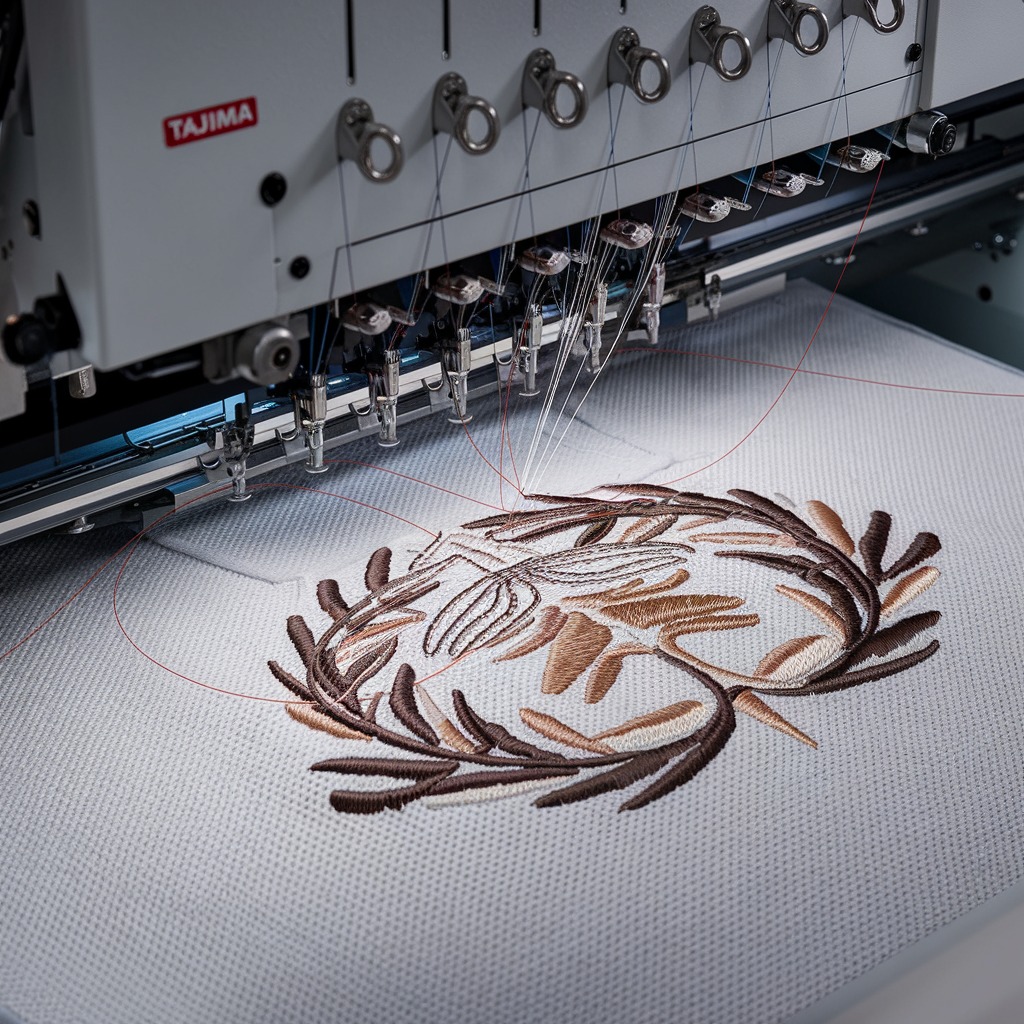
Quick answer: Regular maintenance, including daily cleaning, weekly lubrication, and periodic inspection of wear parts like rotary hooks, needle bar components, and thread path elements, is crucial for the Tajima TLMX series to ensure consistent stitch quality and prevent costly breakdowns.
The Tajima TLMX series embroidery machines are workhorses in the industry, known for their precision and durability. However, like any complex machinery, they require consistent and thorough maintenance to perform at their best. This guide provides a realistic maintenance schedule and identifies the most common wear parts, helping you keep your TLMX running smoothly and extend its lifespan. Regular care not only prevents costly breakdowns but also ensures consistent stitch quality and maximizes your machine's uptime.
Two-minute checks before you open anything
- Check for any unusual noises or vibrations during operation.
- Inspect needles for dullness, bends, or burrs before starting a new job.
- Verify that the thread path is clear and free of tangles or obstructions.
- Ensure all tension discs are clean and functioning correctly.
- Check the bobbin case for lint buildup and proper bobbin rotation.
1. Rotary Hook Bobbin high likelihood
How to tell
Skipped stitches, poor tension, frequent thread breaks, unusual noise from the hook area, or visible burrs, nicks, or excessive wear on the hook body. The bobbin case may also show signs of wear.
Fix
- Inspect the rotary hook for burrs, nicks, or excessive wear on the point and race. Clean thoroughly to remove lint and debris.
- Check the bobbin case for damage or wear. Ensure the bobbin tension spring is functioning correctly.
- If damaged or excessively worn, replace the Onloyo 050260010020 Rotary Hook Bobbin:Regular. Ensure proper timing is checked and adjusted if necessary after replacement.
Always keep spare rotary hooks and bobbin cases on hand, as they are high-wear items.
Parts involved: Rotary hooks & bobbin cases →
2. Thread Hook Wiper high likelihood
How to tell
Loose thread tails after trimming, thread loops left on the fabric, or visible wear, tears, or hardening of the wiper material. The wiper may also appear bent or misaligned.
Fix
- Visually inspect the Onloyo Genuine Thread Hook Wiper for any signs of wear, damage, or hardening.
- Ensure the wiper is correctly positioned and making proper contact with the needle plate during trimming.
- If worn or damaged, replace the Onloyo Genuine Thread Hook Wiper. Verify its function by performing test trims.
A worn wiper can lead to frequent thread trimming issues and requires prompt replacement.
Parts involved: Cutters & trimmers →
Parts you may need for Tajima TLMX
In stock, tested before dispatch, Buyer Protection on every order. Part types for this problem: Rotary hooks & bobbin cases, Cutters & trimmers, Needles & needle bars, Head & mechanical parts.
 Tajima 080210360A79 UN25009400GN Needle Bar Reciprocator Set for KN...$ 23.99View part →
 Tajima 0C0220080000 EF0910000000 Spring Hook for TMEG TMFD STNE TFK...$ 5.49View part →
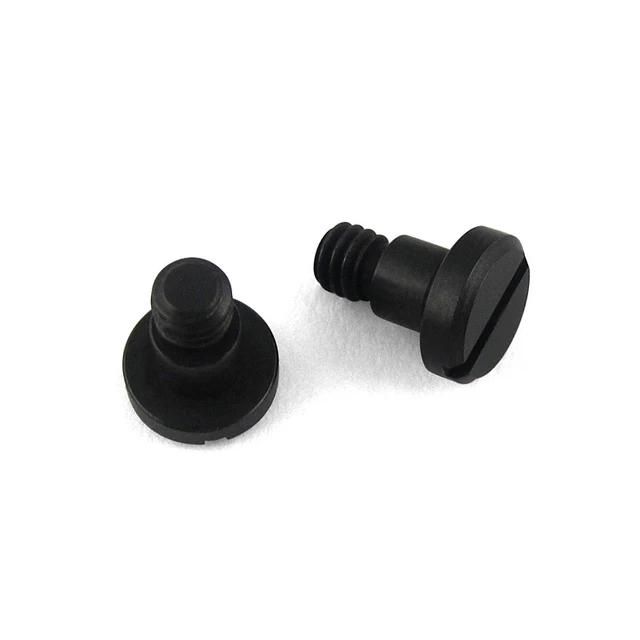 Onloyo 512153010013 Stepped Screw No.1 9/64*7 for Tajima Sequin, De...$ 6.59View part →
 Onloyo 0J4204400000 0J4200800012 Electromagnetic Induction Substrat...$ 26.49View part →
 Tajima 080210360A22 UN25009400GN Needle Bar Reciprocator GN[A] for ...$ 128.09View part →
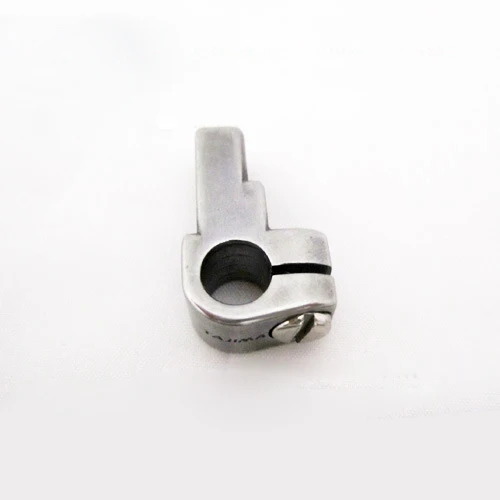 Tajima 090420060017 Stopper Lower Dead Point Needle Bar Connecting ...$ 0.00View part →
All Tajima TLMX parts → Rotary Hooks & Bobbin Cases → Cutters & Trimmers → Needles & Needle Bars →
3. Needle Bar Reciprocator medium likelihood
How to tell
Excessive play or wobble in the needle bar, inconsistent needle depth, unusual clicking or grinding noises during needle movement, or poor stitch formation. Visible wear on the cam surfaces or bearings of the reciprocator.
Fix
- Carefully check each needle bar for lateral and vertical play. Excessive movement indicates wear.
- Inspect the Tajima 080210360A79 UN25009400GN Needle Bar Reciprocator Set or Tajima 080210360A22 UN25009400GN Needle Bar Reciprocator GN[A] for wear on its moving surfaces.
- If worn, replace the reciprocator set. This is a precision component and may require careful adjustment of needle bar height and depth after installation. Consult your machine manual for specific procedures.
Proper adjustment after replacement is critical for stitch quality and machine longevity.
Parts involved: Needles & needle bars → Head & mechanical parts →
4. Needle Retention Compression Spring medium likelihood
How to tell
Needles falling out of the needle bar, loose needles, or difficulty in securely inserting needles. The spring may appear compressed, bent, or broken.
Fix
- Remove the needle and inspect the Onloyo 507605030044 EF0618030000 Needle Retention Compression Spring inside the needle bar.
- Check if the spring has lost its tension, is deformed, or broken.
- If faulty, replace the spring with a new Onloyo 507605030044 EF0618030000 Needle Retention Compression Spring. Ensure the needle is held firmly after replacement.
Parts involved: Screws, springs & small parts → Needles & needle bars →
5. Thread Guide Collar Ceramic Coil medium likelihood
How to tell
Frequent thread breaks, fraying thread, or visible nicks, grooves, or rough spots on the ceramic surface of the Tajima 516503010011 MX0521010000 Thread Guide Collar Ceramic Coil. Thread may not move smoothly through the guide.
Fix
- Carefully inspect all ceramic thread guides for any signs of wear, chipping, or roughness by running a piece of thread through them.
- If any damage is found, replace the affected Tajima 516503010011 MX0521010000 Thread Guide Collar Ceramic Coil. Ensure the new guide is securely seated.
Smooth thread path is essential for preventing thread breaks and maintaining tension.
Parts involved: Thread path & tension →
6. Thread Break Sensor (TC Sensor Substrate) low likelihood
How to tell
Machine failing to detect thread breaks, leading to incomplete embroidery, or false thread break errors when no break has occurred. The sensor may appear dirty or damaged.
Fix
- Clean the Onloyo 0J2602300A23 TC Sensor Substrate Thread Break Sensor thoroughly with compressed air or a soft brush to remove lint and debris.
- Check the sensor's wiring for any damage or loose connections.
- If cleaning does not resolve the issue and the sensor is suspected to be faulty, replace the Onloyo 0J2602300A23 TC Sensor Substrate Thread Break Sensor. Calibration may be required after replacement; consult your manual.
A malfunctioning sensor can cause significant production issues.
Parts involved: Sensors & switches → Circuit boards & electronics →
7. Electromagnetic Induction Substrate A (Magnetic Sensor A) low likelihood
How to tell
Inconsistent or incorrect needle position detection, issues with color changes, or machine stopping unexpectedly with sensor-related errors. The sensor may appear dirty or physically damaged.
Fix
- Inspect the Onloyo 0J4204400000 0J4200800012 Electromagnetic Induction Substrate A for cleanliness and physical damage.
- Ensure all connections to the sensor are secure.
- If troubleshooting points to a faulty sensor, replace the Onloyo 0J4204400000 0J4200800012 Electromagnetic Induction Substrate A. Recalibration of machine head positions may be necessary after replacement.
Parts involved: Sensors & switches → Circuit boards & electronics →
Maintenance schedule
| When | What to do | Why |
|---|---|---|
| Daily (or every 8-10 hours of operation) | Clean the rotary hook area | Removes lint and thread debris that can cause skipped stitches, thread breaks, and damage to the hook. |
| Daily (or every 8-10 hours of operation) | Oil the rotary hook | Ensures smooth operation, reduces friction, and prevents premature wear of the hook assembly. Use only approved machine oil. |
| Daily (or every 8-10 hours of operation) | Clean under the needle plate | Removes lint and small thread pieces that can interfere with trimming and stitch formation. |
| Daily (or every 8-10 hours of operation) | Wipe down machine surfaces | Prevents dust and debris buildup from entering critical components. |
| Weekly (or every 40-50 hours of operation) | Clean thread path components | Removes lint from tension discs, thread guides (including ceramic coils), and take-up levers to ensure smooth thread flow and consistent tension. |
| Weekly (or every 40-50 hours of operation) | Lubricate needle bars and reciprocators | Ensures smooth vertical movement of needle bars and reduces wear on the Tajima 080210360A79 UN25009400GN Needle Bar Reciprocator Set. |
| Weekly (or every 40-50 hours of operation) | Inspect thread trimming system | Check the Onloyo Genuine Thread Hook Wiper and knives for wear, damage, or misalignment to prevent trimming issues. |
| Monthly (or every 160-200 hours of operation) | Clean and inspect thread break sensors | Ensures accurate thread break detection. Clean the Onloyo 0J2602300A23 TC Sensor Substrate Thread Break Sensor to remove lint. |
| Monthly (or every 160-200 hours of operation) | Check for loose screws and connections | Vibration can loosen fasteners over time. Tighten any loose screws, especially around the needle bars, head, and frame. |
| Quarterly (or every 500 hours of operation) | Inspect belts and pulleys | Check for signs of wear, cracking, or tension issues. Consult your manual for proper belt tensioning. |
| Annually (or every 2000 hours of operation) | Professional service and calibration | A qualified technician can perform in-depth checks, timing adjustments, and component replacements to ensure optimal machine performance and longevity. |
Stop and call a technician if
- If you encounter persistent error codes that you cannot resolve with basic troubleshooting.
- For complex mechanical adjustments like needle bar timing or head registration.
- If you suspect a problem with electronic components or circuit boards.
- When you are unsure about a repair procedure and risk causing further damage.
- For annual preventative maintenance checks and calibration.
Prevent it coming back
- Always use high-quality needles and replace them regularly (e.g., every 8-10 hours of sewing or at the first sign of dullness/bending).
- Use only high-quality embroidery thread and bobbin thread to minimize lint and thread breaks.
- Ensure proper thread tension settings for each job to reduce stress on machine components.
- Avoid running the machine at excessively high speeds for prolonged periods, especially with dense designs.
- Keep your work environment clean and dust-free to prevent debris from entering sensitive machine parts.
- Never force parts or make adjustments without consulting the machine manual or a qualified technician.
Frequently asked questions
How often should I lubricate my Tajima TLMX?
Lubrication frequency depends on usage. Generally, daily oiling of the rotary hook and needle bars is recommended. Other moving parts may require weekly or monthly lubrication. Always refer to your machine's manual for specific lubrication points and intervals.
What causes frequent thread breaks on my TLMX machine?
Frequent thread breaks can be caused by many factors, including incorrect tension, worn or burred thread guides, a damaged needle, a worn rotary hook, incorrect needle-to-hook timing, or poor quality thread. Inspect the entire thread path and the rotary hook first.
Why are my stitches skipping on the Tajima TLMX?
Skipped stitches are often due to a dull or bent needle, incorrect needle size for the fabric, incorrect needle-to-hook timing, a worn rotary hook, or insufficient thread tension. Check these components systematically.
Can I use generic parts for my Tajima TLMX?
While some generic parts may fit, using genuine or high-quality aftermarket parts designed specifically for Tajima machines, like those from Onloyo, is highly recommended. Substandard parts can lead to poor performance, increased wear on other components, and potential machine damage.
How do I know if my rotary hook needs replacing?
Look for visible nicks, burrs, or deep grooves on the hook point or race. If you experience consistent skipped stitches, poor tension, or unusual noise from the hook area despite proper cleaning and timing adjustments, it's likely time for a replacement.
Did this guide fix your machine?
Rate it - it helps other operators find the right fix.
Not sure which part is failing?
Need the logo stitched too?
Get your logo digitized by the people who know this machine
Upload the artwork, see the stitch count and the exact price in 10 seconds, then order with a free sew-out preview. $1 per 1,000 stitches, $10 minimum, 24-hour delivery. Vector conversion from $12.
After the fix
Fixed it? Keep the rest of the shop moving.
OS 360 is the shop software from the team behind this parts store. Every job keeps its status, deadline and owner while a TLMX head is down, restock alerts fire for needles, hooks and bobbins before you run dry, and quotes, invoices and payment live in one place.
- Jobs with status, deadline and owner - nothing slips during downtime
- Inventory with restock alerts, this store one click away
- Instant quotes, invoices and one place to collect payment