Blog
Husqvarna Viking Embroidery Machine: Troubleshooting Uneven Stitch Quality

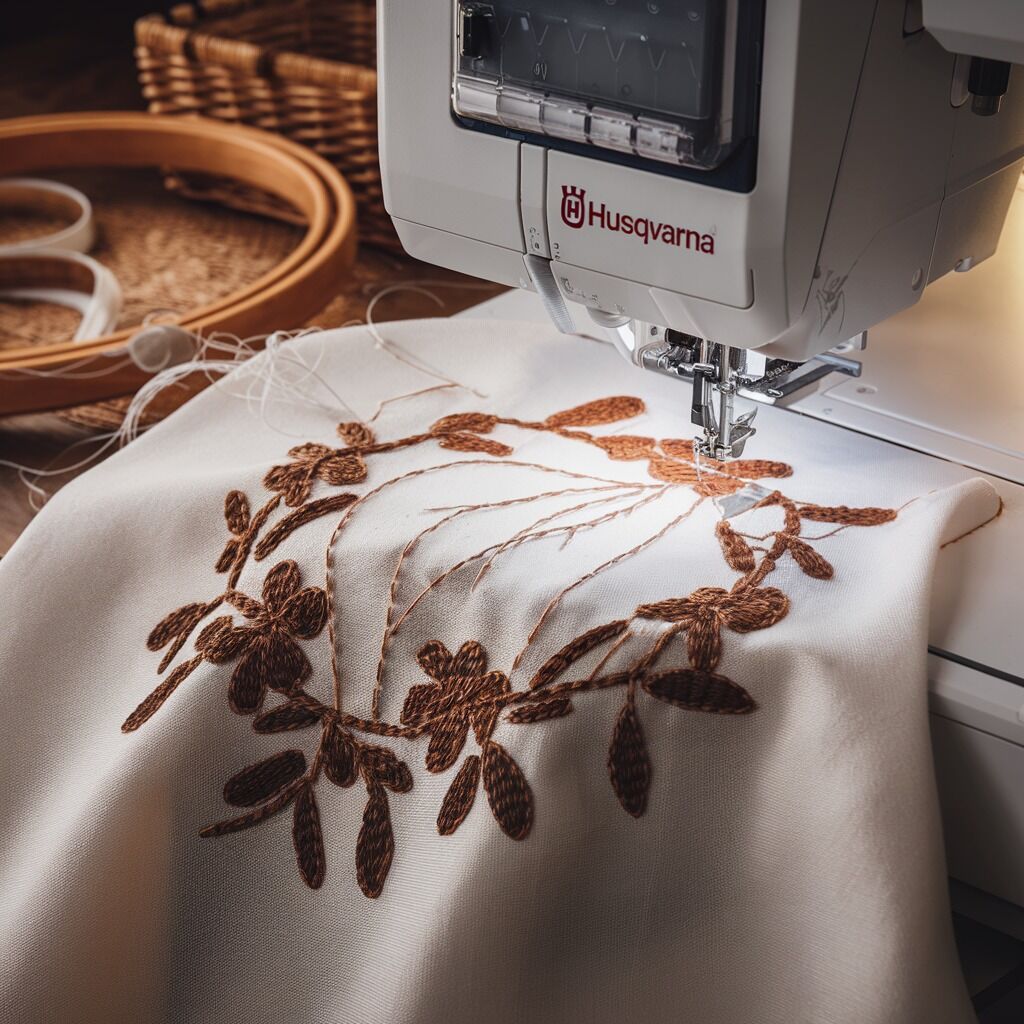
Quick answer: Uneven stitch quality on a Husqvarna Viking embroidery machine is most often caused by incorrect thread tension, a worn needle, or improper hooping. Check these first, then inspect for lint buildup and ensure appropriate materials are used.
Uneven stitch quality can be frustrating, turning a beautiful design into a flawed one. This guide will help you diagnose and resolve common issues causing inconsistent stitches on your Husqvarna Viking embroidery machine, ensuring your projects look professional every time.
Two-minute checks before you open anything
- Is the needle new, sharp, and correctly inserted?
- Is the upper thread correctly threaded through all guides and tension discs?
- Is the bobbin correctly wound and inserted into the bobbin case?
- Is the fabric hooped taut, flat, and without stretching?
- Is there any visible lint or thread debris around the bobbin area or needle plate?
1. Incorrect Thread Tension high likelihood
How to tell
Stitches appear uneven, with loops either on the top surface (upper tension too loose, bobbin tension too tight) or the bottom surface (upper tension too tight, bobbin tension too loose). Fabric may pucker. Perform a test stitch on scrap fabric: the upper and bobbin threads should meet and interlock precisely in the middle of the fabric layers.
Fix
- Ensure the upper thread is correctly seated in all tension discs and thread guides. Floss the upper tension discs with a piece of strong thread or dental floss to remove any hidden lint.
- Adjust the upper thread tension dial. Start with the recommended setting (often '4' or '5' for general embroidery) and make small, incremental adjustments (e.g., 0.5 increments).
- For bobbin tension, remove the bobbin case. If it's a drop-in bobbin, check for lint under the tension spring. If it's a front-loading bobbin case, refer to your machine's manual for specific bobbin tension adjustment procedures, as this often involves a small screw on the bobbin case itself. Make very small adjustments (e.g., 1/8th turn at a time).
- Test stitch after each adjustment until stitches are balanced.
Parts involved: Thread path & tension →
2. Worn or Damaged Needle high likelihood
How to tell
Skipped stitches, frequent thread breakage, uneven or distorted stitches, or a dull thudding sound during stitching. Visually inspect the needle tip for bends, burrs, or dullness. A damaged needle can also cause damage to the fabric.
Fix
- Turn off the machine.
- Loosen the needle clamp screw and remove the old needle.
- Insert a new, appropriate embroidery needle (e.g., size 75/11 or 90/14 for general embroidery) with the flat side of the needle shank facing the back of the machine. Push it up as far as it will go into the needle bar.
- Tighten the needle clamp screw securely.
- Always use the correct needle type and size for your fabric and thread combination (e.g., ballpoint for knits, sharp for wovens, larger sizes for thicker threads/fabrics).
Parts involved: Needles & needle bars →
Parts you may need for Husqvarna Viking
In stock, tested before dispatch, Buyer Protection on every order. Part types for this problem: Thread path & tension, Needles & needle bars, Hoops & frames, Lubrication & maintenance.
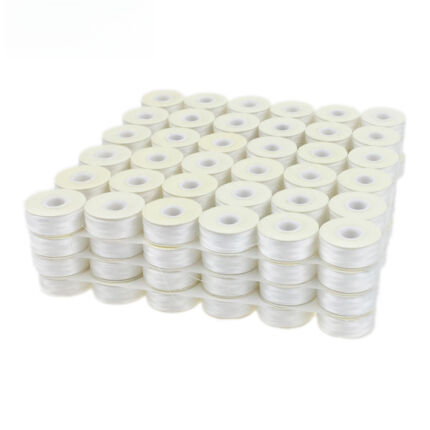 Sanbest Prewound Bobbins 70D/2 75D/2 Size L TH00017 White Black for...$ 47.99View part →
 eversnice 4125615-45, 4131825-45, 4123078-G, 4125615-45-SP-B, 41256...$ 35.99View part →Husqvarna Viking Bobbins (50 Clear Green) P/N: 4125615-45, 4131825-...$ 35.99View part →
 evernice Needle Threader 416190401 P3A0295000 for Singer 2010, 3229...$ 36.99View part →
 Needle Threader Replacement for Singer 5511, 5523, 5532, 5554, 85SC...$ 36.99View part →
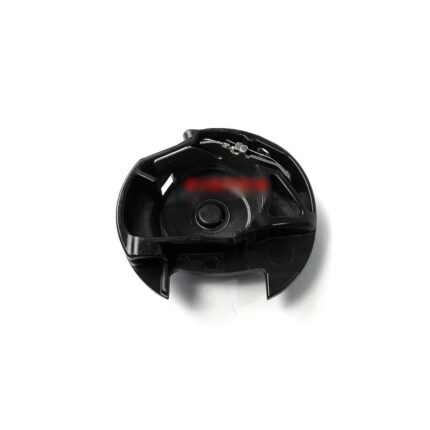 Viking Bobbin Case for Designer 1, 2, Diamond, Royale, Ruby Royale,...$ 78.99View part →
All Husqvarna Viking parts → Thread Path & Tension → Needles & Needle Bars → Hoops & Frames →
3. Hooping Issues high likelihood
How to tell
Fabric puckering, shifting, or visible distortion of the design. The fabric may feel loose or unevenly stretched within the hoop. The stabilizer might not be securely hooped with the fabric.
Fix
- Ensure the correct size hoop is selected for your design and machine.
- Place the stabilizer on the bottom hoop ring, then lay the fabric smoothly over it. Place the top hoop ring over the fabric and press down firmly to secure it.
- Tighten the hoop screw until the fabric and stabilizer are taut, like a drum, but not stretched or distorted. Avoid stretching the fabric as you hoop it, especially knits.
- Check that the fabric grain is straight and not skewed within the hoop.
- Ensure the hoop is correctly attached to the machine's embroidery unit.
Parts involved: Hoops & frames →
4. Machine Maintenance Issues (Lint/Debris) medium likelihood
How to tell
Inconsistent stitching, thread jams, skipped stitches, or unusual noises. Visible lint, dust, or thread bits around the bobbin area, under the needle plate, or in the tension discs.
Fix
- Turn off and unplug the machine.
- Remove the needle, presser foot, needle plate, and bobbin case.
- Using a small brush and/or a vacuum cleaner with a narrow attachment (never canned air, as it can push debris deeper), thoroughly clean out all lint and thread bits from the bobbin area, feed dogs, and under the needle plate.
- Clean the upper tension discs by flossing them with a strong thread or dental floss.
- Reassemble the machine components.
- Apply a drop of good quality sewing machine oil to the designated lubrication points if recommended by your Husqvarna Viking manual.
Parts involved: Lubrication & maintenance → Screws, springs & small parts → Rotary hooks & bobbin cases →
5. Incompatible Thread and Fabric Combination medium likelihood
How to tell
Stitches appear irregular, thread breaks frequently, or the fabric shows signs of stress (e.g., puckering, holes) even with correct tension. The thread may appear too thick or too thin for the fabric's weave.
Fix
- Select embroidery thread appropriate for your fabric type. Finer threads (e.g., 60wt) are better for delicate fabrics like silk or fine knits. Standard 40wt thread is suitable for most applications. Heavier threads (e.g., 30wt) are for dense designs or sturdy fabrics like denim.
- Ensure the thread quality is consistent; low-quality or old thread can fray, knot, and cause uneven stitches.
- Consider using a different needle size to match the thread weight (e.g., larger needle for thicker thread).
Parts involved: Threads & supplies →
6. Improper Stabilizer medium likelihood
How to tell
Fabric shifts during embroidery, resulting in distorted or uneven stitches, especially in dense areas. Puckering or tunneling may occur around the design. The fabric may not feel stable enough when hooped.
Fix
- Choose a stabilizer appropriate for your fabric weight and design density. Use a cut-away stabilizer for unstable fabrics (knits, loosely woven) or dense designs. Use tear-away for stable wovens and lighter designs. Water-soluble or heat-away stabilizers are for specialty applications.
- For complex or dense designs, consider using an additional layer of stabilizer or a heavier weight stabilizer.
- Ensure the stabilizer is hooped securely with the fabric, or if using a sticky-back, that the fabric is firmly adhered without wrinkles.
Parts involved: Threads & supplies →
7. Improper Machine Speed low likelihood
How to tell
Stitches appear less precise or irregular, particularly on intricate details, small lettering, or delicate fabrics. The machine may sound strained or vibrate excessively.
Fix
- Access the speed control setting on your Husqvarna Viking machine's display panel.
- Reduce the embroidery speed, especially when working on complex designs, very small details, or delicate fabrics.
- Slower speeds allow the machine more time to form each stitch accurately and can improve overall stitch quality.
Parts involved: Motors & drivers → Control panels & displays →
Stop and call a technician if
- If, after performing all troubleshooting steps, the stitch quality remains poor.
- If you suspect internal mechanical damage (e.g., bent needle bar, timing issues).
- If the machine displays an error code related to stitching that you cannot resolve with the manual.
- If you are uncomfortable performing any of the internal cleaning or adjustment steps.
Prevent it coming back
- Regularly clean your machine, especially the bobbin area and under the needle plate, to prevent lint buildup.
- Always use a new, sharp needle appropriate for your fabric and thread at the start of each major project or after 8-10 hours of use.
- Perform a tension test stitch before starting a new project or when changing thread/fabric types.
- Hoop your fabric and stabilizer correctly: taut, flat, and without stretching.
- Use high-quality embroidery threads and stabilizers that are compatible with your fabric and machine.
- Adjust machine speed for intricate designs or delicate fabrics.
Frequently asked questions
Why do I have loops on the top of my embroidery?
Loops on the top surface of your embroidery usually indicate that the upper thread tension is too loose, or the bobbin tension is too tight. Check that the upper thread is correctly seated in the tension discs and try increasing the upper tension slightly. Also, ensure your bobbin is wound evenly and inserted correctly.
Why do my stitches look uneven and messy?
Uneven and messy stitches can stem from several issues. The most common are incorrect thread tension, a dull or bent needle, improper hooping (fabric not taut), or lint buildup in the bobbin area. Work through these potential causes systematically.
How often should I change my embroidery machine needle?
It's recommended to change your embroidery machine needle after every 8-10 hours of stitching, or at the start of a new project, whichever comes first. You should also change it immediately if you notice any skipped stitches, thread breaks, or if the needle hits a hoop or pin.
Can using the wrong thread cause uneven stitches?
Yes, using thread that is too thick or too thin for your fabric, or low-quality thread that frays easily, can significantly contribute to uneven stitch quality. Always use high-quality embroidery-specific threads that are compatible with your fabric and machine.
Did this guide fix your machine?
Rate it - it helps other operators find the right fix.
Not sure which part is failing?
Need the logo stitched too?
Get your logo digitized by the people who know this machine
Upload the artwork, see the stitch count and the exact price in 10 seconds, then order with a free sew-out preview. $1 per 1,000 stitches, $10 minimum, 24-hour delivery. Vector conversion from $12.
After the fix
Fixed it? Keep the rest of the shop moving.
OS 360 is the shop software from the team behind this parts store. Every job keeps its status, deadline and owner while a Husqvarna Viking head is down, restock alerts fire for needles, hooks and bobbins before you run dry, and quotes, invoices and payment live in one place.
- Jobs with status, deadline and owner - nothing slips during downtime
- Inventory with restock alerts, this store one click away
- Instant quotes, invoices and one place to collect payment