
Blog
Tajima TCMX Series: Common Problems & Fixes Guide


Quick answer: Common Tajima TCMX issues include frequent thread breaks, skipped stitches, and poor stitch quality. Often, these are resolved by checking thread path, tension, needles, rotary hook timing, and ensuring proper lubrication. Refer to your machine's manual for specific adjustments and maintenance schedules.
The Tajima TCMX series embroidery machines are workhorses in the industry, known for their reliability. However, like any precision equipment, they can encounter issues over time. This guide covers the most common problems reported by operators, offering practical troubleshooting steps and identifying the parts most often involved. Addressing these issues promptly can prevent further damage and keep your production running smoothly. Always refer to your machine's official manual for detailed specifications and safety procedures.
Two-minute checks before you open anything
- Is the machine plugged in and powered on?
- Are all emergency stop buttons disengaged?
- Is the thread path clear and correctly threaded?
- Is the bobbin correctly inserted and wound?
- Is the needle correctly inserted and undamaged?
- Is the fabric hooped securely and properly stabilized?
1. Frequent Thread Breaks high likelihood
How to tell
The machine stops frequently with a 'thread break' error message, or you observe the thread snapping during embroidery. This can happen at various points in the thread path.
Fix
- Inspect the entire thread path from the cone to the needle for any snags, burrs, or obstructions. Pay close attention to thread guides and tension discs.
- Ensure the thread is correctly threaded through all guides, tension discs, and the take-up lever.
- Check thread tension. If it's too tight, it can cause breaks. Adjust the main tension knob and individual tension studs.
- Replace the needle. A bent, dull, or burred needle can fray and break thread. Ensure the needle is inserted correctly and is the appropriate type and size for your thread and fabric.
- Inspect the rotary hook for burrs or damage. A rough hook can abrade the thread as it passes.
- Clean the thread path components, especially the thread tension discs and thread guides, to remove lint and debris.
Consider replacing worn components like the 'Tajima 0C0210010012 FN0903000000 Thread Tension Stud Bolt for STNE, TFKN, STKN, TFGN, TCMX, TLMX', 'Tajima 516503010011 MX0521010000 Thread Guide Collar Ceramic Coil 1.8mm for TMEG TMFD STNE TFKN STKN TFGN TCMX TMLH TLMX', 'Tajima 050320350000 Thread Block (FX0229000000, FN0203000000) for TMEG TMFD TMFX STNE TFKN STKN TFGN TMCE TCMX TMLH TLMX', or the 'Onloyo 050260010020 Rotary Hook Bobbin:Regular for Tajima TMLH TLMX TMCE TCMX Embroidery Machines'. Also, ensure you are using fresh 'Organ PH-C120 Crocheted Towel Embroidery Needle for Tajima TMCE TCMX Machines' if applicable, or standard embroidery needles.
Parts involved: Needles & needle bars → Thread path & tension → Rotary hooks & bobbin cases → Screws, springs & small parts →
2. Skipped Stitches or Poor Stitch Quality high likelihood
How to tell
Embroidery appears incomplete, with gaps in the stitching, or stitches look loose, uneven, or inconsistent. This can manifest as loops on the top or bottom of the fabric.
Fix
- Check needle type and size. Ensure it's appropriate for the fabric and thread. Replace if bent, dull, or damaged.
- Verify needle insertion. The needle scarf should face the rotary hook. Ensure it's pushed all the way up and tightened securely.
- Inspect thread tension. Both top and bobbin tensions need to be balanced. Adjust top tension first, then bobbin tension if necessary.
- Check rotary hook timing. If the hook is not picking up the thread loop at the correct moment, stitches will be skipped. This is a more advanced adjustment.
- Ensure the bobbin is wound correctly and inserted with the correct orientation. Check for lint or debris in the bobbin case.
- Verify presser foot height. If it's too high, the fabric might lift, causing skipped stitches. If too low, it can impede fabric movement.
A worn 'Onloyo 050260010020 Rotary Hook Bobbin:Regular for Tajima TMLH TLMX TMCE TCMX Embroidery Machines' or incorrect needle like 'Organ PH-C120 Crocheted Towel Embroidery Needle for Tajima TMCE TCMX Machines' can cause issues. For timing issues, check the 'Tajima 501459010000 Timing Pulley W25-32 for TFGN, TCMX Embroidery Machines' or 'Tajima 501457010000 W25-60 Timing Pulley for TFMX TMFX TFGN TMAR TMEZ TMBP TMCR TCMX TMCP TTMEG MFD' for wear, and ensure belts are tight.
Parts involved: Needles & needle bars → Rotary hooks & bobbin cases → Thread path & tension → Belts, pulleys & gears →
Parts you may need for Tajima TCMX
In stock, tested before dispatch, Buyer Protection on every order. Part types for this problem: Needles & needle bars, Rotary hooks & bobbin cases, Thread path & tension, Belts, pulleys & gears.
 Tajima 080210360A79 UN25009400GN Needle Bar Reciprocator Set for KN...$ 23.99View part →
 Tajima 0C0220080000 EF0910000000 Spring Hook for TMEG TMFD STNE TFK...$ 5.49View part →
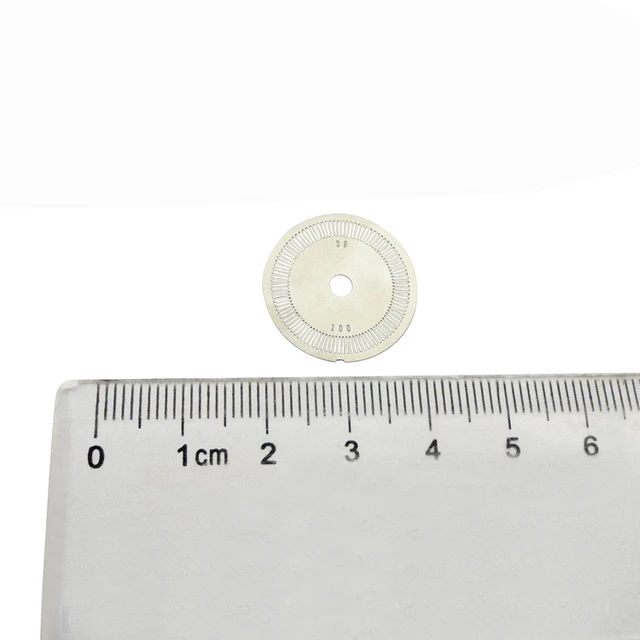 Tajima 0J4201400000 FG7210000000 Slit Rotary Disk ME20-100 for STKN...$ 6.99View part →
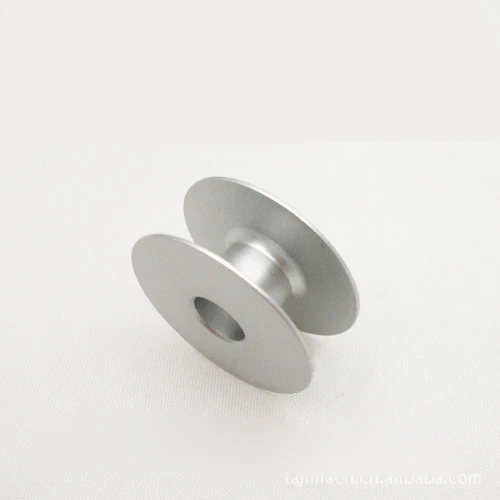 Onloyo 050260010020 Rotary Hook Bobbin:Regular for Tajima TMLH TLMX...$ 9.49View part →
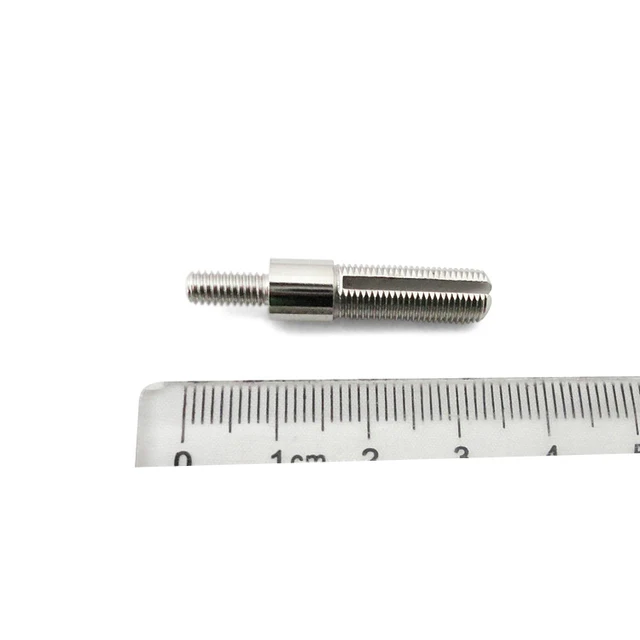 Tajima 0C0210010012 FN0903000000 Thread Tension Stud Bolt for STNE,...$ 11.29View part →
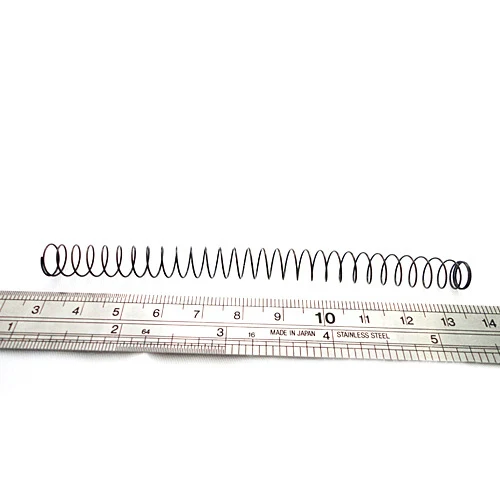 Onloyo 507605030044 EF0618030000 Needle Retention Compression Sprin...$ 4.49View part →
All Tajima TCMX parts → Needles & Needle Bars → Rotary Hooks & Bobbin Cases → Thread Path & Tension →
3. Machine Not Reading Designs / Data Transfer Issues medium likelihood
How to tell
The machine displays an error related to design files, cannot load designs, or the floppy drive is unresponsive. This prevents the machine from starting or continuing embroidery.
Fix
- Ensure the design file is in the correct format (.DST for Tajima) and is not corrupted.
- Check the floppy disk or USB drive for damage or proper insertion.
- Clean the floppy drive head if using floppy disks. Dust and debris can prevent proper reading.
- If using a USB emulator, ensure it is correctly installed and configured, and that the USB stick is formatted correctly and contains compatible files.
- Try a different floppy disk or USB stick with a known good design file to rule out media issues.
If your floppy drive is failing, consider upgrading to a 'Gotek SFRM72-FU USB Floppy Emulator for Tajima TMFX TMEF TFMX TCMX, Barudan BEAT BED BEKY, Happy HCS HCD HCR' for more reliable design loading.
Parts involved: Floppy, USB & memory →
4. Needle Bar Not Moving or Sticking medium likelihood
How to tell
A specific needle bar fails to move up and down smoothly, gets stuck in the up or down position, or makes unusual noises during operation. This can lead to missed stitches or machine stoppage.
Fix
- Inspect the needle bar for any visible obstructions or damage.
- Lubricate the needle bar and its guide. Use appropriate machine oil as per your manual.
- Check the needle bar reciprocator mechanism for wear or damage. This component controls the up-and-down motion.
- Ensure the needle bar guide is clean and free of lint or hardened oil.
- Manually move the needle bar to feel for any binding or resistance. Do this with the machine powered off and the main shaft turned by hand.
Worn components such as the 'Tajima 080210360A79 UN25009400GN Needle Bar Reciprocator Set for KN, TFGN, TCMX, TLMX' or 'Tajima 080210360A22 UN25009400GN Needle Bar Reciprocator GN[A] for TFGN, TCMX, TLMX' are common culprits. Also check the 'Tajima Needle Bar Guide 090450036011, 090450049011, 09045005Y011 for TMEG, TMFD, STNE, TFKN, STKN, TFGN, TCMX, TLMX Embroidery Machines'.
Parts involved: Needles & needle bars → Head & mechanical parts → Lubrication & maintenance →
5. Machine Not Starting or Head Not Moving (Motor Issues) low likelihood
How to tell
The machine powers on but the embroidery head does not move, or a specific motor (e.g., X/Y axis, main motor, color change motor) fails to operate, often accompanied by an error code on the control panel.
Fix
- Check for any emergency stop buttons being engaged.
- Verify all cables and connectors to the motor are secure and undamaged.
- Listen for any unusual noises from the motor (grinding, humming without movement).
- Consult the machine manual for specific error codes related to motor faults.
- If a specific motor is suspected, it may require replacement. This is typically a job for an experienced technician.
If a motor is faulty, you might need a 'Tajima 0J6104100000 CL0835000000 42mm Square Double-End Pulse Motor for TMEX TMFX TCMX Embroidery Machines' or 'Tajima TFGN TCMX Pulse Motor 0J6110700T00 42mm Double-End with Screw Base'. Also, check related sensors like 'Onloyo 0J4204400000 0J4200800012 Electromagnetic Induction Substrate A (Magnetic Sensor A) for Tajima STNE, TFKN, STKN, TFGN, TCMX, TLMX'.
Parts involved: Motors & drivers → Sensors & switches → Cables & wiring →
Stop and call a technician if
- If you are unsure about making complex mechanical adjustments, such as rotary hook timing or motor replacement.
- If the machine displays persistent error codes that you cannot resolve with basic troubleshooting.
- If you suspect a major electrical component failure or damage to circuit boards.
- If the machine is making severe grinding noises or has completely seized up.
Prevent it coming back
- Perform daily cleaning of the rotary hook area, needle plate, and thread path to remove lint and debris.
- Follow the manufacturer's recommended lubrication schedule diligently, using only approved oils.
- Regularly inspect needles and replace them at the first sign of dullness, bending, or burrs.
- Ensure proper thread tension settings for each job, as incorrect tension can lead to many problems.
- Use high-quality threads and bobbins to minimize thread breaks and stitch quality issues.
- Keep your workspace clean and free of dust and fabric scraps that can enter the machine.
Frequently asked questions
Why does my Tajima TCMX keep breaking needles?
Needle breakage on a Tajima TCMX is often due to a bent or dull needle, incorrect needle size for the fabric, improper needle insertion, incorrect rotary hook timing, or the hoop not being properly secured. Check these first, and ensure your fabric is adequately stabilized.
How often should I lubricate my Tajima TCMX machine?
Lubrication frequency depends on machine usage. As a general guideline, daily oiling of the rotary hook and weekly oiling of needle bars and other moving parts is recommended. Always refer to your Tajima TCMX operator's manual for the manufacturer's specific lubrication schedule and recommended oil types.
My Tajima TCMX machine is making a strange noise. What should I do?
Unusual noises often indicate a mechanical issue. Stop the machine immediately. Check for loose parts, obstructions in the needle area or rotary hook, or worn bearings. Do not continue operating the machine until the source of the noise is identified and resolved to prevent further damage.
What is the correct bobbin for a Tajima TCMX?
For Tajima TCMX machines, the 'Onloyo 050260010020 Rotary Hook Bobbin:Regular for Tajima TMLH TLMX TMCE TCMX Embroidery Machines' is a common and suitable choice. Always ensure you are using bobbins that match your machine's hook system for optimal performance.
Did this guide fix your machine?
Rate it - it helps other operators find the right fix.
Not sure which part is failing?
Need the logo stitched too?
Get your logo digitized by the people who know this machine
Upload the artwork, see the stitch count and the exact price in 10 seconds, then order with a free sew-out preview. $1 per 1,000 stitches, $10 minimum, 24-hour delivery. Vector conversion from $12.
After the fix
Fixed it? Keep the rest of the shop moving.
OS 360 is the shop software from the team behind this parts store. Every job keeps its status, deadline and owner while a TCMX head is down, restock alerts fire for needles, hooks and bobbins before you run dry, and quotes, invoices and payment live in one place.
- Jobs with status, deadline and owner - nothing slips during downtime
- Inventory with restock alerts, this store one click away
- Instant quotes, invoices and one place to collect payment