
Blog
Tajima TEMX Series: Essential Maintenance Schedule & Wear Parts Guide


Quick answer: Regular maintenance for your Tajima TEMX series machine involves daily cleaning and oiling, weekly inspections of critical components like needles and rotary hooks, and periodic checks of tension assemblies, belts, and specific wear parts such as the Connecting Rod Scissors Drive Shaft Assembly and Needle Bar Connecting Studs. Following a consistent schedule and replacing worn parts proactively will ensure optimal performance and longevity.
Maintaining your Tajima TEMX series embroidery machine is crucial for consistent stitch quality, extended machine life, and minimizing costly downtime. As a robust industrial machine, the TEMX benefits greatly from a proactive maintenance schedule. This guide outlines essential daily, weekly, and periodic tasks, along with identifying common wear parts you'll encounter. By following these steps, you can keep your TEMX running efficiently and produce high-quality embroidery for years to come.
Two-minute checks before you open anything
- Check for any unusual noises or vibrations during operation.
- Inspect needles for damage or dullness before starting a new job.
- Verify thread tension is correct for each needle/color.
- Ensure the bobbin case is clean and the bobbin is wound correctly.
- Check for any loose screws or components on the needle bars and presser feet.
1. Needles high likelihood
How to tell
Frequent thread breaks, skipped stitches, damaged fabric, dull or bent needle point, excessive noise during stitching.
Fix
- Visually inspect needle points for burrs, bends, or dullness. Check for proper seating in the needle bar.
- Replace any damaged needles immediately. Always use the correct needle type and size for your fabric and thread.
- Ensure needles are inserted correctly with the scarf facing the hook.
Parts involved: Needles & needle bars →
2. Rotary Hook high likelihood
How to tell
Poor bobbin thread pickup, loose stitches, thread shredding in the bobbin area, unusual noise from the hook, burrs or nicks on the hook point.
Fix
- Remove the bobbin case and inspect the rotary hook for lint buildup, burrs, or damage to the hook point.
- Clean the hook area thoroughly with a brush and compressed air.
- If burrs are present, they may be carefully polished with very fine emery cloth, but severe damage requires replacement.
- Ensure the hook timing is correct after any significant cleaning or if stitch quality issues persist.
Parts involved: Rotary hooks & bobbin cases →
Parts you may need for Tajima TEMX
In stock, tested before dispatch, Buyer Protection on every order. Part types for this problem: Needles & needle bars, Rotary hooks & bobbin cases, Cutters & trimmers, Thread path & tension.
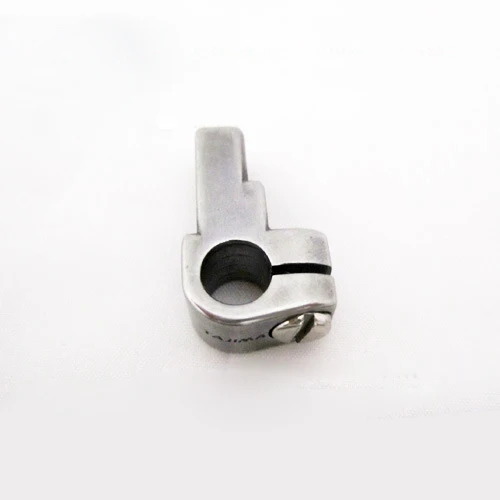 Tajima 090420060017 Stopper Lower Dead Point Needle Bar Connecting ...$ 0.00View part →
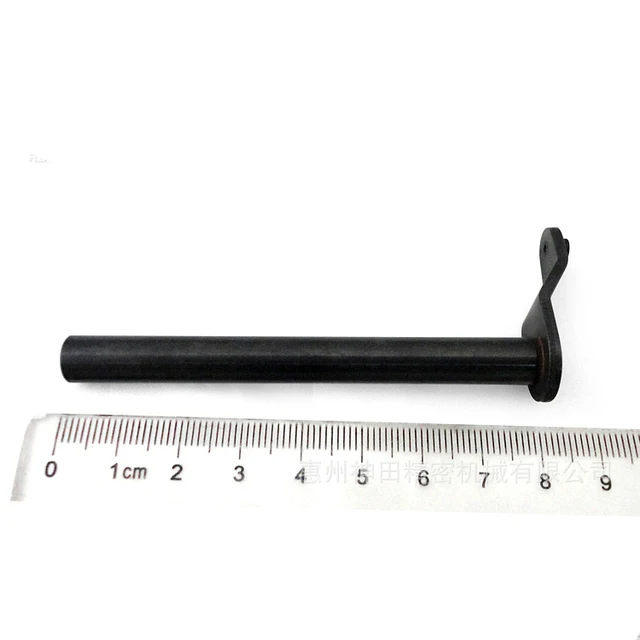 Tajima 050320850S21 Connecting Rod Scissors Drive Shaft Assembly fo...$ 0.00View part →
 Tajima Potentiometer 640900010001 640900010000 PB000100RV00 TFGN TF...$ 132.99View part →
 TAJIMA DU-10 XY Driver Board EH5404000000 MP-117-1-A for TME-HC, TM...$ 156.49View part →
 Hirose HSH-7.94ATR(MTQ) KHS12-RYP Rotary Hook for Tajima, Barudan, ...$ 18.09View part →
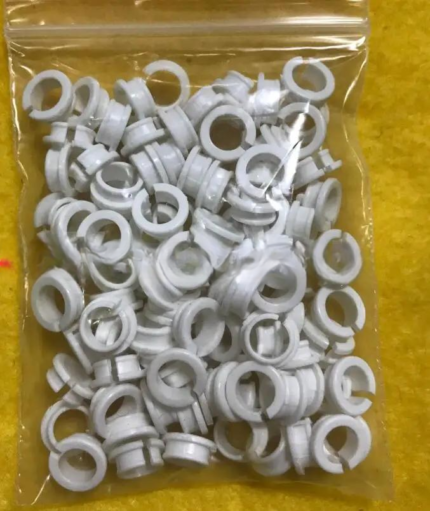 Tajima EF0613220000 EF0613210000 090460040020 090460040031 Presser ...$ 18.09View part →
All Tajima TEMX parts → Needles & Needle Bars → Rotary Hooks & Bobbin Cases → Cutters & Trimmers →
3. Thread Trimmer Blades (Fixed and Moving) medium likelihood
How to tell
Incomplete thread trims, frayed thread ends after trimming, thread jams in the trimmer mechanism, audible 'chewing' sound during trimming.
Fix
- Inspect both the fixed and moving trimmer blades for nicks, dullness, or excessive lint buildup.
- Clean the trimmer area thoroughly. Remove any trapped thread or debris.
- If blades are dull or damaged, they must be replaced. Ensure proper alignment and gap between the blades after replacement.
- Check the trimmer solenoid for proper function and ensure it fully engages the blades.
Parts involved: Cutters & trimmers →
4. Tension Discs and Springs medium likelihood
How to tell
Inconsistent thread tension, looping on top or bottom of the fabric, thread shredding at the tension assembly, visible grooves or damage on tension discs, weak or broken tension springs.
Fix
- Remove tension discs and clean them thoroughly to remove lint and wax buildup. Inspect for burrs or grooves.
- Check tension springs for proper tension and ensure they are not bent or broken. Replace if necessary.
- Reassemble and test tension with a tension gauge or by stitching a test pattern.
Parts involved: Thread path & tension →
5. Tajima 090420060017 Stopper Lower Dead Point Needle Bar Connecting Stud medium likelihood
How to tell
Excessive vertical play in the needle bar, unusual clicking or knocking sounds from the needle bar area, inconsistent needle depth, difficulty with needle bar height adjustment.
Fix
- Access the needle bar mechanism. Locate the connecting stud at the lower dead point of the needle bar.
- Inspect the stud for wear, looseness, or damage. Check for play between the stud and its mating components.
- If worn or loose, carefully remove the old stud and install a new Tajima 090420060017 Stopper Lower Dead Point Needle Bar Connecting Stud.
- Ensure proper needle bar height and timing are re-established after replacement, referring to your machine's service manual.
Parts involved: Needles & needle bars → Head & mechanical parts →
6. Tajima 050320850S21 Connecting Rod Scissors Drive Shaft Assembly low likelihood
How to tell
Malfunctioning or inconsistent scissor trimming action, grinding noises from the trimmer drive, complete failure of the trimmer mechanism, excessive play or looseness in the scissors drive linkage.
Fix
- Power off the machine and carefully inspect the scissors drive mechanism, particularly the connecting rod and shaft assembly.
- Look for bent, broken, or excessively worn components within the Tajima 050320850S21 Connecting Rod Scissors Drive Shaft Assembly.
- If damage is confirmed, the entire assembly may need replacement. This is a more involved repair, often requiring careful disassembly and reassembly of the trimmer drive system.
- Ensure all linkages are properly connected and lubricated after replacement, and verify trimmer function.
This is a critical assembly for the trimmer function. Replacement requires careful attention to timing and alignment.
Parts involved: Shafts, bearings & bushings → Cutters & trimmers → Head & mechanical parts →
7. Tajima Potentiometer 640900010001 640900010000 PB000100RV00 low likelihood
How to tell
Inconsistent or erratic machine speed control, machine starting or stopping unexpectedly, speed control knob not responding accurately, error codes related to motor speed or control.
Fix
- Power off and unplug the machine. Locate the potentiometer, typically associated with the speed control knob or main control panel.
- Inspect the potentiometer for physical damage, loose wiring, or corrosion.
- Test the potentiometer with a multimeter for smooth resistance changes as it's turned. Erratic readings indicate failure.
- If faulty, carefully disconnect and replace with a new Tajima Potentiometer 640900010001 640900010000 PB000100RV00. Ensure all connections are secure.
This part controls machine speed. A faulty potentiometer can lead to unpredictable operation.
Parts involved: Sensors & switches → Circuit boards & electronics → Control panels & displays →
Maintenance schedule
| When | What to do | Why |
|---|---|---|
| Daily (or every 4-6 hours of operation) | Clean the rotary hook area and bobbin case. | Removes lint and thread fragments that can cause stitch imperfections and machine jams. |
| Daily (or every 4-6 hours of operation) | Oil all designated oiling points. | Lubricates moving parts to reduce friction, wear, and heat, ensuring smooth operation. |
| Daily | Wipe down the machine exterior and monitor for loose components. | Prevents dust buildup and allows early detection of potential issues. |
| Weekly | Clean under the needle plate and around the trimmer mechanism. | Removes stubborn lint and debris that can interfere with needle movement and trimming. |
| Weekly | Inspect thread paths, tension discs, and thread guides for burrs or damage. | Ensures smooth thread flow, prevents shredding, and maintains consistent tension. |
| Weekly | Check and clean the thread take-up levers. | Ensures proper thread handling and prevents tangles. |
| Monthly (or every 150-200 operating hours) | Inspect and clean the main tension assemblies. | Removes wax and lint buildup that can cause inconsistent tension. |
| Monthly (or every 150-200 operating hours) | Check and tighten any accessible screws on the needle bars, presser feet, and head components. | Prevents parts from loosening due to vibration, which can affect stitch quality and cause damage. |
| Monthly (or every 150-200 operating hours) | Inspect drive belts for wear, cracks, or proper tension (if accessible). | Worn or loose belts can lead to timing issues and reduced performance. |
| Every 6 months (or every 500 operating hours) | Inspect and lubricate the pantograph rails and bearings. | Ensures smooth movement of the embroidery frame and prevents binding. |
| Every 6 months (or every 500 operating hours) | Check the condition of the Tajima 090420060017 Stopper Lower Dead Point Needle Bar Connecting Stud for wear. | Proactive inspection helps prevent excessive needle bar play and related issues. |
| Annually (or every 1000 operating hours) | Consider a professional service inspection and calibration. | Ensures all machine timings, tensions, and critical components are within manufacturer specifications. |
Stop and call a technician if
- If you encounter persistent error codes that you cannot resolve with basic troubleshooting.
- For any electrical issues, motor problems, or control panel malfunctions.
- If you suspect damage to major internal components like main shafts, bearings, or circuit boards.
- When you are unsure about a repair or adjustment and fear causing further damage.
- For annual preventative maintenance checks and complex calibrations.
Prevent it coming back
- Use only high-quality threads, needles, and backings appropriate for your machine and project.
- Ensure proper thread tension settings to reduce stress on machine components.
- Keep your work area clean to prevent dust and debris from entering the machine.
- Avoid running the machine at excessively high speeds for extended periods, especially with dense designs.
- Address minor issues promptly before they escalate into major problems.
- Always power off and unplug the machine before performing any cleaning or maintenance.
Frequently asked questions
How often should I oil my Tajima TEMX machine?
You should oil your Tajima TEMX machine daily, or every 4-6 hours of continuous operation, in all designated oiling points. Refer to your machine's manual for specific oiling locations and recommended oil type.
What kind of oil should I use for my Tajima TEMX?
Always use high-quality, clear, non-staining sewing machine oil specifically designed for industrial embroidery machines. Consult your Tajima TEMX operator's manual for the exact specifications and recommended oil grade.
Why is my Tajima TEMX machine making a new noise?
New noises often indicate a developing problem. It could be due to lack of lubrication, a loose screw, a worn part (like a bearing or hook), or thread caught in a mechanism. Stop the machine, inspect thoroughly, and address any obvious issues. If unsure, consult your manual or a technician.
How do I know when to replace the rotary hook on my TEMX?
Replace your rotary hook if you observe consistent poor bobbin thread pickup, frequent thread shredding in the hook area, burrs or nicks on the hook point that cannot be polished out, or if the hook makes excessive noise despite proper lubrication and cleaning. Regular inspection is key.
Can I perform all maintenance myself?
Many routine maintenance tasks like cleaning, oiling, and replacing common wear parts (needles, hooks, trimmers) can be performed by an operator. However, more complex adjustments, electrical issues, or major component replacements (like drive shafts or circuit boards) may require a qualified technician. Always refer to your machine's manual.
Did this guide fix your machine?
Rate it - it helps other operators find the right fix.
Not sure which part is failing?
Need the logo stitched too?
Get your logo digitized by the people who know this machine
Upload the artwork, see the stitch count and the exact price in 10 seconds, then order with a free sew-out preview. $1 per 1,000 stitches, $10 minimum, 24-hour delivery. Vector conversion from $12.
After the fix
Fixed it? Keep the rest of the shop moving.
OS 360 is the shop software from the team behind this parts store. Every job keeps its status, deadline and owner while a TEMX head is down, restock alerts fire for needles, hooks and bobbins before you run dry, and quotes, invoices and payment live in one place.
- Jobs with status, deadline and owner - nothing slips during downtime
- Inventory with restock alerts, this store one click away
- Instant quotes, invoices and one place to collect payment