
Blog
Happy HCD Series Embroidery Machine Maintenance Guide


Quick answer: Regular maintenance of your Happy HCD series machine is crucial for optimal performance. Focus on daily cleaning of the thread path and hook area, weekly lubrication, and periodic inspection and replacement of wear parts like needles, rotary hooks, and tension components. Refer to your machine's manual for specific lubrication points and intervals.
The Happy HCD series of embroidery machines are robust workhorses, but like any precision equipment, they require regular and diligent maintenance to ensure optimal performance and longevity. This guide provides a comprehensive overview of essential maintenance tasks, common wear parts, and troubleshooting tips to help you keep your Happy HCD machine running smoothly. Following these guidelines will minimize downtime, improve stitch quality, and extend the life of your valuable equipment.
Two-minute checks before you open anything
- Check needle for sharpness and straightness.
- Inspect thread path for lint and obstructions.
- Verify bobbin is correctly wound and inserted.
- Listen for any unusual noises during operation.
- Ensure hoops are securely clamped and fabric is taut.
- Check for any loose screws or connections.
1. Needles high likelihood
How to tell
Skipped stitches, frequent thread breaks, damaged fabric, dull or bent needle point, excessive noise during stitching.
Fix
- Inspect needle for bends, burrs, or dullness. A dull needle can cause fabric damage and skipped stitches.
- Replace needle with the correct type and size for your fabric and thread. Ensure it is inserted correctly and fully seated.
- Always use high-quality needles to minimize wear and tear on your machine and improve stitch quality.
Parts involved: Needles & needle bars →
2. Thread Tension Discs and Thread Guides medium likelihood
How to tell
Inconsistent thread tension, thread fraying or breaking, poor stitch quality (e.g., looping, puckering), visible grooves or burrs on guides or discs.
Fix
- Clean tension discs and thread guides regularly to remove lint, wax, and debris that can impede thread flow.
- Inspect for burrs or sharp edges that can abrade thread. Minor burrs can sometimes be smoothed with fine sandpaper, but heavily worn parts should be replaced.
- Ensure tension discs move freely and are not sticky. Check that the thread path is clear and unobstructed.
Parts involved: Thread path & tension →
Parts you may need for Happy HCD
In stock, tested before dispatch, Buyer Protection on every order. Part types for this problem: Needles & needle bars, Thread path & tension, Rotary hooks & bobbin cases, Cutters & trimmers.
 Sewtalent Embroidery Hoops for Happy HCH-701, HCS3-1201, HCD3e-1501...$ 39.09View part →
 Sewtalent Magnetic Mighty Hoop Master for Happy Japan HCS HCH HCD H...$ 78.49View part →
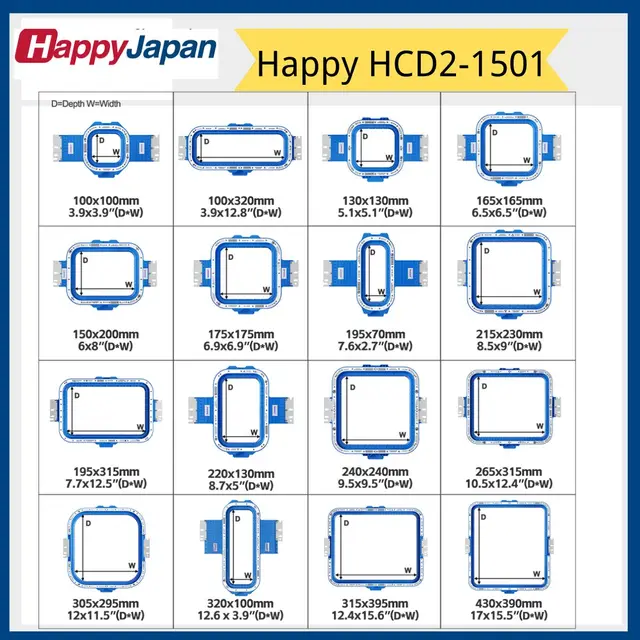 Sewtalent Magnetic Embroidery Hoop Frame for Happy Japan HCD2-1501-...$ 76.99View part →
 SFRM72-FU USB Floppy Emulator for Tajima, Barudan, Happy, ZSK, Brot...$ 65.09View part →
 IHSS57-36-10-RC/EC Nema23 1.2Nm Integrated Stepper Motor Driver for...$ 226.49View part →
 NEMA17 Stepper Motor 30mm 1.8° for DyzeXtruder, Tajima, Barudan, Br...$ 26.49View part →
All Happy HCD parts → Needles & Needle Bars → Thread Path & Tension → Rotary Hooks & Bobbin Cases →
3. Rotary Hook and Bobbin Case medium likelihood
How to tell
Skipped stitches, loose bobbin thread, birdnesting, unusual noises from the hook area, visible nicks or burrs on the hook point or bobbin case.
Fix
- Remove the bobbin case and clean the entire hook area thoroughly, removing all lint, thread bits, and debris.
- Inspect the rotary hook for nicks, burrs, or damage, especially on the hook point. Damage here can cause thread breaks and poor stitching.
- Inspect the bobbin case for wear, especially around the tension spring and thread exit points. Replace if damaged.
- Lubricate the rotary hook race according to your machine's manual (typically a drop of oil daily or every few hours of operation).
Parts involved: Rotary hooks & bobbin cases →
4. Thread Trimmer/Cutter Blades medium likelihood
How to tell
Incomplete thread cuts, frayed thread ends after trimming, thread jams during trimming, audible 'chewing' sound instead of a clean cut.
Fix
- Clean the trimmer area regularly to remove lint and thread debris that can interfere with blade operation.
- Inspect the moving and fixed blades for dullness, nicks, or damage. Sharp blades are essential for clean cuts.
- If cuts are consistently poor, the blades likely need replacement. Refer to your machine's manual for specific replacement procedures.
Parts involved: Cutters & trimmers →
5. Hoops and Clamping Mechanisms medium likelihood
How to tell
Fabric slipping during embroidery, uneven tension across the hooped material, difficulty hooping, visible cracks or bends in the hoop frame, worn or stripped hoop screws.
Fix
- Regularly inspect hoops for cracks, bends, or warping that can affect fabric tension and registration.
- Check hoop screws and clamps for wear. Replace stripped screws or worn clamping mechanisms to ensure secure hooping.
- Ensure the hoop arms on the machine are clean and free of debris, allowing hoops to seat properly.
- Consider upgrading to magnetic hoops for easier hooping and reduced fabric distortion.
We stock Sewtalent Embroidery Hoops for Happy HCH-701, HCS3-1201, HCD3e-1501, HCU2-1501 Machines, Sewtalent Magnetic Mighty Hoop Master for Happy Japan HCS HCH HCD HCU HCR HCM HCG Embroidery Machines, and Sewtalent Magnetic Embroidery Hoop Frame for Happy Japan HCD2-1501-40, HCD3E-1501-40, HCS2-1201, HCR3-1504, HCU-1501.
Parts involved: Hoops & frames →
6. Drive Belts and Pulleys low likelihood
How to tell
Unusual noises (squealing, grinding), inconsistent stitching, machine slowing down or struggling, visible cracks, fraying, or stretching of belts.
Fix
- Periodically inspect all drive belts (e.g., X/Y axis, main shaft) for signs of wear, cracking, fraying, or excessive slack.
- Check pulleys for damage or excessive wear. Ensure they are clean and free of thread wraps.
- If belts are worn or loose, they should be replaced and tensioned correctly according to the manufacturer's specifications. Incorrect tension can lead to premature wear or machine damage.
Parts involved: Belts, pulleys & gears →
7. Stepper Motors low likelihood
How to tell
Skipped stitches in a specific direction (X or Y axis), machine freezing or losing position, unusual humming or grinding noises from a motor, error codes related to motor failure.
Fix
- Check wiring connections to the stepper motor for looseness or damage.
- Ensure the motor is free of obstructions and can move its associated mechanism smoothly.
- If a motor is suspected of failure, it often requires replacement. This is typically a job for an experienced technician.
- Note that some Happy HCD models use NEMA17 stepper motors for certain functions.
We stock NEMA17 Stepper Motor 30mm 1.8° for Happy HCS2 HCD3 and IHSS57-36-10-RC/EC Nema23 1.2Nm Integrated Stepper Motor Driver.
Parts involved: Motors & drivers →
8. Floppy Drive / USB Emulator low likelihood
How to tell
Inability to read design files, 'disk error' messages, slow file loading, intermittent data transfer issues.
Fix
- Ensure the USB drive or floppy disk is properly formatted and free of errors.
- Try a different USB drive or floppy disk to rule out media issues.
- If using a USB emulator, ensure it is correctly installed and configured. Sometimes a firmware update for the emulator can resolve issues.
- If the original floppy drive or an emulator consistently fails, replacement may be necessary.
We stock SFRM72-FU USB Floppy Emulator for Happy and Gotek SFRM72-FU USB Floppy Emulator for Happy HCS HCD HCR.
Parts involved: Floppy, USB & memory →
Maintenance schedule
| When | What to do | Why |
|---|---|---|
| Daily (or every 4-8 hours of operation) | Clean the rotary hook area and bobbin case. | Removes lint and thread bits that can cause skipped stitches, thread breaks, and damage to the hook. |
| Daily (or every 4-8 hours of operation) | Lubricate the rotary hook race. | Reduces friction and wear, ensuring smooth operation and preventing heat buildup. |
| Daily | Clean the needle bar area and presser foot. | Removes lint and debris that can interfere with needle movement and stitch formation. |
| Weekly | Clean all thread path components (tension discs, thread guides, pre-tensioners). | Prevents lint and wax buildup that can cause inconsistent tension and thread breaks. |
| Weekly | Inspect and clean the thread trimmer/cutter mechanism. | Ensures clean thread cuts and prevents jams. Removes lint that can hinder blade movement. |
| Weekly | Wipe down the machine exterior and control panel. | Keeps the machine clean and prevents dust from entering internal components. |
| Monthly (or every 100-150 hours of operation) | Lubricate all specified points as per your machine's manual (e.g., needle bar drive, take-up lever mechanism). | Reduces wear on moving parts and ensures smooth, quiet operation. |
| Monthly | Inspect drive belts for wear, tension, and alignment. | Prevents slippage, ensures accurate movement, and identifies potential failures before they occur. |
| Monthly | Check all screws and fasteners for tightness. | Vibrations can loosen screws over time, leading to misalignment or component failure. |
| Annually (or every 1000-1500 hours of operation) | Perform a thorough internal cleaning and inspection of all mechanical components. | Removes accumulated lint and debris from hard-to-reach areas and allows for detailed inspection of wear parts. |
| Annually | Consider professional servicing by a qualified technician. | Ensures proper timing, calibration, and addresses issues that may not be apparent to the operator. |
Stop and call a technician if
- If you encounter persistent error codes that cannot be resolved with basic troubleshooting.
- If the machine's timing is off (e.g., needle bar and rotary hook are out of sync).
- For complex electrical issues or suspected circuit board failures.
- If you hear unusual grinding or knocking noises that persist after cleaning and lubrication.
- For X/Y axis movement problems that are not related to simple obstructions or belt issues.
- If you are uncomfortable performing a specific repair or adjustment.
Prevent it coming back
- Always use high-quality needles, threads, and backing materials suitable for your project.
- Avoid forcing the machine to embroider through overly thick or difficult materials.
- Ensure proper hooping tension to prevent fabric flagging and needle deflection.
- Keep the work area clean and free of dust and debris.
- Never operate the machine if you hear unusual noises or suspect a problem; investigate immediately.
- Follow manufacturer's recommendations for thread tension settings to avoid undue stress on components.
Frequently asked questions
How often should I lubricate my Happy HCD machine?
Lubrication intervals vary by machine model and usage. Generally, the rotary hook should be oiled daily or every few hours of operation. Other points may require weekly or monthly lubrication. Always consult your Happy HCD machine's specific operator's manual for exact lubrication points, types of oil, and frequency.
What kind of oil should I use for my Happy HCD embroidery machine?
Always use high-quality, clear, non-staining sewing machine oil (typically 10W or 15W viscosity) specifically designed for industrial embroidery machines. Avoid using general-purpose oils or lubricants not intended for sewing equipment, as they can cause damage or stain fabric. Refer to your machine's manual for recommended oil specifications.
Why are my threads constantly breaking on my Happy HCD machine?
Frequent thread breaks can be caused by several factors: a dull or bent needle, incorrect thread tension, burrs or nicks in the thread path (tension discs, guides, needle eye, rotary hook), poor quality thread, incorrect needle size for the thread, or excessive lint buildup. Systematically check each of these areas, starting with replacing the needle and cleaning the thread path.
Can I perform all maintenance myself, or do I need a technician?
Many routine maintenance tasks like cleaning, oiling, and needle replacement can be performed by the operator. However, more complex issues involving timing adjustments, motor replacement, or circuit board diagnostics often require a qualified technician with specialized tools and knowledge. Always refer to your machine's manual and know your limits.
From the Happy HCS3 parts book
The assemblies involved in this problem, as the manufacturer lists them. Open a section to see every part number, which ones we stock, and get a price on the rest.
- Cap Frame (drive Frame)54 parts · 0 in stock
- Cap Frame (hold Frame)53 parts · 0 in stock
- Cap Frame (cap Stretcher)44 parts · 0 in stock
- Thread Catcher30 parts · 0 in stock
- Needle Bar Change Unit26 parts · 0 in stock
- Thread Cutting Driver26 parts · 0 in stock
Reference book: Happy HCS3. Part numbers differ by model - search yours below and we will confirm fit.
Did this guide fix your machine?
Rate it - it helps other operators find the right fix.
Not sure which part is failing?
Need the logo stitched too?
Get your logo digitized by the people who know this machine
Upload the artwork, see the stitch count and the exact price in 10 seconds, then order with a free sew-out preview. $1 per 1,000 stitches, $10 minimum, 24-hour delivery. Vector conversion from $12.
After the fix
Fixed it? Keep the rest of the shop moving.
OS 360 is the shop software from the team behind this parts store. Every job keeps its status, deadline and owner while a HCD head is down, restock alerts fire for needles, hooks and bobbins before you run dry, and quotes, invoices and payment live in one place.
- Jobs with status, deadline and owner - nothing slips during downtime
- Inventory with restock alerts, this store one click away
- Instant quotes, invoices and one place to collect payment