
Blog
Tajima TMFX Series: Common Problems & Fixes Guide


Quick answer: Common Tajima TMFX problems include thread breakage, skipped stitches, needle breaks, and machine not starting. Most issues can be resolved by checking thread path, tension, needle, rotary hook, and ensuring proper maintenance. Refer to your machine manual for specific adjustments and error codes.
The Tajima TMFX series embroidery machines are workhorses in the industry, known for their reliability. However, like any complex machinery, they can encounter issues. This guide provides practical, step-by-step troubleshooting for the most common problems operators face, helping you diagnose and fix issues quickly to minimize downtime. We focus on common symptoms, how to identify the root cause, and concrete steps to get your machine running smoothly again, often with parts you can find right here.
Two-minute checks before you open anything
- Is the machine plugged in and powered on?
- Is the emergency stop button disengaged?
- Is the thread path clear and correctly threaded?
- Is the needle new, correctly inserted, and the right type for your material?
- Is the bobbin correctly wound and inserted, with proper tension?
- Are there any visible obstructions (lint, thread scraps) in the rotary hook area?
- Are the hoops securely attached and not interfering with the needle?
1. Thread Breakage high likelihood
How to tell
The machine stops unexpectedly, an alarm sounds, and you find the upper or lower thread broken. This often happens repeatedly in the same area of a design or on a specific needle.
Fix
- Check the upper thread path for tangles, burrs, or obstructions from the cone to the needle eye. Ensure the thread is seated correctly in all tension discs and guides.
- Inspect the needle for bends, burrs, or a dull point. Replace the needle if any damage is found. Ensure the needle is inserted correctly and fully seated.
- Verify upper and bobbin thread tension. Adjust upper tension slightly looser if the bobbin thread is pulled to the top, or tighter if the upper thread is visible on the bottom. Ensure bobbin tension is also correct.
- Clean the rotary hook area. Remove any lint, debris, or thread fragments that might be interfering with the hook's movement. Check the rotary hook for nicks or burrs.
- Confirm the rotary hook timing is correct. Incorrect timing can cause the needle to hit the hook, leading to thread breaks. This may require a technician or careful adjustment following your machine manual.
Consider replacing the KHS20-R Jumbo Rotary Hook for TAJIMA TME-DC, TMFX, TMB, TMAR, TMEZ & BROTHER BAS-415, BAS-416, BAS-423 Embroidery Machines if it's worn or damaged. Inspect the Tajima Upper Thread Plate Holder Assembly 6, 9, 12, 15 Needle TFMX, TFMX-C, TFMX-II, TFMX-IIC, TMAR, TMFX, TMBP-SC for wear. The Tajima 050320350000 Thread Block and Tajima TC Sensor Bottom Thread Detector Strip 0J2602300A20 can also contribute to thread path issues.
Parts involved: Needles & needle bars → Thread path & tension → Rotary hooks & bobbin cases → Head & mechanical parts →
2. Skipped Stitches or Poor Stitch Quality high likelihood
How to tell
Embroidery appears sparse, with noticeable gaps in stitching, loose loops on the top or bottom, or inconsistent stitch density. Designs may look distorted or uneven.
Fix
- Replace the needle with a new, correct size and type for your fabric and thread. A bent or dull needle is a primary cause of skipped stitches.
- Re-thread the machine completely, ensuring the thread is properly seated in all guides and tension discs. Check for any obstructions in the thread path.
- Adjust upper and bobbin thread tension. Too loose upper tension can cause loops on top, while too tight can cause skipped stitches or thread breaks. Ensure bobbin tension is also appropriate.
- Verify the rotary hook timing. If the hook is not catching the needle loop at the correct moment, stitches will be skipped. This is a critical adjustment.
- Check the presser foot height and pressure. If the fabric is not held firmly, it can move with the needle, leading to skipped stitches. Adjust according to your material thickness.
- Clean the rotary hook area thoroughly and inspect for any damage or burrs that could impede thread pickup.
A worn KHS20-R Jumbo Rotary Hook for TAJIMA TME-DC, TMFX, TMB, TMAR, TMEZ & BROTHER BAS-415, BAS-416, BAS-423 Embroidery Machines can cause skipped stitches. Check the Tajima Upper Thread Plate Holder Assembly 6, 9, 12, 15 Needle TFMX, TFMX-C, TFMX-II, TFMX-IIC, TMAR, TMFX, TMBP-SC for proper function. The Tajima ZG0030400000 Needle Bar Connecting Stud Gauge for TMFX, TFMX, TFGN, TFGN-II, TFMX-IIC, TFMX-C Series can help ensure correct needle bar depth.
Parts involved: Needles & needle bars → Thread path & tension → Rotary hooks & bobbin cases → Presser feet & sewing parts → Head & mechanical parts →
Parts you may need for Tajima TMFX
In stock, tested before dispatch, Buyer Protection on every order. Part types for this problem: Rotary hooks & bobbin cases, Needles & needle bars, Thread path & tension, Presser feet & sewing parts.
 KHS20-R Jumbo Rotary Hook for TAJIMA TME-DC, TMFX, TMB, TMAR, TMEZ ...$ 21.29View part →
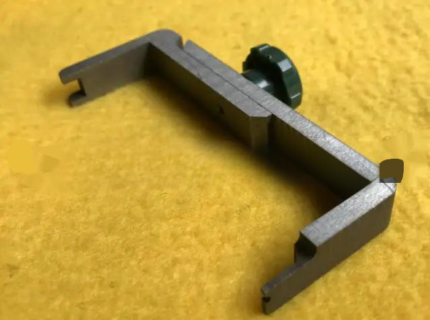 Tajima ZG0030400000 Needle Bar Connecting Stud Gauge for TMFX, TFMX...$ 39.09View part →
 USB Emulator Converter 34-Pin to 26-Pin for Tajima TMEX TMFX Embroi...$ 25.09View part →
 Tajima 9ZJ4040A0000 USB Linker External Reader for TMEG, TMEF, TMBE...$ 257.49View part →
 Take-Up Lever Drive Crank Rod Assembly for Tajima TMFX TFMX TFGN & ...$ 10.99View part →
 Tajima JP1-A-36 Jump Solenoid for TFMX, TMFX, TFGN, TMEZ Embroidery...$ 7.99View part →
All Tajima TMFX parts → Rotary Hooks & Bobbin Cases → Needles & Needle Bars → Thread Path & Tension →
3. Needle Breakage medium likelihood
How to tell
The needle snaps during embroidery, often with a loud crack. This can happen repeatedly or intermittently.
Fix
- Ensure the correct needle size and type are used for the fabric and thread. Using too fine a needle for heavy fabric or thick thread can cause breakage.
- Check the needle insertion. The needle must be fully seated and oriented correctly (scarf facing the rotary hook).
- Inspect the rotary hook timing. If the hook is out of time, the needle can strike it, leading to breakage. This requires precise adjustment.
- Examine the needle bar for any bends or looseness. A wobbly needle bar can cause the needle to hit the needle plate or rotary hook.
- Check for hoop movement or fabric shifting. If the hoop or fabric moves unexpectedly, the needle can hit the hoop or a previously stitched area.
- Ensure the presser foot is set at the correct height for the fabric. If too low, it can impede needle movement; if too high, the fabric can lift and cause the needle to bend.
A worn KHS20-R Jumbo Rotary Hook for TAJIMA TME-DC, TMFX, TMB, TMAR, TMEZ & BROTHER BAS-415, BAS-416, BAS-423 Embroidery Machines can contribute to needle strikes. The Tajima ZG0030400000 Needle Bar Connecting Stud Gauge for TMFX, TFMX, TFGN, TFGN-II, TFMX-IIC, TFMX-C Series is crucial for correct needle bar depth. Check the Tajima Needle Bar Reciprocator Catcher Set for TFMX, TMFX, Feiya, Butterfly, ZSK Clone Embroidery Machines or Tajima Needle Bar Drive Reciprocator Assembly for TFMX, TMFX, TMAR, TFGN, TEHX Series Embroidery Machines for wear.
Parts involved: Needles & needle bars → Rotary hooks & bobbin cases → Hoops & frames → Head & mechanical parts → Presser feet & sewing parts →
4. Machine Not Starting or USB/Floppy Read Errors medium likelihood
How to tell
The machine fails to power on, displays error messages related to data loading, or cannot read designs from the floppy drive or USB device.
Fix
- Ensure the machine is properly plugged into a functional power outlet. Check all power cables and connections.
- Verify the emergency stop button is not engaged. Reset it if necessary.
- If using a floppy disk, ensure it is correctly inserted and not damaged. Try a different floppy disk if possible.
- If using a USB device, ensure it is formatted correctly (FAT32 is common) and contains compatible design files. Try a different USB stick.
- For USB emulators, ensure it is correctly installed and configured. Check for any loose connections to the machine's main board.
- If the control panel is blank or unresponsive, check the power supply to the control panel and main board.
If experiencing floppy/USB issues, consider replacing with a USB Emulator Converter 34-Pin to 26-Pin for Tajima TMEX TMFX Embroidery Machines, a Richpeace RP-SFDR-IV U-A720 USB Emulator Reader for Tajima TMFX TMEX TFHX & NEC FD1138C, a Gotek SFR1M44-FU USB Floppy Emulator for Tajima TMFX TFMX TFMX-C TEHX Series, a Gotek SFRM72-FU SFRM72-FU-EG Floppy Drive Emulator for Tajima TMFX TMEF TMB TFMX, or an EILASUNG FDD-UDD U144K USB Floppy Drive Emulator. For external reading, the Tajima 9ZJ4040A0000 USB Linker External Reader for TMEG, TMEF, TMBE, TMCE, TME-600, TME-DC, TMFD, TMFX Machines or TAJIMA KP-BS-T-113 USB Reader are options. If the machine doesn't power on, check the Tajima MX5100B60000 TMFX Control Panel Monitor Box & CX5601040000 MP138 Power Supply Board for TAJIMA TMFX Embroidery Machines or Tajima MP137-2 Main Motor Control Card CX5602A70000.
Parts involved: Floppy, USB & memory → Control panels & displays → Circuit boards & electronics → Cables & wiring →
5. Unusual Noises or Vibrations low likelihood
How to tell
The machine produces grinding, squealing, knocking, or excessive vibration during operation, which is not typical.
Fix
- Stop the machine immediately and identify the source of the noise. Do not operate if the noise is severe.
- Check all moving parts for lubrication. Apply machine oil to rotary hook, needle bar, and other specified lubrication points according to your manual.
- Inspect all belts for tension and wear. Loose or worn belts can cause squealing or slipping. Tighten or replace as needed.
- Check for loose screws or components, especially around the head, needle bar, and rotary hook area. Tighten any loose fasteners.
- Examine bearings and bushings for wear. Worn bearings can cause grinding noises and excessive play in shafts. This often requires replacement.
- Ensure the machine is on a stable, level surface. Uneven surfaces can cause vibration.
Inspect MITSUBOSHI MBL S5M1680 Timing Belt for Tajima TMFX TMFD TMEZ TFMX TFMG Series, Tajima MBL S5M1145 Timing Belt 15mm for TMFX, TMEF, TFMX-II, TFMX-C, TFGN-II Series, MBL S5M1165 Timing Belt 25mm for Tajima TMFX TFMX TFGN TME Embroidery Machines, Genuine Japanese MBL S5M1420 Timing Belt 13mm Width for Tajima TMFX, TMEZ, TMBP, TWMX Series, MBL S5M1225 Main Shaft Motor Belt 30mm for Tajima TFMX TMFX TMBP-SC TMAR TMCR Series, MBL 250S5M600 SPTG W25-S5M 600/G Timing Belt for TAJIMA TFMX, TMFX, TMEZ, TMBP, TFMX-IIC Series, Tajima W25-S5M Synchronous Drive Belt 25mm for TMFX, TMEF, TFMX, TMEZ, TMAR, TFMX-IIC, and Tajima 623100020000 623100030000 623100050000 10mm Synchronous Timing Belt for TFM TFG TMFX TMEZ TMAR Embroidery Machines for wear. Also check Tajima W20-16 Timing Belt Pulley CX0170000000 501440030000 S5M 20mm for TMFX, TFMX, TFMX-C, TMAR, TMBP, TEJT, TFMX-II Series, Tajima S-7804 32 Teeth 2.5CM Belt Cam Pulley for TFMX TFGN TMFX Embroidery Machines, and Tajima 32 Teeth Synchronous Belt Pulley for TFMX, TMFX, TMAR, TFGN, TMEZ, TMCR, TMFD Series. The Tajima Belt Pulley Cover Plate Guide Rail for TMFX, TFMX, TFGN, TMEZ Series Embroidery Machines should be secure.
Parts involved: Belts, pulleys & gears → Shafts, bearings & bushings → Head & mechanical parts → Lubrication & maintenance → Screws, springs & small parts →
Maintenance schedule
| When | What to do | Why |
|---|---|---|
| Daily | Clean rotary hook, needle plate, and thread path. Check and clear any lint or debris. | Prevents thread breaks, skipped stitches, and maintains stitch quality. |
| Weekly | Thoroughly clean under the needle plate, tension assemblies, and lubricate specified points. | Reduces wear on moving parts and prevents buildup that can cause mechanical issues. |
| Monthly | Inspect all belts for wear and tension. Check for loose screws and tighten as needed. | Ensures smooth operation, prevents unexpected breakdowns, and maintains machine timing. |
| Annually (or every 1000-1500 operating hours) | Professional service including timing checks, bearing inspection, and replacement of wear parts. | Extends machine lifespan, maintains optimal performance, and catches potential issues early. Consult your manual for exact intervals. |
Stop and call a technician if
- If you hear severe grinding, clunking, or scraping noises that do not resolve with basic cleaning and lubrication.
- If the machine displays persistent error codes that you cannot resolve using the manual's troubleshooting guide.
- If you suspect major component failure, such as a motor, main board (Tajima MP137-2 Main Motor Control Card CX5602A70000), or XY axis driver card (Tajima EC6102050000 XY Axis Driver Card Board MP167-1).
- If you are unable to correctly set rotary hook timing or needle bar depth after following manual instructions.
- If the machine is completely unresponsive or fails to power on despite checking basic power connections.
Prevent it coming back
- Perform daily and weekly cleaning routines as specified in your machine's manual, focusing on the rotary hook, needle plate, and thread path.
- Use high-quality needles appropriate for your fabric and thread type, and replace them regularly (e.g., every 8-10 hours of sewing or at the first sign of dullness/burrs).
- Ensure proper thread tension for both upper and bobbin threads. Test tension regularly.
- Lubricate all specified points with the correct type of machine oil at recommended intervals. Refer to your manual for exact specifications.
- Regularly inspect belts for wear, cracks, or proper tension. Replace worn belts promptly.
- Keep your work area clean and free of debris that could enter the machine.
- Use stable, well-maintained hoops and ensure fabric is properly hooped and stabilized.
- Back up your design files and machine settings regularly.
Frequently asked questions
Why is my Tajima TMFX machine making a loud knocking sound?
A knocking sound often indicates a mechanical issue. Stop the machine immediately. Check for loose components, especially around the needle bar and rotary hook. It could be incorrect rotary hook timing, a bent needle striking the hook, or worn bearings. Lubricate all moving parts and inspect for foreign objects. If the issue persists, it may require a technician.
How often should I clean my Tajima TMFX embroidery machine?
You should perform daily cleaning of the rotary hook area, needle plate, and thread path to remove lint and debris. A more thorough weekly cleaning, including under the needle plate and tension assemblies, is recommended. Refer to your machine's manual for specific cleaning intervals and procedures.
My Tajima TMFX isn't reading my USB stick. What should I do?
First, ensure your USB stick is formatted to FAT32 and contains compatible design files. Try a different USB stick. If you're using a USB emulator, check its connections and ensure it's functioning correctly. Sometimes, the emulator itself may need replacement, such as a Gotek SFR1M44-FU USB Floppy Emulator or Richpeace RP-SFDR-IV U-A720 USB Emulator Reader.
Did this guide fix your machine?
Rate it - it helps other operators find the right fix.
Not sure which part is failing?
Need the logo stitched too?
Get your logo digitized by the people who know this machine
Upload the artwork, see the stitch count and the exact price in 10 seconds, then order with a free sew-out preview. $1 per 1,000 stitches, $10 minimum, 24-hour delivery. Vector conversion from $12.
After the fix
Fixed it? Keep the rest of the shop moving.
OS 360 is the shop software from the team behind this parts store. Every job keeps its status, deadline and owner while a TMFX head is down, restock alerts fire for needles, hooks and bobbins before you run dry, and quotes, invoices and payment live in one place.
- Jobs with status, deadline and owner - nothing slips during downtime
- Inventory with restock alerts, this store one click away
- Instant quotes, invoices and one place to collect payment





