
Blog
Tajima STKN Series: Common Problems & Fixes Guide

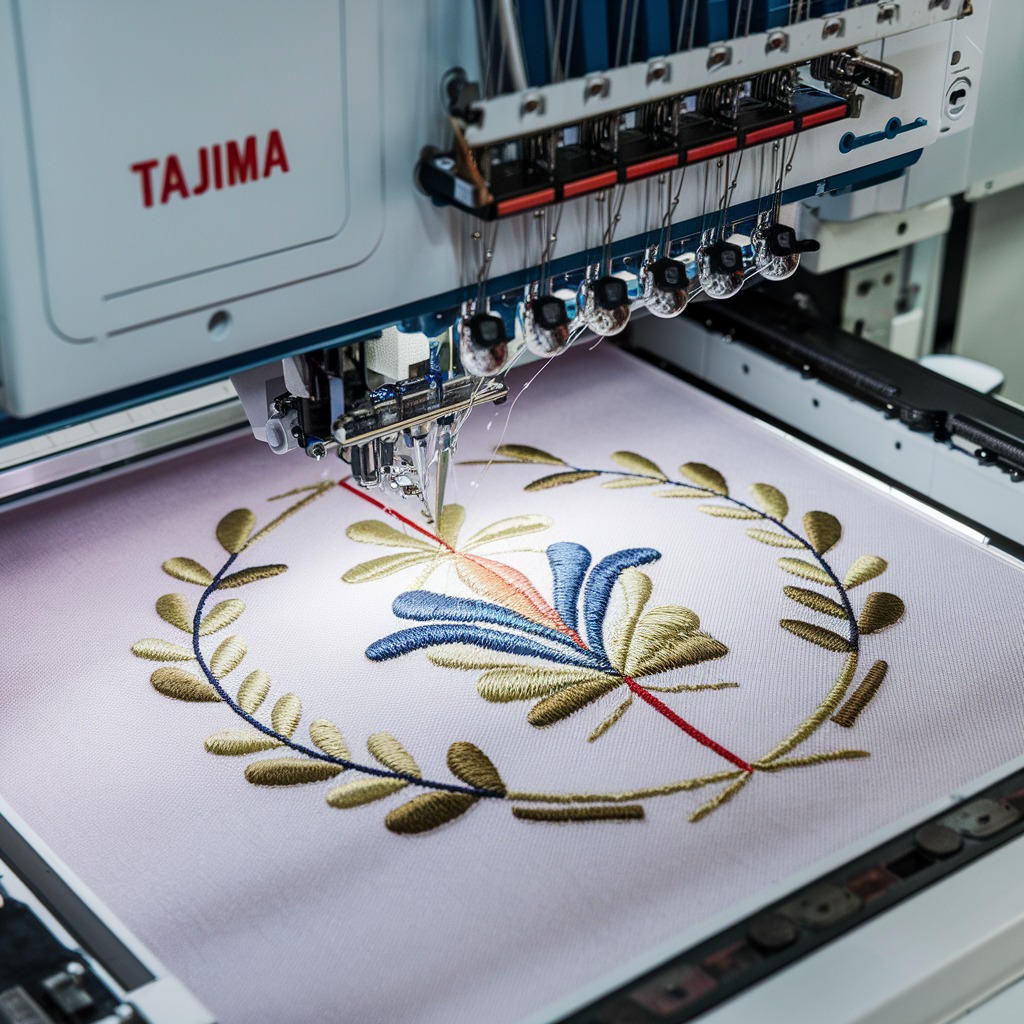
Quick answer: Common Tajima STKN issues like thread breaks, needle breaks, and poor stitch quality are often caused by incorrect tension, worn thread path components, dull needles, or timing issues. Regular cleaning, proper lubrication, and timely replacement of wear parts like thread guides, sensors, and rotary hook components can resolve most problems.
The Tajima STKN series embroidery machines are workhorses in the industry, known for their reliability. However, like any precision equipment, they can encounter issues that interrupt production. This guide provides practical, step-by-step troubleshooting for the most common problems reported by operators, helping you diagnose and fix issues quickly to minimize downtime. We'll focus on identifying symptoms, performing concrete fixes, and pinpointing the specific parts that often need attention, using real product titles from our inventory at 360 Digitizing Shop.
Two-minute checks before you open anything
- Is the machine powered on and plugged in securely?
- Are all threads correctly threaded through the machine, including the bobbin?
- Is the needle inserted correctly and not bent or dull?
- Is the bobbin wound evenly and inserted properly into the bobbin case?
- Is the fabric hooped tightly and stabilized correctly?
- Are there any visible obstructions or tangled threads in the needle area or rotary hook?
- Are all tension settings appropriate for the thread and fabric?
1. Frequent Thread Breakage high likelihood
How to tell
The machine stops frequently with a 'thread break' error message, or you observe loose, shredded, or snapped threads during embroidery. Stitches may appear incomplete or skipped.
Fix
- Check thread path for obstructions, burrs, or sharp edges. Clean thoroughly.
- Verify thread tension settings. Adjust upper and bobbin tension as needed, ensuring the thread flows smoothly.
- Inspect the needle for dullness, bends, or burrs. Replace if necessary, ensuring the correct type and size for your thread and fabric.
- Examine the rotary hook for nicks or damage. A damaged hook can snag thread.
- Ensure the thread break sensor is clean and functioning correctly.
- Check the thread cone for proper unwinding and ensure it's not catching.
Consider replacing worn components like the Tajima 0C0210010012 FN0903000000 Thread Tension Stud Bolt, Tajima 050320350000 Thread Block, or Tajima 516503010011 MX0521010000 Thread Guide Collar Ceramic Coil 1.8mm. If the sensor is faulty, replace the Onloyo 0J2602300A23 TC Sensor Substrate Thread Break Sensor. A damaged rotary hook might require replacing the Tajima 0J4201400000 FG7210000000 Slit Rotary Disk ME20-100. The Tajima 0C0220080000 EF0910000000 Spring Hook can also affect tension.
Parts involved: Thread path & tension → Needles & needle bars → Rotary hooks & bobbin cases → Sensors & switches → Screws, springs & small parts →
2. Needle Breakage medium likelihood
How to tell
Needles break frequently, often accompanied by a loud 'snap' sound. This can lead to skipped stitches or damage to the fabric.
Fix
- Ensure the correct needle type and size are used for the fabric and thread combination.
- Check that the needle is inserted correctly and fully into the needle bar, with the scarf facing the rotary hook.
- Inspect the needle bar for bends or damage. Ensure it moves freely.
- Verify the presser foot height and pressure are appropriate for the material.
- Check for timing issues between the needle and rotary hook. This often requires a technician.
- Examine the rotary hook for damage or misalignment that could be striking the needle.
- Ensure the hoop is tight and the fabric is properly stabilized, preventing fabric flagging.
Worn Tajima Needle Bar Guide (090450036011, 090450049011, 09045005Y011) can cause needle deflection. The Onloyo 507605030044 EF0618030000 Needle Retention Compression Spring 0.5mm can affect needle stability. Check the Tajima 090420060017 Stopper Lower Dead Point Needle Bar Connecting Stud for proper adjustment. A damaged Tajima 0J4201400000 FG7210000000 Slit Rotary Disk ME20-100 can also contribute.
Parts involved: Needles & needle bars → Presser feet & sewing parts → Rotary hooks & bobbin cases → Head & mechanical parts → Screws, springs & small parts →
Parts you may need for Tajima
In stock, tested before dispatch, Buyer Protection on every order. Part types for this problem: Thread path & tension, Needles & needle bars, Rotary hooks & bobbin cases, Sensors & switches.
 Hirose HSH-7.94ATR(MTQ) KHS12-RYP Rotary Hook for Tajima, Barudan, ...$ 18.09View part →
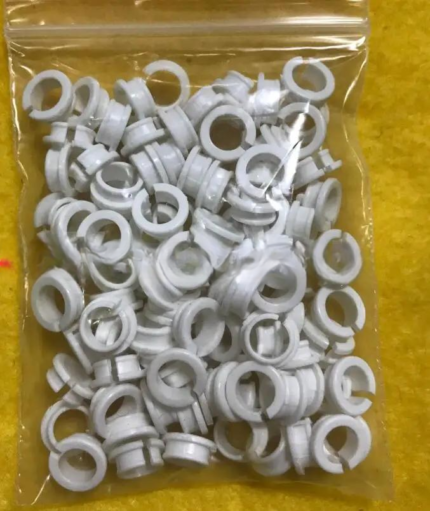 Tajima EF0613220000 EF0613210000 090460040020 090460040031 Presser ...$ 18.09View part →
 Koban KHS12-RYP Rotary Hook with Trimmer for Tajima, Barudan, SWF, ...$ 37.29View part →
 Groz-Beckert DBXK5 FG/SUK Embroidery Needles (100 Pcs) for Tajima, ...$ 33.99View part →
 HAYA MGP BC-DBZ(1)-NBL KF220440 ME0503000NBL Bobbin Case (50 Pcs) f...$ 66.29View part →
 KHS12-RYPN KF220750 ME0505010AMQ Rotary Hook for Tajima Barudan SWF...$ 27.09View part →
All Tajima parts → Thread Path & Tension → Needles & Needle Bars → Rotary Hooks & Bobbin Cases →
3. Poor Stitch Quality (Loopy, Skipped, or Uneven Stitches) high likelihood
How to tell
Stitches appear loose, loopy on the top or bottom, skipped, or inconsistent in length or formation. The embroidery lacks crispness or definition.
Fix
- Adjust upper and bobbin thread tension. Ensure bobbin tension is correct for the thread type.
- Check for proper needle insertion and ensure it's not bent or dull. Replace if needed.
- Clean the thread path thoroughly, removing any lint or debris from tension discs and thread guides.
- Verify the presser foot height and pressure. It should hold the fabric firmly without crushing it.
- Ensure the bobbin is wound evenly and inserted correctly into the bobbin case.
- Check for proper hooping and stabilization to prevent fabric movement during stitching.
- Inspect the rotary hook for burrs or damage that could interfere with loop formation.
Worn Tajima 0C0210010012 FN0903000000 Thread Tension Stud Bolt or Tajima 516503010011 MX0521010000 Thread Guide Collar Ceramic Coil 1.8mm can cause inconsistent tension. A damaged Tajima 0J4201400000 FG7210000000 Slit Rotary Disk ME20-100 can lead to poor loop formation. Ensure the Tajima EF0613220000 EF0613210000 090460040020 090460040031 Presser Foot Bushing Guide Collar is in good condition for proper presser foot function.
Parts involved: Thread path & tension → Needles & needle bars → Rotary hooks & bobbin cases → Presser feet & sewing parts → Screws, springs & small parts →
4. Machine Jams or Grinding Noises medium likelihood
How to tell
The machine stops abruptly, makes unusual grinding or clunking noises, or the needle bar movement is restricted. This can sometimes be accompanied by a 'motor error' or 'head error' message.
Fix
- Immediately turn off the machine. Do not force movement.
- Carefully remove any tangled thread or fabric from the needle plate and rotary hook area.
- Check for any foreign objects that may have fallen into the machine.
- Inspect the needle bar and rotary hook for damage or misalignment. Look for signs of impact.
- Manually turn the handwheel to check for smooth movement. If stiff, do not force it.
- Check the synchronous belts for proper tension and wear. Loose or damaged belts can cause timing issues and jams.
- Ensure all moving parts are adequately lubricated according to the machine manual.
Worn Tajima Synchronous Belt (623500270000, 623500360000, 623500400000, 623500430000, or W35-S5M PNs: 623500030000, 623500040000) can cause timing issues. The Onloyo 502107010003 Stopper Collar 7.94mm Dia. or Tajima 090430070032 Shockproof Pad A Damper Ring and Tajima 090430080010 EF0643010000 Damper Ring B Shockproof Pad can be damaged during severe jams. Check the Onloyo 509179010000 EF0206000001 Oil-Bushing Bobbin Shaft Sleeve for wear if the bobbin area is seizing. The Onloyo 0E0210210000 ATH Camshaft is a critical timing component.
Parts involved: Belts, pulleys & gears → Rotary hooks & bobbin cases → Head & mechanical parts → Shafts, bearings & bushings → Lubrication & maintenance →
Maintenance schedule
| When | What to do | Why |
|---|---|---|
| Daily/Every 8-10 hours | Clean thread path, needle plate, and rotary hook area. Lubricate rotary hook. | Prevents lint buildup, reduces friction, and ensures smooth operation. |
| Weekly/Every 40-50 hours | Thorough cleaning of entire head. Check and adjust thread tensions. Inspect needles and replace worn ones. | Maintains stitch quality and prevents minor issues from escalating. |
| Monthly/Every 160-200 hours | Inspect synchronous belts for wear and tension. Check for loose screws. Lubricate all specified points. | Ensures proper timing and reduces wear on critical mechanical components. |
| Annually/Every 2000 hours | Professional service for timing checks, major lubrication, and inspection of internal components. | Extends machine lifespan and ensures optimal performance. |
Stop and call a technician if
- If the machine displays complex error codes that are not resolved by basic troubleshooting.
- If you suspect internal timing issues (e.g., needle and hook timing are off).
- If there are persistent grinding noises or mechanical resistance that you cannot identify or safely resolve.
- If electrical components or circuit boards appear damaged.
- For any repairs that require specialized tools or extensive disassembly beyond your comfort level.
Prevent it coming back
- Perform daily cleaning of the thread path, needle plate, and rotary hook area.
- Lubricate the machine regularly according to the manufacturer's manual, using recommended oils.
- Use high-quality needles and threads appropriate for your fabric and design.
- Ensure proper hooping and stabilization to prevent fabric flagging.
- Regularly inspect wear parts like thread guides, tension discs, and rotary hook components for damage.
- Keep your workspace clean and free of debris that could enter the machine.
- Follow recommended maintenance schedules for belt tension and timing checks.
Frequently asked questions
How often should I clean my Tajima STKN machine?
It's recommended to clean the rotary hook area, needle plate, and thread path daily or after every 8-10 hours of operation, especially when using linty threads. A thorough cleaning and lubrication should be performed weekly or bi-weekly depending on usage.
What type of needle should I use for my Tajima STKN?
Always refer to your machine's manual for the recommended needle system (e.g., DBxK5, DPx5). The specific needle size and point type will depend on the fabric and thread you are using. Generally, a sharp point is for woven fabrics, and a ballpoint is for knits.
My machine is making a strange noise, what should I do?
Immediately stop the machine and turn off the power. Inspect the needle area, rotary hook, and thread path for any obstructions or tangled threads. Check for loose screws or damaged parts. If you cannot identify the source, do not operate the machine and consider calling a technician.
Why is my bobbin thread showing on top of the embroidery?
This usually indicates that your upper thread tension is too tight or your bobbin thread tension is too loose. Adjust the upper tension first, then check the bobbin tension if necessary. Ensure the bobbin is wound evenly and inserted correctly.
Did this guide fix your machine?
Rate it - it helps other operators find the right fix.
Not sure which part is failing?
Need the logo stitched too?
Get your logo digitized by the people who know this machine
Upload the artwork, see the stitch count and the exact price in 10 seconds, then order with a free sew-out preview. $1 per 1,000 stitches, $10 minimum, 24-hour delivery. Vector conversion from $12.
After the fix
Fixed it? Keep the rest of the shop moving.
OS 360 is the shop software from the team behind this parts store. Every job keeps its status, deadline and owner while a Tajima head is down, restock alerts fire for needles, hooks and bobbins before you run dry, and quotes, invoices and payment live in one place.
- Jobs with status, deadline and owner - nothing slips during downtime
- Inventory with restock alerts, this store one click away
- Instant quotes, invoices and one place to collect payment