
Blog
Tajima TFGN Series: Essential Maintenance Schedule & Wear Parts Guide


Quick answer: Regular maintenance for your Tajima TFGN series machine involves daily cleaning and lubrication, weekly checks of thread path components, monthly inspection of belts and hooks, and periodic replacement of wear parts like thread sensors, timing belts, and needle bar components to ensure optimal performance and prevent costly downtime.
Maintaining your Tajima TFGN series embroidery machine is crucial for consistent stitch quality, reliable operation, and extending its lifespan. This guide provides a comprehensive maintenance schedule and highlights the wear parts you should regularly inspect and replace. By following these steps, you can minimize downtime and keep your TFGN machine producing high-quality embroidery.
Two-minute checks before you open anything
- Check for any unusual noises or vibrations during operation.
- Inspect the needle for bends, burrs, or dullness.
- Verify that the thread path is clear and free of lint or tangles.
- Ensure the bobbin is correctly wound and seated in the bobbin case.
- Check the machine's display for any error messages.
1. Thread Break Sensor (TC Sensor) high likelihood
How to tell
Frequent false thread breaks, machine stopping without an actual thread break, or failure to detect a real thread break. Visual inspection may show corrosion or damage to the sensor contacts or substrate.
Fix
- Power off the machine.
- Locate the TC Sensor (often near the thread guides or take-up levers).
- Gently clean the sensor contacts with a soft, lint-free cloth and isopropyl alcohol.
- Inspect the sensor for any visible damage, cracks, or corrosion.
- If cleaning does not resolve the issue, replace the affected component. For the TFGN, this could be the 'Tajima TC Sensor Card & Thread Contact Set 0J2602300A22 0J2602300A23 FG7204010000 0J2602100010', 'Onloyo 0J2602300A23 TC Sensor Substrate Thread Break Sensor', or 'Tajima TC Sensor Bottom Thread Detector Strip 0J2602300A20'.
- Follow the machine manual for specific replacement instructions and calibration if necessary.
The TC Sensor system involves multiple components that can wear out. Check all related parts.
Parts involved: Sensors & switches → Circuit boards & electronics →
2. Timing Belts high likelihood
How to tell
Skipped stitches, misaligned designs, unusual noises (squealing, flapping), or visible cracks, fraying, or stretching on the belts. Machine may also run rough or lose synchronization.
Fix
- Power off and unplug the machine.
- Locate the various timing belts (e.g., main drive, X/Y axis, head drive).
- Visually inspect each belt for wear, cracks, missing teeth, or excessive slack.
- Gently press on the belt to check tension; it should have minimal give but not be overly tight.
- If a belt shows signs of wear or improper tension, it should be replaced. Common belts for TFGN include 'Genuine Japanese MBL S5M1270 Timing Belt 20mm', 'Tajima MBL S5M1145 Timing Belt 15mm', 'MBL S5M1145 Timing Belt 20mm', 'Tajima MBL S5M850 Timing Belt 35mm', 'MBL S5M1160 Timing Belt 30mm', and 'MBL S5M1165 Timing Belt 20mm'.
- Ensure proper tension when installing new belts, referring to your machine's manual for specifications.
Parts involved: Belts, pulleys & gears →
Parts you may need for Tajima TFGN
In stock, tested before dispatch, Buyer Protection on every order. Part types for this problem: Sensors & switches, Circuit boards & electronics, Belts, pulleys & gears, Rotary hooks & bobbin cases.
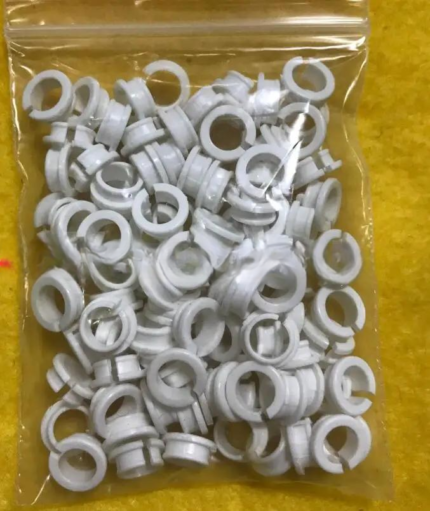 Tajima EF0613220000 EF0613210000 090460040020 090460040031 Presser ...$ 18.09View part →
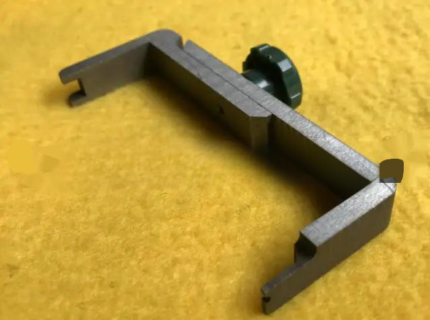 Tajima ZG0030400000 Needle Bar Connecting Stud Gauge for TMFX, TFMX...$ 39.09View part →
 EF6600000000 JHX-G8L1000 1000P/R Rotary Encoder for Chinese Tajima ...$ 92.49View part →
 Genuine Japanese MBL S5M1270 Timing Belt 20mm for Tajima TFMX, TMAR...$ 68.99View part →
 Tajima 080210360A79 UN25009400GN Needle Bar Reciprocator Set for KN...$ 23.99View part →
 Take-Up Lever Drive Crank Rod Assembly for Tajima TMFX TFMX TFGN & ...$ 10.99View part →
All Tajima TFGN parts → Sensors & Switches → Circuit Boards & Electronics → Belts, Pulleys & Gears →
3. Rotary Hook medium likelihood
How to tell
Frequent thread breaks, poor stitch quality (looping, loose stitches), birdnesting, or unusual noise from the hook area. Inspect the hook tip for burrs, nicks, or excessive wear. The bobbin case may also show wear.
Fix
- Power off the machine.
- Remove the needle plate and bobbin case.
- Carefully inspect the rotary hook point for any nicks, burrs, or dullness. Run a fingernail over the tip; it should be smooth.
- Check the bobbin case for any grooves or rough spots where thread might catch.
- If damage is found, the rotary hook or bobbin case should be replaced. While we don't list a complete rotary hook assembly, related parts like 'Tajima 0C0220080000 EF0910000000 Spring Hook' or 'Tajima 0J4201400000 FG7210000000 Slit Rotary Disk ME20-100' are available and contribute to hook function.
- Ensure proper hook timing is set after replacement, as per your machine's service manual.
Parts involved: Rotary hooks & bobbin cases → Screws, springs & small parts →
4. Needle Bar Reciprocator & Bushings medium likelihood
How to tell
Excessive play or wobble in the needle bars, unusual noise during needle bar movement, poor stitch formation, or needle breakage. Visual inspection may show wear on the reciprocator cam or bushings.
Fix
- Power off the machine.
- Gently grasp each needle bar and check for excessive side-to-side or front-to-back play. A small amount of play is normal, but significant looseness indicates wear.
- Inspect the needle bar reciprocator assembly for visible wear or damage.
- If excessive play is detected or the reciprocator is worn, consider replacing the assembly. Relevant parts include 'Tajima 080210360A79 UN25009400GN Needle Bar Reciprocator Set', 'Tajima Needle Bar Drive Reciprocator Assembly', 'Tajima 080210370A11 U89400000000 KN[A] Needle Bar Reciprocator Assembly', and 'Tajima Needle Bar Rubber Core Slider'.
- Bushings like 'Tajima EF0613220000 EF0613210000 090460040020 090460040031 Presser Foot Bushing Guide Collar' (though listed for presser foot, similar bushings are used in needle bar mechanisms) should also be checked for wear.
- Lubricate new components as per the machine's manual.
Parts involved: Needles & needle bars → Shafts, bearings & bushings → Head & mechanical parts →
5. Thread Guides & Tension Components medium likelihood
How to tell
Frequent thread breaks, inconsistent tension, shredding thread, or poor stitch quality. Visually inspect all thread guides, tension discs, and ceramic coils for nicks, burrs, or grooves.
Fix
- Power off the machine.
- Thread a piece of scrap thread through the entire thread path for each needle.
- Feel for any resistance, catching, or rough spots along the path.
- Inspect ceramic thread guides ('Tajima 516503010011 MX0521010000 Thread Guide Collar Ceramic Coil 1.8mm') for chips or grooves.
- Check tension discs for cleanliness and smooth operation. Ensure they open and close freely.
- Inspect the thread tension stud bolts ('Tajima 0C0210010012 FN0903000000 Thread Tension Stud Bolt') for damage.
- Replace any damaged or worn components. Clean all components thoroughly.
Parts involved: Thread path & tension →
6. Hook Knife Pulse Motor low likelihood
How to tell
Inconsistent thread trimming, failure of the trimmer to engage or retract, or unusual noises from the trimmer mechanism. The motor may feel hot or make grinding sounds.
Fix
- Power off the machine.
- Observe the trimmer mechanism during a test trim cycle (if safe to do so with covers off).
- Check for any obstructions preventing the knife from moving freely.
- If the motor is failing to actuate the knife reliably, or makes excessive noise, it may need replacement. The 'Tajima 0J6107802000 42mm Square Double-End Pulse Motor for TFGN Series Hook Knife' or 'Replacement 0J6107802000 Pulse Motor 42mm Square Double-End Hook Knife' are suitable replacements.
- Ensure proper wiring connections and secure mounting after replacement.
Parts involved: Motors & drivers → Cutters & trimmers →
7. Jump Solenoid low likelihood
How to tell
Skipped stitches during jump movements, inconsistent jump stitch length, or the presser foot not lifting/lowering correctly during jumps. The solenoid may not click or engage reliably.
Fix
- Power off the machine.
- Locate the jump solenoid (often near the needle bar assembly).
- Observe its operation during a test run (if safe) to see if it actuates consistently.
- Check for any mechanical obstructions preventing its plunger from moving freely.
- If the solenoid is not engaging or disengaging reliably, it may need replacement. The 'Tajima JP1-A-36 Jump Solenoid' is the correct part.
- Ensure proper electrical connection and mechanical linkage after replacement.
Parts involved: Solenoids & magnets →
8. Rotary Encoder low likelihood
How to tell
Machine losing position, misaligned designs, erratic head movement, or error codes related to motor feedback. This can indicate the encoder is sending incorrect or no signals.
Fix
- Power off the machine.
- Locate the rotary encoder (typically on the main motor or X/Y drive motors).
- Check for loose connections or physical damage to the encoder or its wiring.
- If the machine exhibits symptoms of position loss and other mechanical issues are ruled out, the encoder may be faulty. The 'EF6600000000 JHX-G8L1000 1000P/R Rotary Encoder' is a common replacement.
- Replacement often requires careful alignment and calibration; consult your machine's manual or a qualified technician.
Parts involved: Sensors & switches → Circuit boards & electronics →
Maintenance schedule
| When | What to do | Why |
|---|---|---|
| Daily (or every 8-10 operating hours) | Clean the rotary hook area and bobbin case. | Removes lint and thread debris that can cause thread breaks, poor stitch quality, and premature hook wear. |
| Daily (or every 8-10 operating hours) | Lubricate the rotary hook, needle bars, and other specified oiling points. | Reduces friction and wear on moving parts, ensuring smooth operation and preventing overheating. |
| Weekly (or every 40-50 operating hours) | Clean the entire thread path (thread guides, tension discs, take-up levers). | Removes wax and lint buildup that can cause inconsistent tension and thread breaks. |
| Weekly (or every 40-50 operating hours) | Inspect needles for damage and replace as needed. | Dull or bent needles cause skipped stitches, thread breaks, and fabric damage. |
| Monthly (or every 160-200 operating hours) | Inspect all timing belts for wear, cracks, or proper tension. | Worn or loose belts can lead to misaligned designs, skipped stitches, and machine synchronization issues. |
| Monthly (or every 160-200 operating hours) | Check the rotary hook for burrs, nicks, or excessive wear. | A damaged hook causes thread breaks, poor stitch quality, and can damage the bobbin case. |
| Monthly (or every 160-200 operating hours) | Inspect needle bar reciprocators and bushings for excessive play. | Excessive play leads to inconsistent stitch formation and needle breakage. |
| Quarterly (or every 500 operating hours) | Clean and inspect thread break sensors (TC Sensors). | Ensures accurate thread break detection and prevents false alarms or missed breaks. |
| Annually (or every 2000 operating hours) | Consider professional servicing for comprehensive inspection and adjustment. | A professional can identify subtle wear, adjust critical timings, and perform preventative maintenance beyond routine tasks. |
Stop and call a technician if
- If you encounter persistent error codes that you cannot resolve with basic troubleshooting.
- For complex mechanical adjustments like hook timing or needle bar timing after replacing major components.
- If there are electrical issues, motor failures, or problems with the main control board.
- When you are unsure about a repair procedure and risk causing further damage to the machine.
Prevent it coming back
- Always use high-quality needles, threads, and bobbin threads to reduce stress on machine components.
- Ensure proper thread tension settings for each design and fabric to prevent unnecessary strain on the thread path and hook.
- Operate the machine within its recommended speed limits.
- Keep your embroidery area clean and free of dust and debris, which can accumulate in moving parts.
- Follow the lubrication schedule diligently, using only recommended machine oil.
- Address minor issues promptly to prevent them from escalating into major repairs.
Frequently asked questions
How often should I lubricate my Tajima TFGN?
You should lubricate your Tajima TFGN daily or every 8-10 hours of operation, focusing on the rotary hook, needle bars, and other specified points. Always refer to your machine's manual for exact lubrication points and frequency.
What causes frequent thread breaks on a Tajima TFGN?
Frequent thread breaks can be caused by worn thread path components (guides, tension discs), a damaged rotary hook, incorrect needle size or type, improper tension settings, burrs on the needle plate, or a faulty thread break sensor. Regular inspection and replacement of worn parts are key.
How do I know if my timing belt needs replacing?
Signs of a worn timing belt include visible cracks, fraying, missing teeth, excessive stretching causing slack, unusual noises (squealing or flapping), or issues like skipped stitches and design misalignment. Inspect belts regularly and replace them if any damage is found.
Can I perform all maintenance myself?
Many routine maintenance tasks like cleaning, lubrication, and basic part replacement (e.g., thread sensors, belts) can be performed by an operator. However, complex repairs, timing adjustments, or electrical issues should be handled by a qualified technician to avoid further damage.
What is the most important maintenance task for a Tajima TFGN?
Daily cleaning and lubrication are arguably the most important tasks. Keeping the machine free of lint and properly oiled prevents premature wear on critical moving parts, ensuring smooth operation and extending the life of your machine.
Did this guide fix your machine?
Rate it - it helps other operators find the right fix.
Not sure which part is failing?
Need the logo stitched too?
Get your logo digitized by the people who know this machine
Upload the artwork, see the stitch count and the exact price in 10 seconds, then order with a free sew-out preview. $1 per 1,000 stitches, $10 minimum, 24-hour delivery. Vector conversion from $12.
After the fix
Fixed it? Keep the rest of the shop moving.
OS 360 is the shop software from the team behind this parts store. Every job keeps its status, deadline and owner while a TFGN head is down, restock alerts fire for needles, hooks and bobbins before you run dry, and quotes, invoices and payment live in one place.
- Jobs with status, deadline and owner - nothing slips during downtime
- Inventory with restock alerts, this store one click away
- Instant quotes, invoices and one place to collect payment