
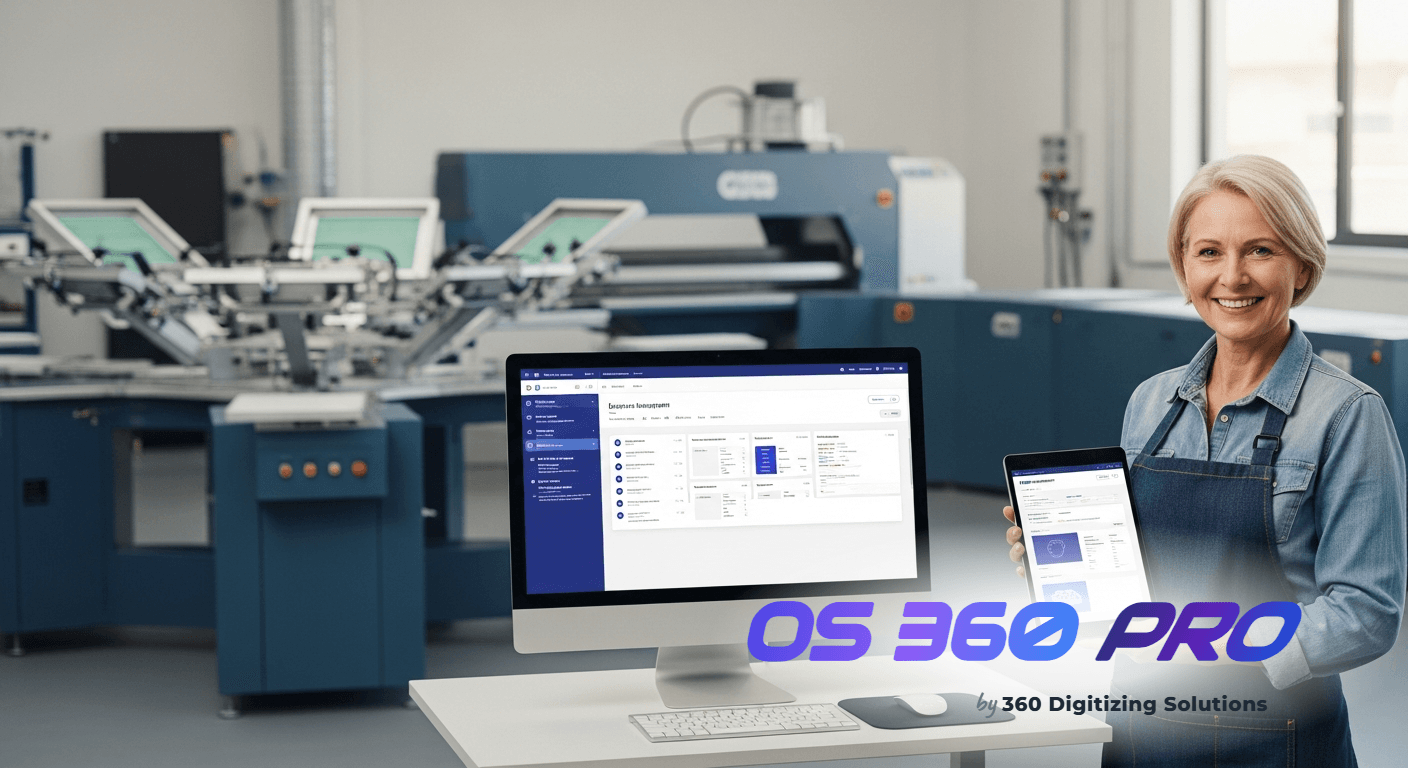
The daily rhythm of an apparel decoration shop often feels less like a smooth manufacturing line and more like a high-stakes juggling act.
One moment, your screen printing department is swamped with new orders, screens piling up for reclaiming and exposure. The next, your embroidery machines are humming along, but the setup team is idle, waiting for the next job to be prepped.
This uneven workflow is a common, frustrating reality for shop owners. It’s a constant battle to keep everyone productive and ensure deadlines are met without burning out your specialized staff.
This operational chaos leads to significant inefficiencies, impacting both your bottom line and your team’s morale. Is one department backlogged while another sits waiting for work? This common scenario highlights a critical need for greater flexibility. The solution often lies in strategic cross-training staff screen printing and embroidery operations.
Varying order queues can stall screen prep while embroidery is overloaded, or vice versa, creating bottlenecks that ripple through your entire production schedule. Learning how to cross-train crew members effectively is essential to keep production lines fluid. It transforms your team into a versatile, adaptable workforce, ready to tackle whatever comes next.
1. The Bottleneck Blues: Uneven Workloads & Stalled Production
Apparel decoration shops frequently face the challenge of unpredictable demand.
One week, you might have a surge of large screen printing orders requiring extensive setup and production time. The following week, the bulk of your work could shift to intricate embroidery designs, demanding different skills and equipment.
This inherent variability creates significant operational headaches.
Dept.
Status
Assignee
Screen
In Progress
Mark
Emb.
Queued
Sarah
Screen
Completed
Alex
Emb.
Setup
Mark
Screen
Queued
Sarah
This imbalance often means that while one department is overwhelmed, another has staff sitting idle, waiting for work. This isn’t just inefficient; it’s a direct drain on your resources. You’re paying wages for unproductive time, and critical deadlines can slip, leading to frustrated customers and rushed, error-prone work.
- Manual Workload Balancing: Shop owners typically rely on whiteboards, spreadsheets, or even mental notes to track current jobs and assign tasks. This requires constant oversight and manual updates.
- Document Standard Operating Procedures (SOPs): Create detailed, step-by-step guides for common tasks in both departments, such as screen reclaiming, hooping garments, and basic quality checks.
- Schedule Rotating Shifts: Implement a system where staff members spend dedicated time in different departments each week or day, gaining exposure to various tasks.
The OS 360 Pro Solution
- Job Scheduling: OS 360 Pro provides a clear, centralized overview of all jobs, their current status, and assigned personnel. You can instantly see where bottlenecks are forming and reallocate resources.
- Enhanced Productivity: By visualizing workloads, you can proactively move cross-trained staff to high-priority areas, keeping all production lines moving efficiently. This minimizes idle time and maximizes output.
- Data-Driven Decisions: Core analytics allow you to track job completion times and resource utilization, helping you identify patterns and optimize future staffing and training strategies.
2. Skill Gaps & Training Inefficiencies: The Single Point of Failure
Many apparel decoration shops inadvertently foster a culture of hyper-specialization. An employee becomes exceptionally skilled at operating the automatic screen press, while another excels solely at digitizing embroidery files.
While expertise is valuable, over-reliance on a few key individuals creates a “single point of failure.” If that specialized employee is sick, on vacation, or simply overloaded, the entire workflow grinds to a halt.
This lack of versatility leads to bottlenecks and missed opportunities. Without cross-trained staff, you can’t easily shift personnel to address sudden surges in demand for a particular department. Training, when it happens, is often ad-hoc, inconsistent, and not formally tracked, leading to varying skill levels and difficulties in maintaining quality standards across tasks.
- On-the-Job Shadowing: Pair experienced staff with trainees for informal learning, relying on verbal instruction and observation.
- Informal Training Sessions: Schedule occasional, unstructured training during slower periods, often without clear objectives or progress tracking.
The OS 360 Pro Solution
- Centralized Communication (WhatsApp Integration): Share SOPs, training videos, and best practices directly through a familiar platform. This ensures everyone has access to consistent, up-to-date training materials, facilitating structured cross-training.
- Standardized Workflow through Order Approvals: Use the system for job approvals and quality checks, ensuring that even newly cross-trained staff follow consistent procedures. This helps maintain high quality across all tasks, regardless of who performs them.
3. The Order Queue Chaos: Unpredictable Demand & Resource Allocation
Managing an apparel decoration shop means constantly reacting to an unpredictable stream of orders. One day, you might receive several large corporate orders for screen-printed t-shirts, demanding quick turnaround on design approval and production. The next, a series of complex, multi-color embroidery jobs for custom patches could flood your queue, each requiring meticulous setup and quality control.
Client
Status
Amount
Acme Corp
Paid
$1,250.00
Sports Club
Pending
$780.00
Local Band
Paid
$2,100.00
Design Studio
Overdue
$450.00
This unpredictable demand makes resource allocation a nightmare. Without a clear system, you’re constantly guessing which department needs more hands, often leading to last-minute overtime, missed deadlines, or the painful decision to turn down profitable jobs because you simply don’t have the flexible staff to handle them. This directly impacts revenue and growth.
- Manual Quoting: Generating quotes by hand or using basic spreadsheet templates, which can be time-consuming and prone to errors in pricing and production estimates.
- Spreadsheet Revenue Tracking: Manually entering sales and expenses into a spreadsheet to get a basic idea of cash flow, often after the fact.
The OS 360 Pro Solution
- Quote Generation: Quickly generate accurate quotes that reflect labor and material costs. This helps you understand the true profitability of potential jobs and better plan for resource needs.
- Cloud-Based Invoice Tracking & Automated Payments: Track invoice statuses instantly and capture payments directly via Stripe & PayPal. This provides a real-time view of incoming revenue, helping you identify busy periods and proactively cross-train staff.
Five more ways OS 360 Pro keeps your shop ahead
Need help optimizing your stitch counts in the ink mixing & reclaiming department?
Managing stitch counts challenges in your ink mixing & reclaiming line is critical. Learn the standard spreadsheet metrics to identify and eliminate excessive costs.
Need help auditing your setup times in the direct-to-garment dtg department?
Managing setup times challenges in your direct-to-garment dtg line is critical. Learn the standard spreadsheet metrics to identify and eliminate unapproved designs.
Need help reducing your rush fees in the screen printing department?
Managing rush fees challenges in your screen printing line is critical. Learn the standard spreadsheet metrics to identify and eliminate incorrect setups.
Need help optimizing your underbase setups in the digitizing prep department?
Managing underbase setups challenges in your digitizing prep line is critical. Learn the standard spreadsheet metrics to identify and eliminate double-data entry.
The True Cost of Manual Management
See exactly how a modern shop management system compares against traditional workflows.
| Comparison Aspect | Manual Sheets & Gut Feeling | OS 360 Pro Analytics |
|---|---|---|
| Workload Visibility | Limited Oversight Reliance on physical whiteboards or disconnected spreadsheets means delayed updates and poor real-time understanding of bottlenecks. | Real-time Job Scheduling Instantly see all jobs, statuses, and assigned staff across departments, enabling quick reallocation of cross-trained personnel. |
| Training & SOPs | Inconsistent Knowledge Verbal instructions and scattered documents lead to varied skill levels and difficulty in standardizing procedures for cross-trained staff. | Centralized Communication Utilize WhatsApp integration to share and manage all SOPs and training materials consistently, ensuring uniform skill development. |
| Financial Tracking | Reactive Revenue Management Manual entry into spreadsheets provides historical data, making it hard to predict cash flow or identify trends for proactive staffing. | Automated Payment & Invoice Tracking Live Stripe & PayPal integrations and cloud-based invoice tracking offer instant revenue insights, aiding in demand-based staff deployment. |
| Quote & Order Management | Error-Prone Estimating Manual quote generation increases the risk of miscalculations, leading to underpriced jobs or inaccurate production time estimates. | Streamlined Quote Generation & Approvals Generate accurate quotes quickly and manage client approvals efficiently, ensuring transparent pricing and smooth job initiation. |
| Operational Flexibility | Rigid Departmentalization Limited ability to shift staff between screen printing and embroidery, resulting in idle time in one area while another is overloaded. | Enhanced Resource Agility With integrated job tracking and communication, you can effectively leverage your cross-trained team to adapt to fluctuating demand. |