
Blog
Juki LU-1508 Series: Common Problems & Fixes


Quick answer: Most Juki LU-1508 problems like skipped stitches or thread breaks are due to incorrect needle installation, improper threading, tension issues, or worn rotary hooks. Start by checking these common culprits.
The Juki LU-1508 series is a robust and reliable walking foot industrial sewing machine, but like any heavy-duty equipment, it can encounter issues. This guide covers the most common problems reported by operators, offering clear steps to diagnose and fix them, helping you get back to sewing with minimal downtime.
Two-minute checks before you open anything
- Is the needle inserted correctly and not bent or dull?
- Is the machine threaded correctly, both top and bobbin?
- Are the tension settings appropriate for your thread and material?
- Is the bobbin wound evenly and inserted correctly?
- Is there any tangled thread or lint in the bobbin case or rotary hook area?
- Is the oil level sufficient in the reservoir?
1. Skipped Stitches or Inconsistent Stitch Quality high likelihood
How to tell
Stitches are missing, uneven, or form loops on the top or bottom of the material. The machine may sound like it's sewing but no stitch is formed.
Fix
- Ensure the needle is inserted correctly, fully seated, and facing the right direction (scarf to the hook).
- Verify the needle is the correct type and size for your thread and material.
- Re-thread the entire machine, ensuring the thread is properly seated in all guides and tension discs.
- Check the upper thread tension; it might be too loose or too tight. Adjust incrementally.
- Inspect the bobbin case and bobbin for proper winding and tension. Ensure the bobbin is inserted correctly.
- Examine the needle for bends, burrs, or a dull point; replace if necessary.
- Check for burrs or nicks on the rotary hook that could be snagging the thread. If damaged, the hook may need replacement.
A worn or damaged rotary hook can cause persistent skipped stitches. For LU-1508, consider the JUKI B1830-563-BA0 Large Rotary Hook for LU-563, LU-563-3, LU-1508, LU-1508H, LU-1509NH.
Parts involved: Needles & needle bars → Thread path & tension → Rotary hooks & bobbin cases →
2. Frequent Thread Breakage high likelihood
How to tell
The upper or bobbin thread repeatedly breaks during sewing, often with a snapping sound.
Fix
- Check the entire thread path for any sharp edges, burrs, or obstructions on thread guides, tension discs, or the needle plate.
- Ensure the thread is not too old, brittle, or of poor quality.
- Verify the needle is correctly sized for the thread; a needle too small can cause thread abrasion and breakage.
- Reduce upper thread tension slightly if it's too tight.
- Inspect the needle for bends, burrs, or a dull point; replace if any damage is found.
- Check the rotary hook for burrs or nicks that could be cutting the thread. Smooth with fine emery cloth or replace if severely damaged.
- Ensure the bobbin is wound evenly and not overfilled, and that the bobbin case has no sharp edges.
A rough or damaged rotary hook can be a primary cause. Consider replacing with JUKI B1830-563-BA0 Large Rotary Hook for LU-563, LU-563-3, LU-1508, LU-1508H, LU-1509NH if inspection reveals damage.
Parts involved: Needles & needle bars → Thread path & tension → Rotary hooks & bobbin cases →
Parts you may need for Juki
In stock, tested before dispatch, Buyer Protection on every order. Part types for this problem: Rotary hooks & bobbin cases, Needles & needle bars, Thread path & tension, Presser feet & sewing parts.
 Flying Tiger DBx1 Industrial Lockstitch Needles, 100 pcs/box, Sizes...$ 12.09View part →
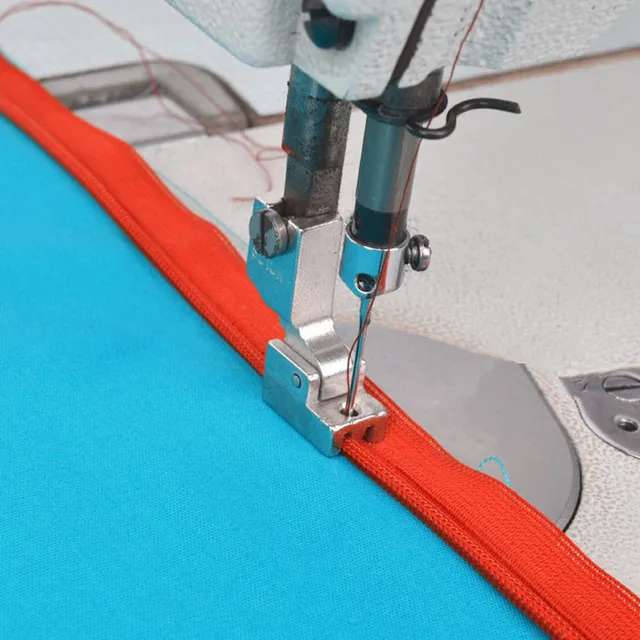 Industrial Sewing Machine Zipper Presser Foot S518N - Compatible wi...$ 8.49View part →
 Flying Tiger HAX1 15x1 Sewing Machine Needles 100-Pack for Brother ...$ 13.99View part →
 Industrial BC-DBZ(1)-NBL6 Bobbin Case for Barudan TZ1 LE2, Brother ...$ 8.49View part →
 BC-DBZ(1)-NBL6 Bobbin Case for Barudan TZ1, Brother BAS-400, JUKI L...$ 8.49View part →
 Rotary Hook HSH-7.94B HSH-7.94A B1830-127-OAO for JUKI DDL-5550 DDL...$ 16.49View part →
All Juki parts → Rotary Hooks & Bobbin Cases → Needles & Needle Bars → Thread Path & Tension →
3. Material Feeding Problems (Uneven or No Feed) medium likelihood
How to tell
The material does not move smoothly, stitches are inconsistent in length, or the machine seems to 'drag' the fabric.
Fix
- Check the presser foot pressure; it might be too low for the material thickness. Adjust the pressure screw on top of the machine head.
- Ensure the feed dogs are clean and free of lint or debris. Use a brush to clear any buildup.
- Verify the feed dog height is appropriate for your material. Consult your machine manual for adjustment procedures.
- Check for any obstructions under the needle plate that might impede feed dog movement.
- Inspect the walking foot mechanism for free movement and ensure it's properly engaged.
- Ensure the stitch length setting is not at zero or too short for the material.
Parts involved: Presser feet & sewing parts → Head & mechanical parts → Lubrication & maintenance →
4. Machine Jamming or Seizing medium likelihood
How to tell
The handwheel is difficult or impossible to turn, or the machine stops abruptly with a loud thud.
Fix
- Immediately turn off the machine. Remove the needle and presser foot.
- Carefully remove the needle plate and inspect the bobbin area for tangled thread, fabric scraps, or debris.
- Remove the bobbin case and rotary hook. Clean out all thread snarls and lint from the hook area.
- Check the needle bar and presser bar for any obstructions or binding.
- If the machine still feels stiff after cleaning, check for any loose screws or parts that might be binding the mechanism.
- Ensure the machine is adequately lubricated according to the manufacturer's recommendations. Low oil can cause seizing.
Sometimes a severe jam can damage the rotary hook. If the hook is bent or cracked, it will need replacement. For LU-1508, use JUKI B1830-563-BA0 Large Rotary Hook for LU-563, LU-563-3, LU-1508, LU-1508H, LU-1509NH.
Parts involved: Rotary hooks & bobbin cases → Lubrication & maintenance → Screws, springs & small parts → Head & mechanical parts →
5. Excessive Noise or Vibration low likelihood
How to tell
The machine produces unusual grinding, knocking, or squealing sounds, or vibrates more than usual during operation.
Fix
- Identify the source of the noise. Is it coming from the head, the motor, or the stand?
- Check for loose screws on the machine head, needle plate, or covers. Tighten any loose fasteners.
- Ensure the machine is properly lubricated. Lack of oil can cause squealing or grinding.
- Inspect the rotary hook area for any foreign objects or loose parts.
- Check the motor belt for wear or proper tension. A loose belt can cause flapping noises.
- If the noise is a knocking sound, it could indicate wear in bearings or shafts. This often requires professional inspection.
Parts involved: Lubrication & maintenance → Screws, springs & small parts → Belts, pulleys & gears → Shafts, bearings & bushings → Head & mechanical parts →
Maintenance schedule
| When | What to do | Why |
|---|---|---|
| Daily | Check oil level and top up if necessary. | Ensures continuous lubrication for moving parts, preventing wear and overheating. |
| Daily/Per Shift | Clean lint and thread from the bobbin case, rotary hook, and feed dogs. | Prevents thread jams, skipped stitches, and maintains stitch quality. |
| Weekly | Wipe down the machine exterior and check for loose screws. | Maintains cleanliness and prevents minor issues from escalating. |
| Monthly | Inspect thread guides, tension discs, and needle plate for burrs or damage. | Identifies potential causes of thread breakage or poor stitch quality before they become major problems. |
| Every 6-12 Months | Change the oil in the reservoir (refer to your manual for exact frequency). | Ensures optimal lubrication with clean oil, extending machine lifespan. |
Stop and call a technician if
- If the machine continues to jam or seize after thorough cleaning and inspection.
- If you suspect internal mechanical damage (e.g., bent shafts, broken gears).
- If the machine is making persistent grinding or knocking noises that you cannot identify or resolve.
- If electrical issues arise (e.g., motor not running, control panel errors).
- If you are unsure about adjusting complex timing mechanisms like hook timing or feed dog synchronization.
Prevent it coming back
- Always use high-quality needles appropriate for your material and thread.
- Regularly clean lint and thread debris from the bobbin area, feed dogs, and tension discs.
- Ensure the machine is always properly lubricated with the correct type and amount of oil.
- Inspect needles frequently for bends, burrs, or dullness and replace them proactively.
- Follow proper threading procedures meticulously every time.
- Avoid forcing thick materials through the machine if it struggles; adjust settings or use appropriate tools.
- Perform routine maintenance checks as outlined in your machine's manual.
Frequently asked questions
Why is my Juki LU-1508 skipping stitches?
Skipped stitches on a Juki LU-1508 are most commonly caused by an incorrectly inserted or damaged needle, improper threading, incorrect thread tension, or a worn/damaged rotary hook. Always start by checking the needle and re-threading the machine.
What should I do if my Juki LU-1508 machine jams?
If your Juki LU-1508 jams, immediately turn off the power. Carefully remove the needle, presser foot, and needle plate. Inspect the bobbin area and rotary hook for tangled thread or debris. Clean thoroughly. If the handwheel still won't turn, do not force it; consult your manual or a technician.
How often should I oil my Juki LU-1508?
The Juki LU-1508 is an industrial machine with an automatic lubrication system. Ensure the oil reservoir is always filled to the correct level with the recommended oil type. Check the oil level daily and change the oil periodically as recommended in your machine's official manual, typically every 6-12 months depending on usage.
My Juki LU-1508 is making a strange noise. What could it be?
Unusual noises can indicate several issues. Check for loose screws, ensure proper lubrication, inspect the rotary hook area for obstructions, and check the motor belt. If the noise persists or sounds like grinding, it may indicate internal wear and requires further investigation.
Did this guide fix your machine?
Rate it - it helps other operators find the right fix.
Not sure which part is failing?
Need the logo stitched too?
Get your logo digitized by the people who know this machine
Upload the artwork, see the stitch count and the exact price in 10 seconds, then order with a free sew-out preview. $1 per 1,000 stitches, $10 minimum, 24-hour delivery. Vector conversion from $12.
After the fix
Fixed it? Keep the rest of the shop moving.
OS 360 is the shop software from the team behind this parts store. Every job keeps its status, deadline and owner while a Juki head is down, restock alerts fire for needles, hooks and bobbins before you run dry, and quotes, invoices and payment live in one place.
- Jobs with status, deadline and owner - nothing slips during downtime
- Inventory with restock alerts, this store one click away
- Instant quotes, invoices and one place to collect payment





