
What is this case study? This page documents a real completed Digitizing order produced by 360 Digitizing Solutions for a Left Chest placement on Polyester. To protect client privacy, company and brand names have been anonymized. Browse specs, before/after images, and production notes below.
Mastering Left-Chest Vampire Embroidery on Polyester
See how our team handled a complex left-chest apparel order, translating intricate artwork into a clean, production-ready stitch file for performance fabrics.
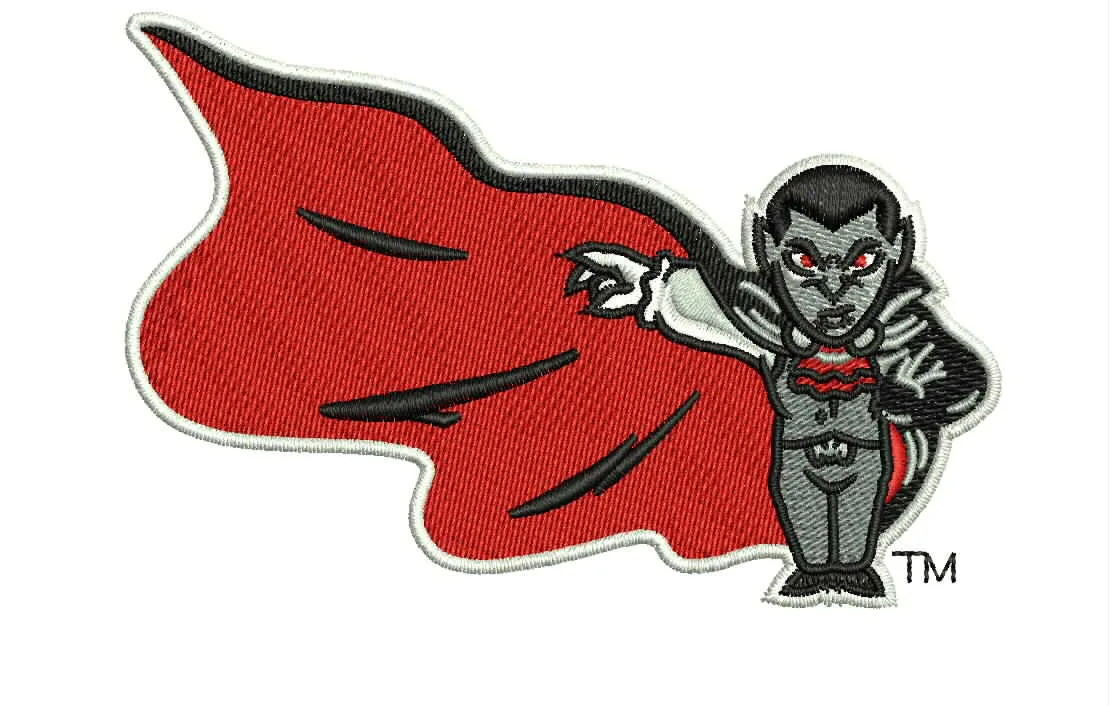
Final Digitized Proof
Order Specifications
Project Background
Polyester is notoriously unforgiving when paired with heavy stitch counts. If the density is set too high, the fabric tends to pucker and bunch up around the design borders. Our client needed an expert hand to convert the artwork into a file that would run smoothly on commercial embroidery machines without causing thread breaks or material distortion.
Another major hurdle involved preserving the fine details of the character’s features within a relatively tight physical boundary. Scaling down complex artwork often results in muddy letters or lost lines if the stitch angles are not mapped out carefully from the start. Our team had to evaluate every single path to determine the optimal entry and exit points for the needle.
By planning the production strategy ahead of time, we ensured that the final layout would maintain its visual punch. The client required a reliable, production-ready file that could be loaded straight onto their multi-head machines for an immediate run without requiring manual trial-and-error adjustments on the shop floor.
Technical Production Process
The stitch density was meticulously calculated across all 14,836 stitches to keep the profile thin yet opaque. By alternating stitch angles between adjacent sections, we minimized heavy buildup and reduced the risk of needle deflections. This careful angle management allows the thread to lie flat and clean against the garment surface.
Trimming and jump stitches were kept to an absolute minimum through optimized path sequencing. This cuts down production time significantly for the shop floor operator, ensuring that the machine runs continuously from start to finish without unnecessary stops or manual snips.
- ✓ Applied tailored pull compensation to combat polyester shrinkage and puckering.
- ✓ Distributed 14,836 stitches evenly to preserve fine details at 3.25×2.2 inches.
- ✓ Optimized color stop sequences and tie-ins for high-speed multi-head production.
Final Outcome
This project highlights our ability to balance creative detail with practical manufacturing constraints. By focusing on clean vector conversion and intelligent stitch pathing, we help apparel decorators save time, reduce material waste, and deliver superior embroidered goods to their own customers every single time.
Ready for Flawless Production?
We deliver production-ready files optimized for your exact machines and fabrics, reducing thread breaks and maximizing shop efficiency.
Frequently Asked Questions
What fabric was used for this embroidery project? +
This project was executed on performance polyester fabric, requiring precise density control to prevent puckering.
What is the stitch count for this design? +
The design features a total of 14,836 stitches scaled precisely to a 3.25×2.2 inch left-chest placement.
Disclaimer: All logos and designs are the property of their respective copyright/trademark owners. This case study is for the sole purpose of demonstrating 360 Digitizing Solutions’ technique and quality. We do not claim ownership of the original artwork, nor are these designs for sale.
Brand Representative? Request Portfolio Privacy/Removal (Corporate Email Required)