
What is this case study? This page documents a real completed Digitizing order produced by 360 Digitizing Solutions for a Left Chest placement on Polyester. To protect client privacy, company and brand names have been anonymized. Browse specs, before/after images, and production notes below.
Mastering Complex Marine Unit Embroidery on Polyester Fabric
A local apparel decorator approached us with a detailed, high-stitch-count crest that needed to fit cleanly on performance polyester. See how our expert team solved the unique challenges of this large left-chest layout.
Final Digitized Proof
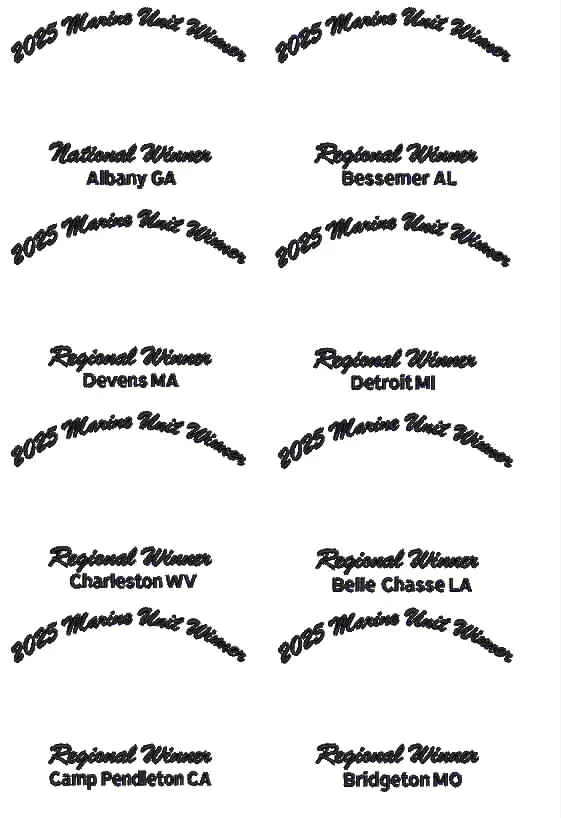
Order Specifications
Project Background
Polyester is notoriously tricky for high-density stitching. Without proper stabilization and planning, heavy satin columns and dense fills cause the synthetic fabric to pull inward, resulting in puckering and warped borders. The client needed a reliable partner who understood how to balance high stitch counts with fabric limitations without sacrificing the visual impact of the original emblem.
Our team stepped in to review the requirements and map out a bulletproof digitizing strategy. We analyzed every line, curve, and fill area to ensure the 48,954 stitches would distribute evenly across the garment. The goal was to maintain absolute structural integrity while delivering a clean, professional finish that the end customer would be proud to wear.
By taking a careful, methodical approach to the artwork interpretation, we eliminated common production pitfalls before they ever reached the embroidery floor. Our experienced digitizers focused heavily on pull compensation settings, knowing that polyester requires precise adjustments to counteract the natural elasticity of the textile during high-speed runs.
Technical Production Process
Next, we optimized the stitch directions for all fill areas. Rather than running every element in a single direction, we alternated angles to reduce vertical pull and distribute thread tension more evenly across the garment. We also adjusted the density of the satin borders, giving them enough punch to stand out cleanly while avoiding needle deflection or thread breakage on multi-head commercial machines.
Trimming and jump stitches were carefully mapped out to minimize machine downtime and keep the back of the garment clean. Every color section was sequenced logically to ensure smooth transitions from background fills to foreground details, drastically reducing the risk of birdnesting or thread fraying during production runs.
- ✓ Applied custom pull compensation tailored specifically for polyester textiles.
- ✓ Utilized a robust edge-walk underlay foundation to eliminate fabric puckering.
- ✓ Optimized stitch sequencing to reduce trims and prevent thread breaks on large designs.
Final Outcome
The client successfully completed their entire run of garments on schedule, saving valuable time and minimizing wasted blanks. This project stands as another great example of how precise technical planning and expert file preparation make all the difference in commercial apparel decoration.
Ready for Flawless Production?
We deliver production-ready files optimized for your exact machines and fabrics, reducing thread breaks and maximizing shop efficiency.
Frequently Asked Questions
What fabric was used for this embroidery project? +
This design was digitized specifically for polyester fabric, requiring precise density and underlay adjustments to prevent puckering.
How many stitches were in the final digitized file? +
The finalized left-chest design consists of 48,954 stitches across an 8.6×12.75 inch area.
Disclaimer: All logos and designs are the property of their respective copyright/trademark owners. This case study is for the sole purpose of demonstrating 360 Digitizing Solutions’ technique and quality. We do not claim ownership of the original artwork, nor are these designs for sale.
Brand Representative? Request Portfolio Privacy/Removal (Corporate Email Required)