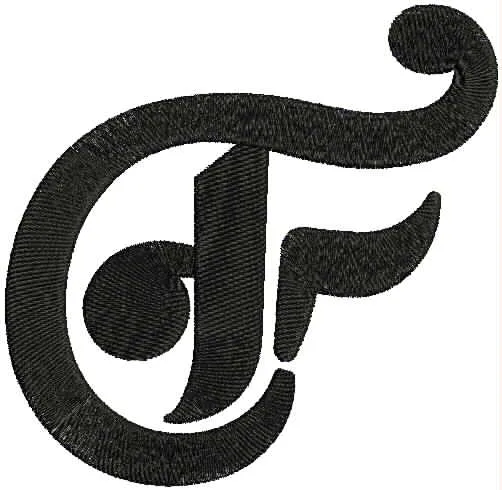
What is this case study? This page documents a real completed Digitizing order produced by 360 Digitizing Solutions for a Centered placement on Canvas Bag. To protect client privacy, company and brand names have been anonymized. Browse specs, before/after images, and production notes below.
Precision Digitizing for Durable Canvas Bags
This project required precise structural alignment for a heavy-duty canvas bag. Our team delivered a clean, production-ready file that ensures perfect registration on every stitch.
Customer Original Artwork

Final Digitized Proof
Order Specifications
Project Background
The design needed to be centered on a 4×3.5 inch area. Because canvas is thicker than standard cotton or polyester, the digitizing process required specific adjustments to the pull compensation. Without these adjustments, the design would likely distort or lose its intended registration during the actual run on an industrial embroidery machine.
Our team carefully reviewed the artwork provided by the client. We identified several areas where the line work could potentially cause issues on such a heavy material. The goal was to preserve the integrity of the design while ensuring that the stitch path was optimized for a stable, high-quality outcome on a commercial scale.
We communicated with the client to understand their specific machine capabilities, as this allows us to tailor the file for their environment. This collaborative approach is what allows us to deliver files that do not require constant monitoring by the operator. By addressing these challenges upfront, we saved the client time and prevented potential waste on expensive blank canvas bags.
Ultimately, the client needed a result that looked professional and remained durable through everyday use. We focused on creating a balanced file that respects the physical constraints of the canvas bag while delivering a high-impact aesthetic that meets the client’s quality standards.
Technical Production Process
We carefully calculated the stitch density, opting for a slightly higher count than usual to ensure full coverage over the rough texture of the canvas. By adjusting the angle of the stitches, we directed the tension away from the center of the design, which helps prevent the fabric from puckering during the embroidery process.
Furthermore, we set custom pull compensation values to account for the way canvas behaves during the stitching process. This ensures that the outlines match up perfectly with the fill areas. Our team also optimized the trim commands to reduce the machine’s travel time, which significantly improves overall production efficiency.
Finally, we verified the entire stitch sequence to ensure minimal thread breaks. By organizing the elements in a logical order, the embroidery machine can complete the design in a continuous, smooth motion without unnecessary stops. This technical preparation is critical for maintaining consistency across a large batch of bags.
- ✓ Applied dual-layer underlay to stabilize the coarse canvas surface.
- ✓ Adjusted pull compensation to maintain sharp edges on all design elements.
- ✓ Optimized jump stitch paths to reduce production time and prevent thread tangling.
Final Outcome
Our client reported that the file ran perfectly on their machines on the first try. By providing a production-ready file, we helped them improve their throughput and reduce downtime. The finished bags look professional, clean, and ready for retail, demonstrating the value of precise, expert digitizing work.
Ready for Flawless Production?
We deliver production-ready files optimized for your exact machines and fabrics, reducing thread breaks and maximizing shop efficiency.
Frequently Asked Questions
How do you handle embroidery on heavy canvas fabric? +
Canvas is a dense, non-stretch material. We use a high-density underlay and specific compensation settings to ensure the design sits perfectly on top without puckering or sinking.
What is the importance of stitch density for bags? +
Since canvas bags are often used as promotional items that undergo frequent handling, we adjust the density to ensure the embroidery remains secure and durable over time.
Disclaimer: All logos and designs are the property of their respective copyright/trademark owners. This case study is for the sole purpose of demonstrating 360 Digitizing Solutions’ technique and quality. We do not claim ownership of the original artwork, nor are these designs for sale.
Brand Representative? Request Portfolio Privacy/Removal (Corporate Email Required)