
Blog
Tajima TME-HC Series: Common Problems & Fixes Guide


Quick answer: Common Tajima TME-HC problems include thread breaks, skipped stitches, machine not moving, and data transfer issues. Most can be resolved by checking thread path, needle, timing, lubrication, and inspecting driver boards or the USB reader.
The Tajima TME-HC series is a workhorse in the embroidery industry, known for its reliability. However, like all machinery, it can encounter issues over time. This guide addresses the most common problems reported by operators of the TME-HC series, providing clear steps to diagnose and fix them. We focus on practical solutions you can implement at the machine, often involving parts we stock at 360 Digitizing Shop.
Two-minute checks before you open anything
- Is the machine plugged in and powered on?
- Are all emergency stop buttons disengaged?
- Is the thread path clear and correctly threaded?
- Is the needle new, correctly inserted, and appropriate for the job?
- Is the bobbin correctly wound and inserted?
- Is the fabric properly hooped and stabilized?
1. Frequent Thread Breaks high likelihood
How to tell
The machine stops frequently with a 'Thread Break' error, or you notice the thread snapping during operation. This can happen at various points in the stitch cycle.
Fix
- Check the thread path for any snags, burrs, or obstructions from the cone to the needle.
- Ensure the thread is correctly seated in all tension discs and guides.
- Replace the needle with a new, correct size and type for your fabric and thread. Check for bent or dull needles.
- Inspect the rotary hook for nicks or burrs. Clean out any lint or thread jams.
- Adjust upper and bobbin thread tension. Start with factory recommendations and fine-tune as needed.
- Verify the take-up lever is moving freely and not binding.
- Check the thread take-up spring for proper tension and function.
Parts involved: Needles & needle bars → Thread path & tension → Rotary hooks & bobbin cases → Screws, springs & small parts →
2. Skipped Stitches or Poor Stitch Quality high likelihood
How to tell
Embroidery appears uneven, stitches are missing in areas, or loops are visible on the fabric surface. The design may look sparse or incomplete.
Fix
- Ensure the fabric is properly hooped, taut, and stable without puckering.
- Replace the needle with a new, sharp needle appropriate for the material.
- Verify the needle is inserted correctly and fully seated in the needle bar with the scarf facing the hook.
- Check the rotary hook timing. If the hook is not catching the needle thread loop consistently, timing adjustment is needed (consult your machine manual).
- Inspect the presser foot height and ensure it's appropriate for the fabric thickness.
- Clean out any lint or debris from the bobbin case area and under the needle plate.
Parts involved: Needles & needle bars → Rotary hooks & bobbin cases → Presser feet & sewing parts → Lubrication & maintenance →
Parts you may need for Tajima
In stock, tested before dispatch, Buyer Protection on every order. Part types for this problem: Needles & needle bars, Thread path & tension, Rotary hooks & bobbin cases, Screws, springs & small parts.
 TAJIMA DU-10 XY Driver Board EH5404000000 MP-117-1-A for TME-HC, TM...$ 156.49View part →
 Hirose HSH-7.94ATR(MTQ) KHS12-RYP Rotary Hook for Tajima, Barudan, ...$ 18.09View part →
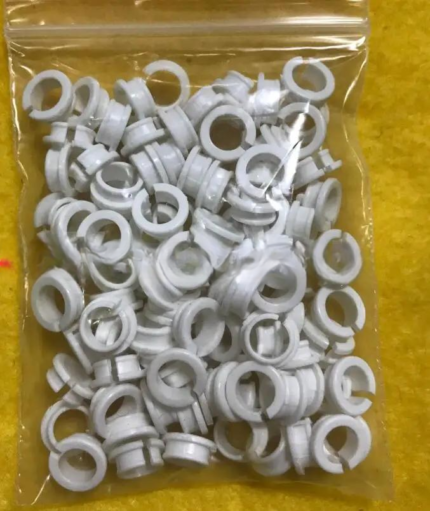 Tajima EF0613220000 EF0613210000 090460040020 090460040031 Presser ...$ 18.09View part →
 Koban KHS12-RYP Rotary Hook with Trimmer for Tajima, Barudan, SWF, ...$ 37.29View part →
 Gotek SFRM72-FU Floppy Drive Emulator USB Reader for Tajima, Baruda...$ 59.29View part →
 Groz-Beckert DBXK5 FG/SUK Embroidery Needles (100 Pcs) for Tajima, ...$ 33.99View part →
All Tajima parts → Needles & Needle Bars → Thread Path & Tension → Rotary Hooks & Bobbin Cases →
3. Machine Not Moving (X/Y Axis or Head) medium likelihood
How to tell
The machine powers on, but the pantograph (X/Y frame) does not move, or the embroidery head does not cycle. You might hear a humming sound without movement, or no response at all when starting a design.
Fix
- Check for any physical obstructions preventing movement of the pantograph or head.
- Verify all emergency stops are disengaged and safety covers are closed.
- Inspect the main power supply and connections to the machine.
- If the X/Y movement is affected, check the connections to the XY driver board. Consider replacing the TAJIMA DU-10 XY Driver Board EH5404000000 MP-117-1-A for TME-HC if other checks fail.
- If the head is not moving, check for mechanical binding or issues with the main motor or its driver card. The Tajima 0J2201101017 Electronic Driver Card MP-221-1B-A for TME-HC is a common component for head control.
- Listen for unusual noises from motors or gears that might indicate a mechanical failure.
Multiple DU-10 XY Driver Board variants exist for TME-HC. Confirm the exact part number needed for your machine: TAJIMA DU-10 XY Driver Board EH5404000000 MP-117-1-A for TME-HC, Tajima DU-10 XY Driver Board MP-117-1-A for TME-HC, Tajima DU-10 XY Driver Board MP-117-6 for TME-HC, or Tajima DU-10 Driver Board MP117 0J2201000090 for TME-HC.
Parts involved: Motors & drivers → Circuit boards & electronics → Cables & wiring → Belts, pulleys & gears →
4. Unusual Noises or Vibrations medium likelihood
How to tell
The machine produces grinding, squeaking, knocking, or excessive vibration during operation that wasn't present before.
Fix
- Perform a thorough cleaning of the machine, especially around the rotary hook, needle bars, and pantograph rails.
- Lubricate all moving parts according to your machine's maintenance schedule. Pay attention to needle bars, take-up levers, and pantograph rails.
- Inspect for loose screws or components, especially around the needle case and head assembly.
- Check for worn gears or bearings. The Tajima ME0530000000 Take-Up Lever Drive Crank Rod Gear is a common wear item that can cause noise.
- Ensure the machine is on a stable, level surface.
Parts involved: Lubrication & maintenance → Screws, springs & small parts → Belts, pulleys & gears → Shafts, bearings & bushings → Head & mechanical parts →
5. Data Transfer or Design Loading Issues low likelihood
How to tell
The machine fails to read design files from the floppy disk or USB device, displays 'File Not Found' errors, or takes an unusually long time to load designs.
Fix
- Ensure the design file is in the correct format (.DST for Tajima) and is not corrupted.
- Try a different floppy disk or USB drive to rule out media issues.
- Clean the floppy drive head (if applicable) using a cleaning disk.
- If using a USB reader, ensure it's properly connected and recognized by the machine. Consider replacing the TAJIMA KP-BS-T-113 USB Reader if the issue persists across multiple USB drives.
- Check for any loose cables connecting the floppy drive or USB reader to the main control board.
The TAJIMA KP-BS-T-113 USB Reader is a common upgrade for older TME-HC machines that originally used floppy drives.
Parts involved: Floppy, USB & memory → Cables & wiring →
Stop and call a technician if
- If you suspect a major timing issue that you are uncomfortable adjusting yourself.
- If the machine displays complex error codes that are not covered in your manual's basic troubleshooting.
- If you've replaced common wear parts and the problem persists.
- For electrical issues beyond simple cable checks, especially if you suspect a main board failure.
Prevent it coming back
- Adhere strictly to your machine's lubrication schedule to prevent wear and friction.
- Regularly clean lint and debris from the rotary hook area, tension discs, and under the needle plate.
- Use high-quality needles appropriate for your fabric and thread type, and replace them frequently.
- Ensure proper hooping techniques to prevent fabric movement and needle deflection.
- Perform routine checks for loose screws, worn belts, and damaged thread guides.
Frequently asked questions
Why does my Tajima TME-HC keep breaking needles?
Needle breaks are often caused by incorrect needle size/type for the fabric, a bent or dull needle, incorrect needle insertion, improper hooping causing fabric movement, or incorrect machine timing (needle bar depth or rotary hook timing). Always check these first.
How often should I lubricate my TME-HC?
General lubrication for daily use machines should be done daily or every 8-10 hours of operation for key moving parts like needle bars and rotary hooks. Other areas like pantograph rails and main shafts may need weekly or monthly lubrication. Always consult your Tajima TME-HC operator's manual for specific lubrication points and intervals.
My TME-HC embroidery looks distorted. What could be wrong?
Distorted embroidery is usually due to poor hooping (fabric not taut or stable), incorrect stabilizer choice, worn pantograph belts or loose frame components, or issues with the X/Y drive system. Check your hooping first, then inspect for mechanical play.
Can I upgrade my TME-HC from floppy disk to USB?
Yes, many Tajima TME-HC machines can be upgraded with a USB reader. The TAJIMA KP-BS-T-113 USB Reader is a popular option that allows you to load designs from a USB stick instead of floppy disks, improving reliability and convenience.
Did this guide fix your machine?
Rate it - it helps other operators find the right fix.
Not sure which part is failing?
Need the logo stitched too?
Get your logo digitized by the people who know this machine
Upload the artwork, see the stitch count and the exact price in 10 seconds, then order with a free sew-out preview. $1 per 1,000 stitches, $10 minimum, 24-hour delivery. Vector conversion from $12.
After the fix
Fixed it? Keep the rest of the shop moving.
OS 360 is the shop software from the team behind this parts store. Every job keeps its status, deadline and owner while a Tajima head is down, restock alerts fire for needles, hooks and bobbins before you run dry, and quotes, invoices and payment live in one place.
- Jobs with status, deadline and owner - nothing slips during downtime
- Inventory with restock alerts, this store one click away
- Instant quotes, invoices and one place to collect payment





